











Ghost ships are a recurring theme in Western literary corpuses. One of his most famous examples would be the “Flying Dutchman”, a ghost ship destined to roam the seas forever. More realistic stories of unmanned ships found at sea have also fascinated people. Somehow, imagining those giant lone hulls lost and adrift seems a powerful and haunting picture. Get a glimpse into the world of giant metal creatures that roam and communicate autonomously with each other.
As Oskar Levander, now Rolls-Royce’s Marine Corps Vice President of Innovation, Engineering and Technology, pointed out in a recent speech, fully autonomous vessels are already under development. In fact, a British company has just announced plans to develop a 60-meter boat along these lines, with a range of 3,500 nautical miles and over the horizon he will have over 100 days of operation. Is possible.
However, implementation of these technologies is expected to be a step-by-step procedure. The first ships were only capable of short trips and were not completely unmanned. For example, fixed-route ferries use autonomous systems but retain crew to assist passengers. The control system combines remote control from the mainland with IA solutions to enable ships to face unexpected situations such as storms and obstacles in their path.
In an ideal world, the final stage of self-driving ships would mean building radically different and innovative ships, not just in terms of functionality, but by adopting designs that have never been seen before. Structures currently reserved for crew such as the command deck will be gone, the ship’s overall aerodynamics will be improved, and the crew cabin will be replaced by a larger cargo hold. Last but not least, the ships will be designed to be impregnable for sea pirates. Also, the fact that they carry no crew means an end to kidnapping.
Of course, all this should be taken with a pinch of salt. Marine technology is advancing by leaps and bounds, but the efficiency of automation protocols such as Industry 4.0 is difficult to replicate in the dynamic, global and uncontrolled environments encountered during long voyages. Developed in Germany, the system still needs intensive research to create a standard and consistent platform for communication between factories and transportation systems via IA and the Internet. Careful analysis of future obstacles and legal approval of these technologies are prerequisites for the first projects to become a reality.
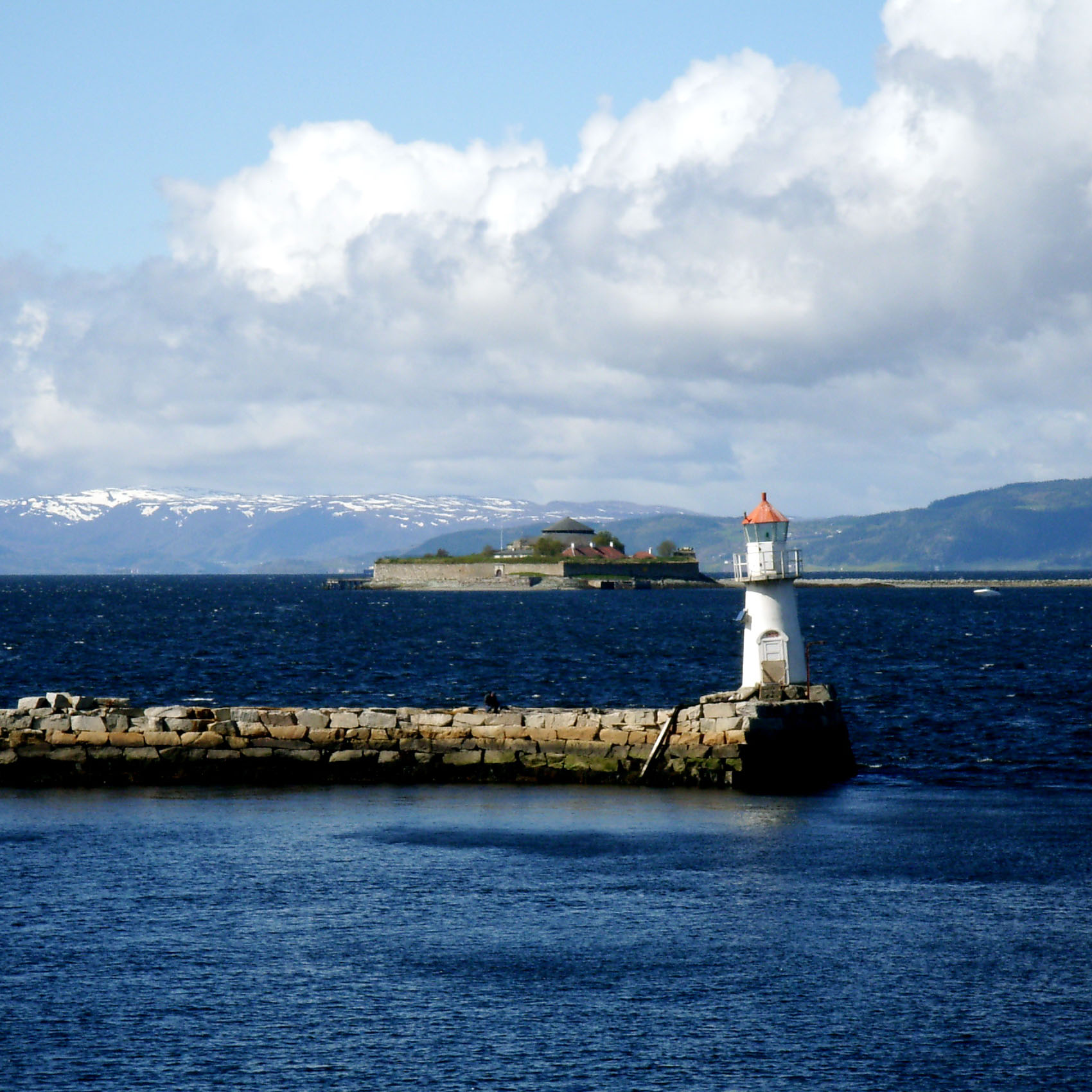
Trondheim Fjord: Kindergarten for Future Ships
Right in the middle of Michigan (USA) is a 32-acre mockup city with driverless cars roaming freely. It’s MCity, the proving ground where automakers like Ford test their self-driving cars. Thousands of miles away, you can find the aquatic equivalent of the place. To see the fruits of a collaboration between the Norwegian University of Science and Technology (NTNU) and the Norwegian Institute of Marine Technology (MARINTEK), you have to go to Norway’s breathtaking Trondheim he fjord. Low-traffic waters, numerous coastal high-tech industries, and full government support make these waters ideal playgrounds for analyzing the feasibility of the world’s most advanced vessels. . Companies such as Kongsberg Seatex, SINTEF Ocean, Maritime Robotics and the aforementioned Rolls-Royce Marine have already tested their navigation and collision detection systems under real conditions. “As far as we know, there is no test site of this kind in the world,” recently declared Gard Ueland, Chairman of Kongsberg Seatex.
sauce: Spectrum, Phys.org, Life in Norway, Rolls-Royce, Maritime officer
