











Wraps presented with solar power are becoming more and more rare and at the same time more familiar.It’s been a hot topic lately Photovoltaic roof under traditional tile exterior, a truly sustainable trompe l’oeil integrated into traditional architecture. Now it’s time for ground level improvements. World’s first solar road It is already fully operational in France.
This isn’t the first attempt at turning solar powered wrap solar panels into a tarmac. Solar-powered bicycle lane for almost two years. however, France Besides generating energy, Open to car transportation.
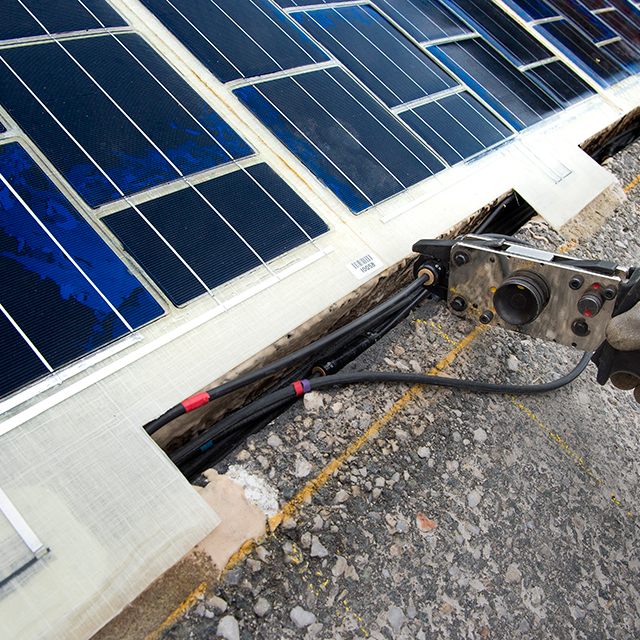
The world’s first solar road is in France
The road leading to a small Normandy village called Tourvre aux Perches Covering a distance of 1 kilometer so far It consists of 2,800 m² of solar modules. These panels are covered in a resin made from a thin layer of silicone that can withstand weight. 2,000+ vehicles per day While ensuring tire grip without compromising energy efficiency.
Admittedly, 1 km is not a long distance.But the idea is that this road will act as a pilot test while supplying energy to the village lampposts for two yearsAfter this period, depending on the outcome, the possibility of extending the project up to 1,000 km within the French road layout will be explored.
All proponents and opponents are right
Five years of research and a budget of 5 million euros are figures for the first solar road built in France.engineering achievements Solar power can be used to generate energy for local consumptionsuch as street lighting and traffic light requirements, or Providing lay-bys without being connected to the gridAdditionally, the solar pavement sits on top of the already built road tarmac, so no additional infrastructure needs to be created.
According to the French Environment Agency (ADEME): Just 15 m² of this tarmac will power several traffic lights.and one kilometer can feed a town of 5,000 inhabitants.
Sponsors and the French authorities backing the project have vowed that the project will be profitable in 2020, but the price of a kilowatt produced by the solar road will be the same as that produced by a conventional solar power plant. If it can be to the extent, the facts of the matter are:or This initiative also addresses many shortcomings.
Early estimates put the price per kilowatt generated by solar tarmac at €17, compared to €1.3 for roof installations. The cost of its implementation is prohibitive Considering the amount of energy it produces. Based on the idea that traffic covers the panel only 10-20% of the time he I’m guessing. Not recommended for solar paving as it is less efficient than sloping panels.
In any event, time will have the final say and will see who is right on this matter and whether or not solar roads will indeed be the paved roads of the future.
means: La Vanguardia, Hypertext, El Pais, Zataka
image: Whatway
