











Apps that can improve business operations are quickly added to the SaaS stack. But what employees don’t realize is that this SaaS-to-SaaS connection, which is usually out of sight of security teams, greatly increases risk.
Whether employees connect via Microsoft 365, Google Workspace, Slack, Salesforce, or other apps, security teams have no way to quantify employee exposure. These “secondary” apps either request an intrusive set of permissions or can be malicious. Every click that authorizes access grants the right to edit or delete company files, to send emails on behalf of users, to create new files, or to access data in a way that poses a serious threat to the security of the organization. may grant you the right to process
To meet the challenges of SaaS security, security teams must address the entire SaaS ecosystem.
The evolution of SaaS security today has extended SaaS security beyond simply preventing access. This goes far beyond protecting your app. Today’s organizations must consider identity management, threat detection, and access management, along with endpoint security, response capabilities, and more. Once an organization has taken these steps, it will be better prepared to defend against the SaaS attack surface.
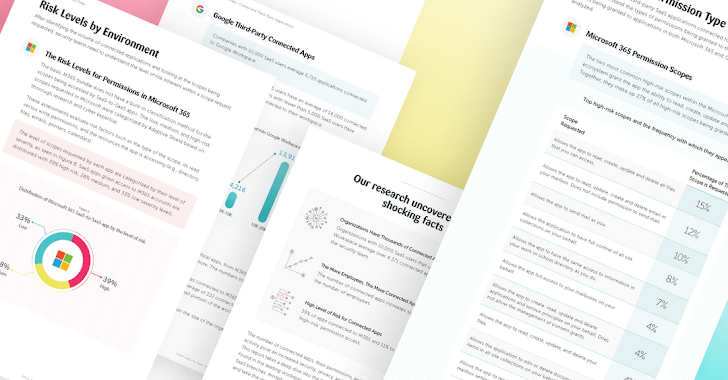
The SaaS-to-SaaS Access Report provides insight into the risks and challenges that SaaS-to-SaaS access poses to help organizations understand the magnitude of the risks involved.
Join us for an informative webinar with Maor Bin, CEO of Adaptive Shield. Discusses the risks of third-party app access and details cross-SaaS access reports.
Topics covered in the webinar:
- Security in the SaaS ecosystem
- SaaS security challenges
- Introducing the 2023 SaaS-to-SaaS Access Report
- Main findings
- Insights and Points
- SaaS-to-SaaS Posture Access and Risk Assessment
- Malicious app detection from SaaS to SaaS
Sign up today to learn how to improve your SaaS security.
