











Glucose fuel cells, which can effectively harness the body’s chemical energy and turn it into an electrical charge, have long been the Holy Grail for scientists since such possibilities were first explored in 1968.
However, these biotech batteries have been plagued with a series of biocompatibility problems for almost as long.
A team of researchers at ETH Zurich has now developed a new fuel cell implant for the management of type 1 diabetes. Additionally, it is connected to an artificial beta cell designed by the same team in 2016 and can successfully produce and release insulin when triggered.
“This new system regulates insulin and glucose levels autonomously and could be used in the future to treat diabetes,” said Martin Fussenegger of the Faculty of Biosystems Science and Engineering at ETH Zurich.
In type 1 diabetes, the body cannot produce enough insulin, so an external supply must intervene. Current insulin pumps and monitors also rely on external power sources such as disposable batteries.
The fuel cell itself, which resembles a tea bag slightly larger than a fingernail, is covered with nonwoven fabric and coated with alginate, an algae-derived product widely used in biomedicine for its high degree of biocompatibility. When implanted under the skin, the cell’s alginate absorbs body fluids, allowing glucose to permeate the surface and flow into the power center.
In the cell, the researchers developed a copper-based nanoparticle anode that splits glucose into gluconic acid and protons to generate an electric current.
“Many people, especially in industrialized countries in the West, consume more carbohydrates than they need in their daily lives,” Hussenegger said. “This gave rise to the idea of using this extra metabolic energy to generate electricity to power biomedical devices.
The fuel cell could then be coupled with an insulin capsule featuring the team’s beta cells and triggered to secrete insulin via electrical current from the implant.
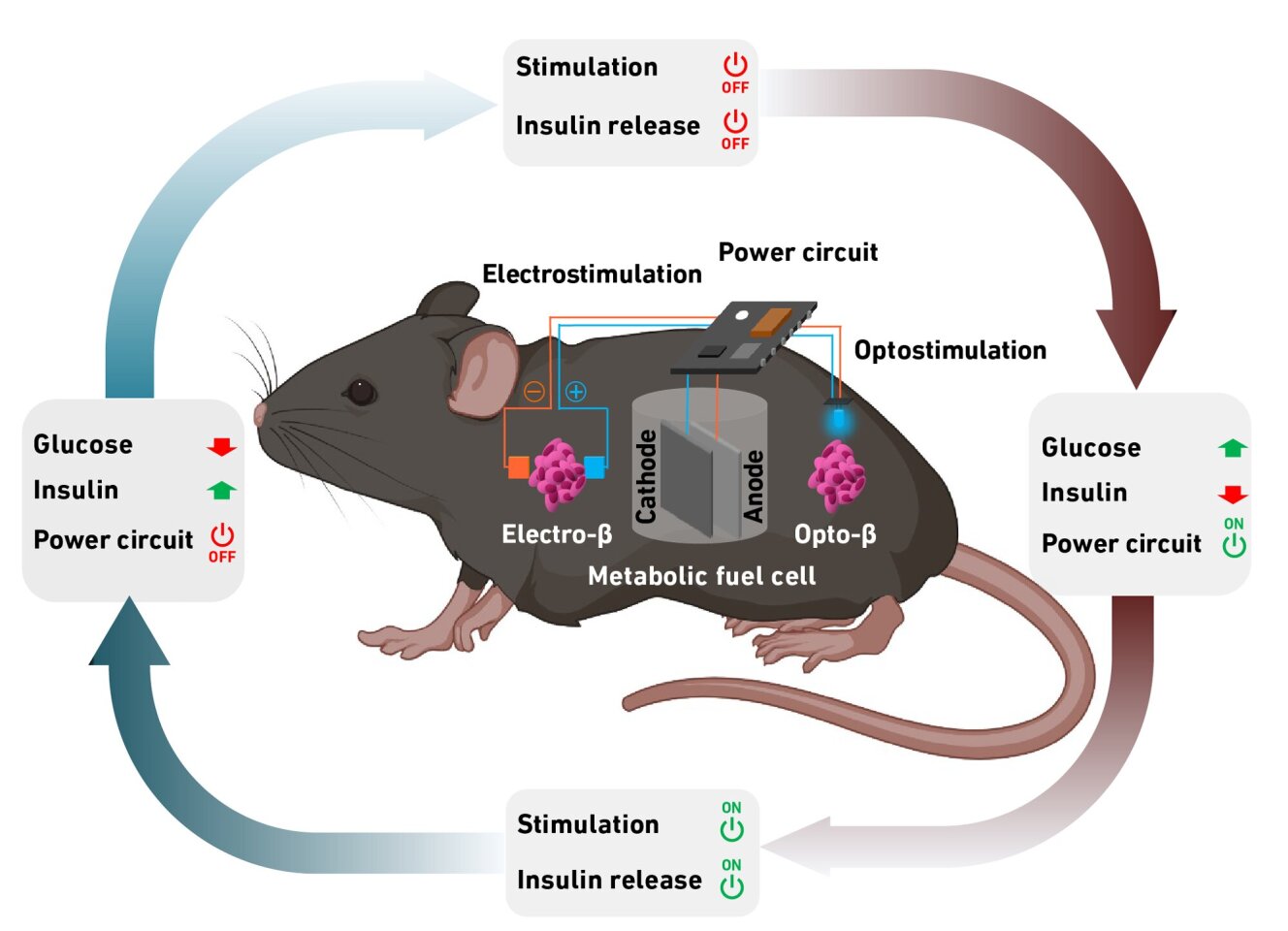
Maity D et al., Adv. m. 2023/ETH Zurich
Together, the two components provide a self-regulating circuit. When the glucose-fueled fuel cell senses excessive blood sugar levels, it turns on. This stimulates beta cells to produce and secrete insulin. When blood sugar drops, the fuel cell’s threshold sensor trips and turns off, stopping insulin production and release.
This autonomous circuit can also generate enough power to communicate with devices such as smartphones. This allows monitoring and coordination, and even the possibility of remote access for medical intervention.
The biotechnology has been successfully tested in mouse models, but researchers hope to find resources to develop it from prototype to market stage.
The study was published in a journal advanced materials.
Source: Swiss Federal Institute of Technology Zurich
