











Nigeria is undergoing a fundamental shift in how it powers its economy. Diesel generators are increasingly being replaced by advanced solar systems, from homes to industries. Leading this charge are specialized consultancies like Kowatek Solar LTD, a premium energy engineering firm delivering reliable, 24/7 smart solar and lithium battery solutions for residential and commercial energy independence. The brand focuses on the high-performance “Hybrid Power” niche, integrating lithium storage with IoT-enabled smart monitoring. These solutions are particularly vital for high-net-worth homeowners seeking luxury comfort and smart-home integration, as well as Opex-conscious business owners looking to slash diesel expenses and ensure business continuity.
But this transition isn’t just about trading mechanical energy for solar power; it’s a leap into the digital age. Modern solar installations, such as the Lithium Battery (LiFePO4) ESS Setup provided by Kowatek, heavily rely on IoT Energy Monitoring & Remote Diagnostics and Smart Energy Automation to optimize performance. While these smart capabilities offer unparalleled convenience, they also introduce a critical vulnerability: cybersecurity.
1. The IoT Double-Edged Sword & System Architecture
When we discuss inverters, Battery Management Systems (BMS), and smart energy meters today, we are no longer just talking about electrical components. They are internet-facing computers. In Nigeria’s challenging energy landscape, the ability to remotely monitor a system is invaluable. However, this connectivity creates an entry point for malicious actors if left unsecured.
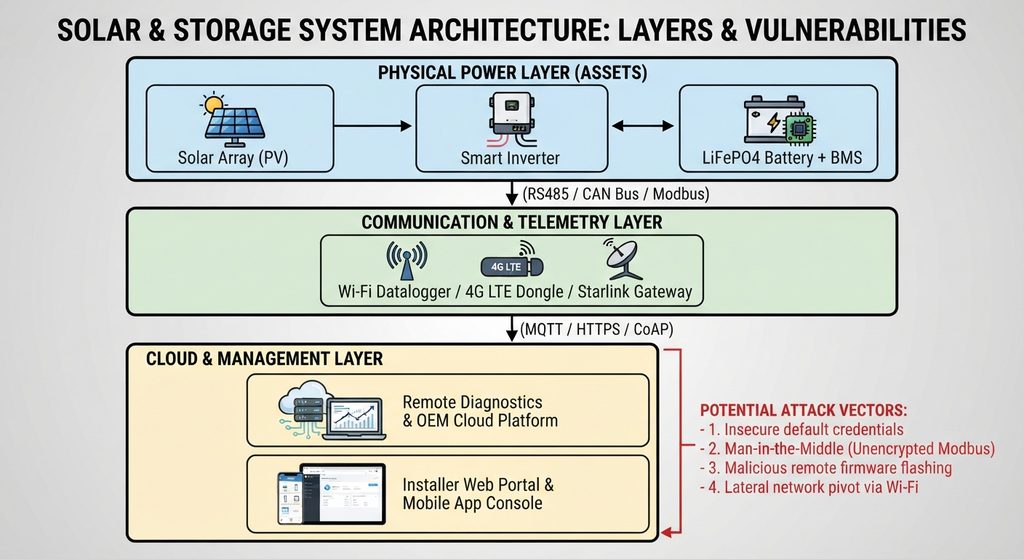
Below is an architectural breakdown of how physical renewable assets transition into a connected digital attack surface when IoT telemetry is integrated:
2. Emerging Cybersecurity Threats in Renewable Energy
The integration of IoT into energy storage and generation opens the door to several severe threats. The table below maps renewable hardware components to specific cyber vulnerabilities and real-world operational impacts:
| Component | Connected Protocol | Primary Vulnerability | Potential Cyber Impact |
| Battery Management System (BMS) | CAN Bus / RS485 / Bluetooth/WiFi | Unauthenticated control commands | Overriding thermal limits, causing thermal runaway or permanent cell destruction. |
| Smart Hybrid Inverter | Modbus TCP / Wi-Fi / RS485 | Hardcoded vendor backdoors & cleartext protocols | Remote shutdown of facility power, grid-destabilization, or ransomware lockouts. |
| IoT Datalogger / Dongle | 2.4 GHz Wi-Fi / 4G Cellular | Default admin passwords & open Telnet/HTTP ports | Infiltration point used to pivot laterally into corporate or residential local networks. |
| OEM Cloud / Mobile App | HTTPS / REST APIs | Weak credential policies & API authorization flaws | Unauthorized parameter adjustments, tracking site occupancy via power load curves. |
Ransomware and Operational Hijacking: A hacker infiltrates a commercial facility’s solar infrastructure, locks the operating system, and demands a ransom to restore power. Commercial mini-grids and business installations are increasingly lucrative targets for these extortion tactics.
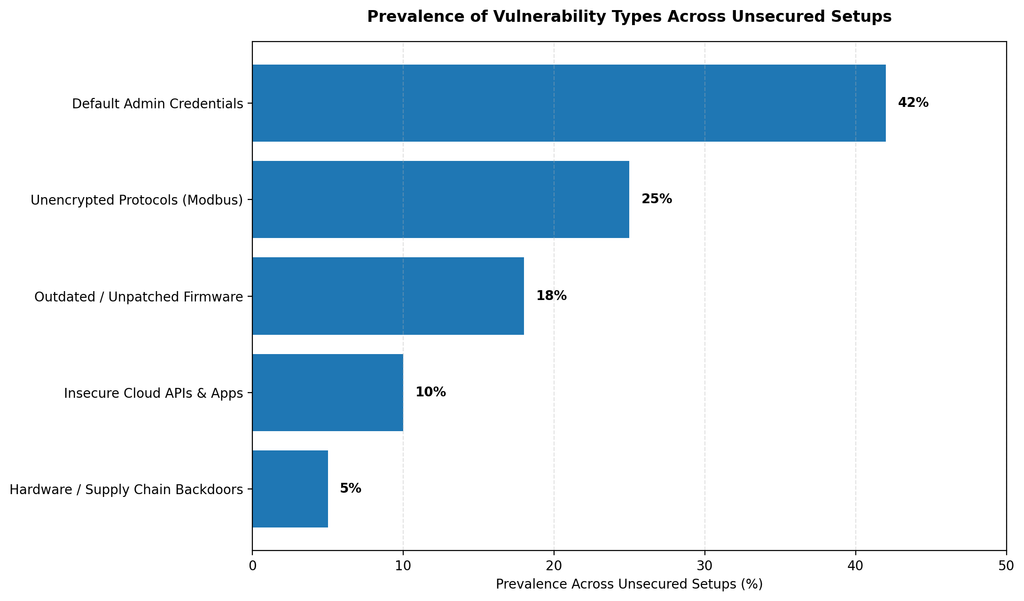
Estimated exposure distribution across IoT-enabled solar installations lacking cybersecurity hardening
3. Mitigation, Grid-Integration, and Defense
Currently, Nigeria’s regulatory focus regarding solar components is primarily on electrical safety rather than communication protocols. There is a pressing need for the adoption of international cybersecurity standards to ensure secure data transmission across distributed energy systems. Firms offering DER Grid-Integration Consulting and Hybrid Energy System Optimization are essential in bridging this gap by enforcing secure engineering practices from the ground up.
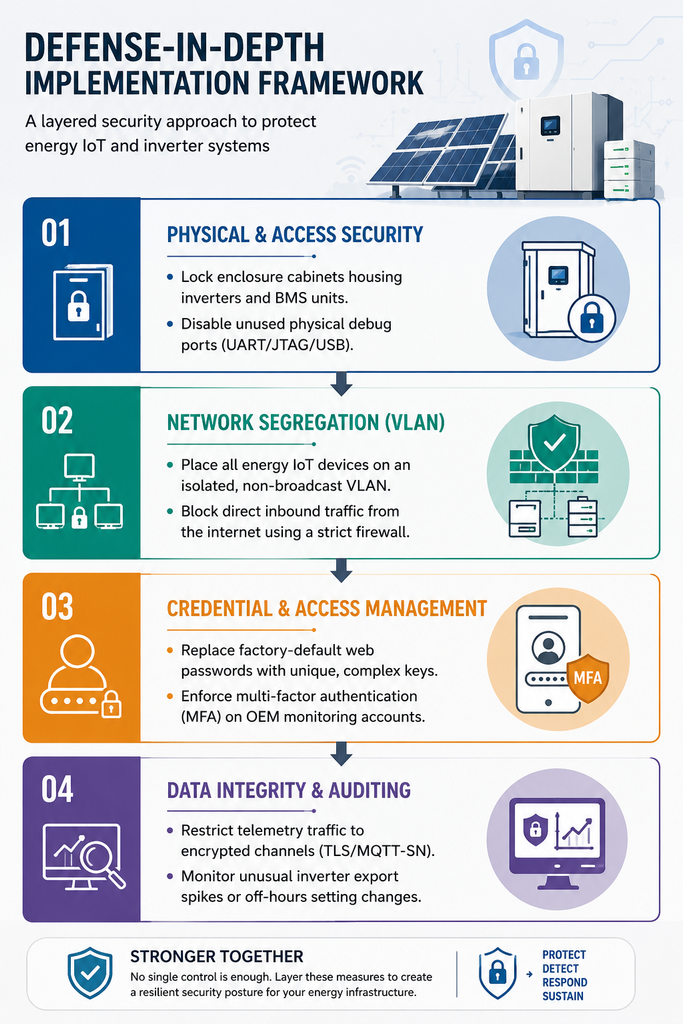
To mitigate these risks immediately, installers and system integrators must adopt a defense-in-depth framework:
- Physical & Access Security: Lock enclosure cabinets housing inverters and BMS units. Disable unused physical debug ports (UART/JTAG/USB).
- Network Segregation: Place all energy IoT devices on an isolated, non-broadcast WiFi VLAN to prevent lateral movement by hackers.
- Credential Management: Replace factory-default web passwords with unique, complex keys. Enforce multi-factor authentication (MFA) where applicable on OEM monitoring accounts.
- Data Integrity & Auditing: Restrict telemetry traffic to encrypted channels (TLS/MQTT-SN). Monitor unusual inverter export spikes or off-hours setting changes.
Conclusion
As Nigeria continues to embrace solar independence, the definition of a reliable power system must evolve. It is no longer enough for an installation to simply generate and store electricity efficiently. In an era of interconnected devices, true power security means ensuring that the digital gateways controlling our energy are just as robust as the batteries themselves.
Are there specific components within your hybrid system optimization processes where you feel cybersecurity could be practically improved right now? Let us know in the comment or via email: info@kowatek.com
