










Introduction: Nigeria’s Energy Reality
Nigeria’s electricity challenge extends beyond just a lack of generation capacity; it also involves how energy is consumed, wasted, and mismanaged. Despite having an installed generation capacity of over 13,000 MW, the effective available power in Nigeria often fluctuates between 4,000 and 5,000 MW for a population exceeding 220 million people. As a result:
- Over 85 million Nigerians lack access to reliable grid electricity.
- Businesses spend between ₦4 and ₦7 trillion annually on diesel and petrol generators.
- Energy inefficiency leads to increased operating costs, equipment failures, and higher emissions.
In this context, Energy and Load Audits are essential tools for addressing Nigeria’s electricity consumption issues at the user level.
What Is an Energy & Load Audit?
Energy Audit (Consumption-Focused)
An energy audit assesses how and where energy is used within a facility – such as homes, offices, factories, schools, hospitals, and estates. It identifies waste, inefficiencies, and cost-saving opportunities.
Load Audit (Demand-Focused)
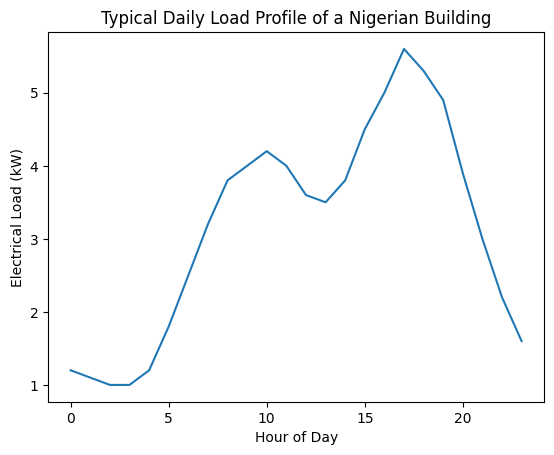
A load audit quantifies electrical demand by determining which equipment consumes power, how much, and when. This type of audit answers crucial questions, including:
- Why do generators trip or inverters overload?
- Why do electricity bills continue to rise despite low usage?
- Is the installed solar or backup system properly sized?
Together, energy and load audits provide the technical foundation necessary for effective power system design.
How Poor Energy Practices Affect Electricity Consumption in Nigeria
- Oversized and Undersized Power Systems
In Nigeria, many solar and inverter systems fail within 6 to 18 months due to incorrect load assumptions. And the common causes includes but not limited to:
- The absence of a pre-installation load audit
- Relying on guesswork instead of accurate measurements
- Ignoring surge currents from appliances (e.g., air conditioners, pumps, freezers and so on)
Impact:
- Battery failure
- Inverter overload
- Customer dissatisfaction
- Wasted capital
Reality:
Field studies indicate that about 60% of failed solar systems in Nigeria were improperly sized due to a lack of load audits.
- High Energy Waste in Homes and Businesses
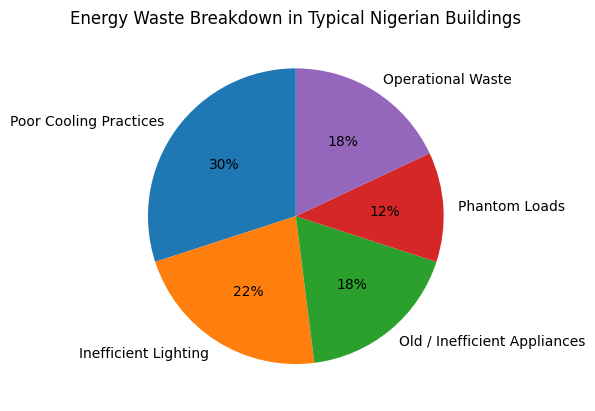
A typical Nigerian building consumes approximately 40% to 70% more energy than it would if it followed modern energy-efficient standards or “green” building practices. This can be traced to:
- Inefficient lighting (such as old CFLs and halogen bulbs)
- Poor appliance choices
- Phantom loads (devices drawing power while turned off)
- Inefficient cooling practices
An energy audit typically identifies 20-30% in immediate savings without requiring lifestyle changes, only smarter usage and better equipment.
- Generator Dependency and Cost Explosion
Nigeria has an estimated 22 to 25 million small generators, consuming over 15 billion liters of fuel annually.
For Businesses:
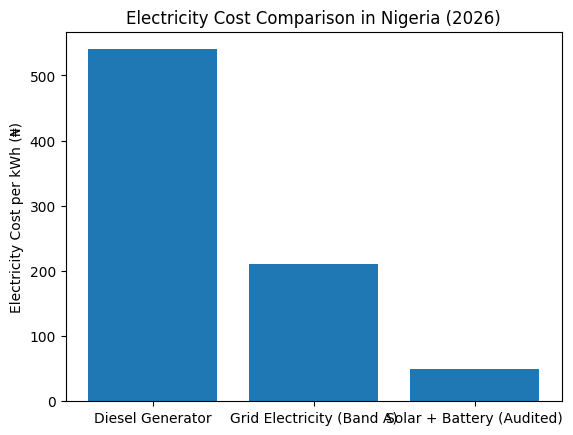
- Diesel electricity costs: ₦480-₦600 per kWh
- Grid electricity costs: ₦205-₦215per kWh for those in Band A
- Solar electricity costs (after audit and optimization): ₦35-₦60 per kWh (levelized)
Without audits, many businesses overspend on fuel simply because their energy systems are inefficient and poorly planned.
Why Energy and Load Audits Are Critical for Nigeria’s Energy Transition
- Smarter Solar and Hybrid System Design
Conducting a thorough energy audit ensures:
- Correct inverter capacity
- Appropriate battery sizing (no guesswork involved)
- Optimal solar array sizing
- Reduced system stress and extended lifespan
This process is particularly crucial in Nigeria, where capital is limited, installers have little knowledge and mistakes can be costly.
Reduced National Energy Demand Pressure
If just 20% of Nigerian homes and small-to-medium enterprises (SMEs) reduced their energy consumption by 15% through audits and efficiency upgrades:
- National demand would decrease by over 1,000 MW
- Grid stability would improve
- The frequency of load shedding would diminish
Ultimately, energy efficiency could act as Nigeria’s fastest “new power plant.”
Climate and Environmental Benefits
Diesel generators release harmful emissions, including:
- CO₂
- Nitrogen oxides
- Particulate matter (PM2.5)
Implementing energy audits followed by solar and efficiency upgrades can diminish emissions by 2-6 tons of CO₂ per site annually, depending on the scale of the operation.

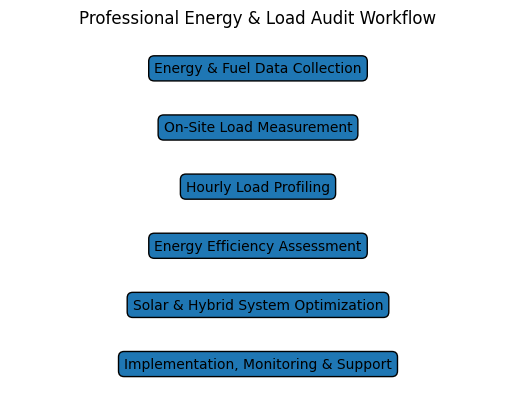
The Energy Audit Process in the Nigerian Context
Utility & Fuel Data Review
- Analyze NEPA bills, generator fuel records, and runtime logs.
On-Site Load Measurement
- Measure actual appliance wattage and surge currents.
Load Profiling
- Assess day versus night usage and identify peak demand periods.
Efficiency Assessment
- Evaluate lighting, cooling systems, motors, pumps, and electronic devices.
System Matching & Optimization
- Align energy demand with solar power, batteries, the grid, and generators.
Financial Analysis
- Calculate savings, payback periods, and return on investment (ROI).
Where Kowatek Solar LTD Comes In
Kowatek Solar LTD: From Audit to Implementation
At Kowatek Solar LTD, energy and load audits are not just paperwork, they are the foundation of effective engineering solutions.
What Kowatek Solar Provides:
Professional Energy & Load Audits
- Real measurements, not assumptions.
- Analysis of surge and peak demand.
- Detailed appliance-level breakdowns.
Audit-Driven Solar & Hybrid System Design
- Proper inverter and battery sizing.
- Reduced failure rates.
- Optimized cost per kilowatt-hour (kWh).
Energy Efficiency Advisory
- Guidance on appliance replacement.
- Strategies for load shifting.
- Smart energy management practices.
Long-Term System Performance
- Lower maintenance costs.
- Extended battery lifespan.
- Higher customer ROI.
Results:
Clients typically achieve a 20-40% reduction in energy costs and a significant decrease in generator runtime within the first year.
Realistic Financial Impact: A Typical SME Example
| Item | Before Audit | After Audit + Solar |
|---|---|---|
| Monthly Energy Cost | ₦450,000 | ₦210,000 |
| Generator Runtime | 10 hrs/day | 2 hrs/day |
| Annual Fuel Spend | ₦3.8 million | ₦1.1 million |
| Payback Period | – | 12-20 months |
Conclusion: Addressing Nigeria’s Power Problem Starts at the Consumer Level
Nigeria needs more than just additional power plants; it requires smarter energy consumption.
Energy & Load Audits:
- Reduce waste.
- Improve system reliability.
- Lower costs.
- Enable sustainable solar adoption.
With the right audit-driven approach, energy can transform from an unpredictable burden into a controlled asset. Kowatek Solar LTD is dedicated to assisting Nigerian homes, businesses, and institutions in transitioning from inefficient power usage to smart, resilient, and cost-effective energy systems.
