











Of all the existing renewable energies, solar power does not seem too difficult to integrate seamlessly into our daily lives and to replace ubiquitous oil, coal or natural gas sources. Just a few days ago we learned how the Quantum Leap Development of treated glass that can generate electricity from sunlight You can improve the energy management of your building. In other words, a system that can make ordinary glass objects more likely to generate their own energy.From the windshield of your car to the table in your living room.
In fact, interdisciplinary collaboration has led to many innovations being implemented in fields that previously simply did not belong there. This project is inspired by the art of kirigami and features flexible and adaptable solar panels..
But one area where solar power really feels familiar is the construction industry. There are solar roads, buildings with solar windows, and now also solar tiles. New materials loaded with innovation genes are shipped from the factory.
Solar panels that look like clay tiles
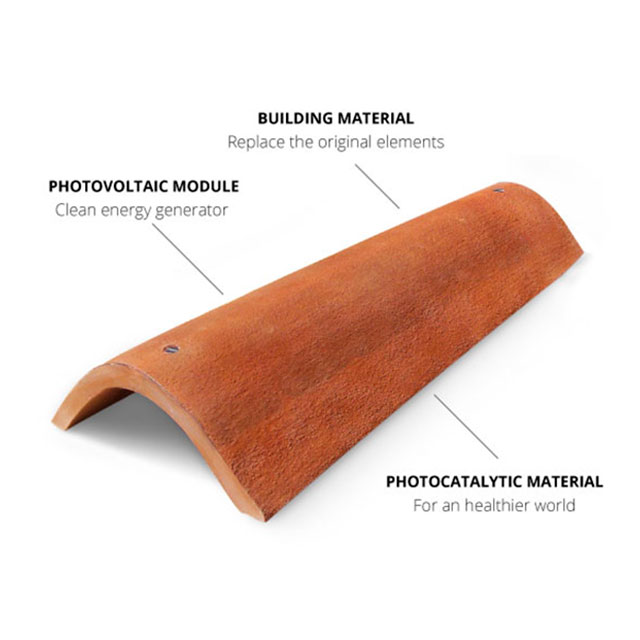
Those who believed that traditions rooted in old ways and procedures were incompatible with cutting-edge technology may need to reconsider their beliefs. solar clay tilesmanufactured by a startup named Diaquaable to blend the best of both worlds: imbued with the halo of history and the passing of time, characteristic of the characteristic Brunelleschi dome, Hidden beneath the rustic exterior are solar panels that can generate energyThese groundbreaking sneaks unmistakably place them in 21st-century architecture and technological developments that seemingly went unnoticed.
But how exactly does it work? The tiles are clays that incorporate several monocrystalline silicon cells that are capable of photovoltaic power generation.On top of them a layer made of some material is added Recyclable, non-toxic, seemingly opaque but transparent to sunlightIn other words, it camouflages cells without interfering with the production of solar energy. According to its technical specifications, 223 tiles (15 m²) are required to generate 1kWp..
Another good news is that the model can be applied to various building materials. The company plans to implement it in wood, stone, slate and concrete.
In that case, we are not only talking about roofs, but also solar walls or solar floors, which can be completely coated with these tiles or plates without changing the aesthetics of the building in any way. Preserve the historical and cultural heritage intact.
“These solar tiles could be a sustainable solution for historic buildings.”

tesla solar tiles
When talking about solar power breakthroughs, it is inevitable to mention Tesla,especially solar city, its subsidiary. Just a few days ago, founder Elon Musk introduced a new product line to the media. Tiled solar panels attached to the roof.
They are solar cells integrated into small individual tiles Its appearance makes it almost impossible to distinguish it from that of a conventional roof. The Baseline model features four designs to satisfy all tastes. brick red, beige, slate or grayAlong with this solar rooftop is a new energy storage unit called power wall was also introduced. According to the developer, it has two 14 kWh lithium-ion batteries, allowing him to double the performance of the previous version. According to the developer, he will provide a day’s worth of energy for four bedrooms and a suite of appliances in the home.
Tesla’s concept is very similar to Dyaqua’s, but the Italian company is looking to promote viable architectural integration into iconic city buildings.
The date and price of its introduction to the market are currently unknown, but as it stands, your rooftop or even Salamanca Cathedral may be hiding real sustainable and technological secrets beneath its ordinary exterior. there is.
sauce: Engadget, IS-ARQuitectura
image: Solar City, Diaqua
