











In order to help someone quit smoking, it’s important to know how much they’re smoking initially, and how much they can smoke on a regular basis. It is designed to help with
A pendant monitoring device currently in development at Northwestern University Feinberg School of Medicine is known as SmokeMon.
It incorporates a heat sensor that continuously tracks the heat of a lit cigarette as it enters and exits the user’s mouth.
With that data, the included machine-learning-based software can establish an individual user’s “smoking topography.” This includes the duration of each smoking session, timing of smoking, number of times, duration, amount and interval. between puffs.
Armed with that information, health coaches can develop a realistic and actionable plan to wean a particular smoker off tobacco. In the event of unsuccessful attempts to quit, the coach can determine whether those extra cigarettes constitute a simple slip or a complete relapse.
“For many people trying to quit smoking, the slip is smoking one, two or even one cigarette. But slipping is not the same as relapse (regularly returning to smoking),” said the chief scientist. says Assoc. Professor Nabil Al-Surafa. “People can learn from their mistakes. You can shift your focus to dealing with cravings.”
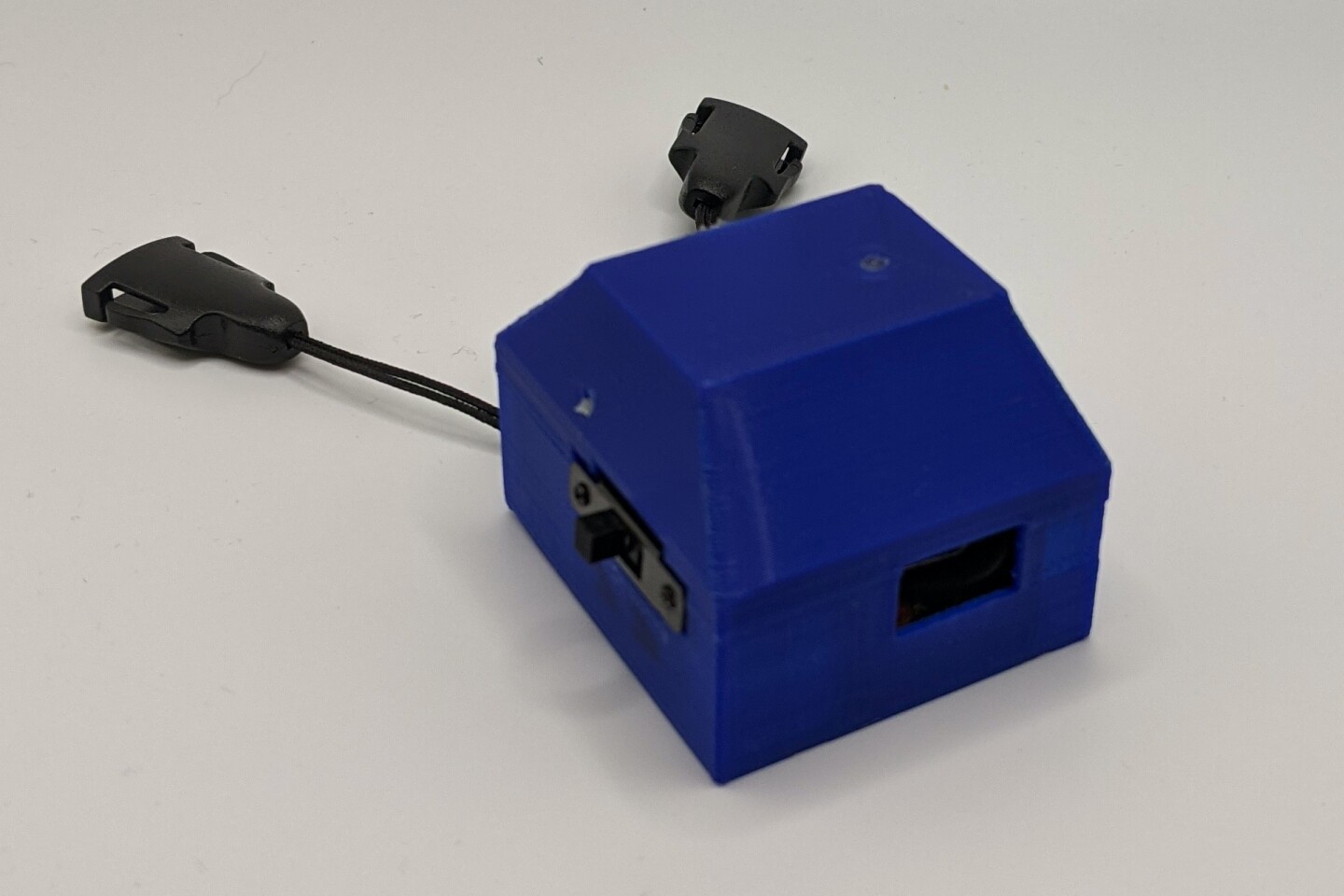
Northwestern University
Wearing such a device might feel a little Big Brother-ish to some, but it’s less intrusive than previous systems that used wearable cameras to identify people’s smoking status. There is no mistake. SmokeMon only tracks and records heat, not images.
Other systems instead use motion-tracking sensors attached to each cigarette, but such setups tend to change the way a person smokes, providing an inaccurate profile. The use of smartwatches to track smoking-related arm movements has also been explored, but similar hand-to-mouth movements (such as those during eating) can be confused with such movements. was often
So far, SmokeMon has been successfully tested with a group of 19 participants, who wore the device during a total of 115 smoking sessions in both controlled and real-world scenarios. He has also been evaluated by a panel of 18 tobacco treatment professionals who reportedly felt the technology could be very helpful.
A paper on this study was recently published in the journal ACM Proceedings on Interactive Mobile Wearables and Ubiquitous Technologies.
Source: Northwestern University by EurekAlert
