











In 2006, Mexico declared war on drug traffickers as the war between cartels escalated. Since then, he has killed more than 300,000 people in the country, with the death toll escalating due to violence between law enforcement, the military and cartels. The official list of missing persons exceeds 100,000. missing person-Had disappeared. Many of them are probably among some 52,000 unidentified bodies in Mexican morgues. A missing person is neither alive nor dead, legally speaking. They include those whose bodies have not been found or identified, and those who are still alive and may be in captivity.
In 2021 and 2022, the No Están Solas project worked with a Mexican human rights group that was trying to find and identify the remains of some of the missing people. Mexico’s crisis has many faces: cartel violence, forced migration, clashes between the Mexican government and its people, and drug traffickers who provide jobs, protection and resources, often through coercion. I learned
I believe the violence will worsen if we do not address the powerful new factor of climate change and its impact on Mexico’s water supply. Changes in weather patterns, inability of government agencies to keep up with population growth and migration, and the reality of declining infrastructure are reducing freshwater availability in several parts of Mexico. This, I believe, is fueling crime, social unrest and migration as people seek more livable and safer land.
In the first half of 2021, Mexico experienced an average rainfall deficit of 20%, and by 2022, several states had more than 90% less rainfall than expected. Declining rainfall is putting great stress on already overexploited aquifers and depleted reservoirs. To make matters worse, governments mismanage water supplies, failing to crack down on illegal pumping by cartels and farmers, and preferentially allocating scarce public water supplies to large corporations. This exacerbates the water crisis, causing Mexico’s poorer and marginalized communities to bear the brunt of the drought.
From what I’ve seen, I believe climate change will increasingly lead to the sort of violence that defines this country’s war on drugs, just as researchers have linked it to the Syrian civil war. , I believe the United States can make a difference. Since 2006, the U.S. government has committed billions of dollars in aid to the failed drug war as drug seizures at the U.S.-Mexico border remain high and drug war-related killings soar. Funding water collection and distribution projects from military aid and law enforcement can reduce the role of water as a driver of violence and displacement.
While cataloging mass graves and helping disseminate legal information to those affected by disappearances, he learned that the distribution of violence was not random, and that the disappearance crisis and the murder epidemic were linked to each other. I realized that it is an extension of Disappearances and confirmed murders seem to me to be disproportionately concentrated in water-stressed areas.
Access to water has long been a source of conflict in Mexico. Drinking water shortages create a new market for drug cartels who take advantage of rising water prices by siphoning water from utilities and reselling it. At the same time, water-hungry urban poor and farmers are increasingly resorting to theft, kidnapping, sabotage, and peaceful protests to protect themselves and their livelihoods. A government crackdown on these escalating chaos is increasing the threat to Mexican civilians. Long ignored by federal authorities in Mexico, many of Mexico’s unsolved deaths and enforced disappearances result from state-sponsored violence.
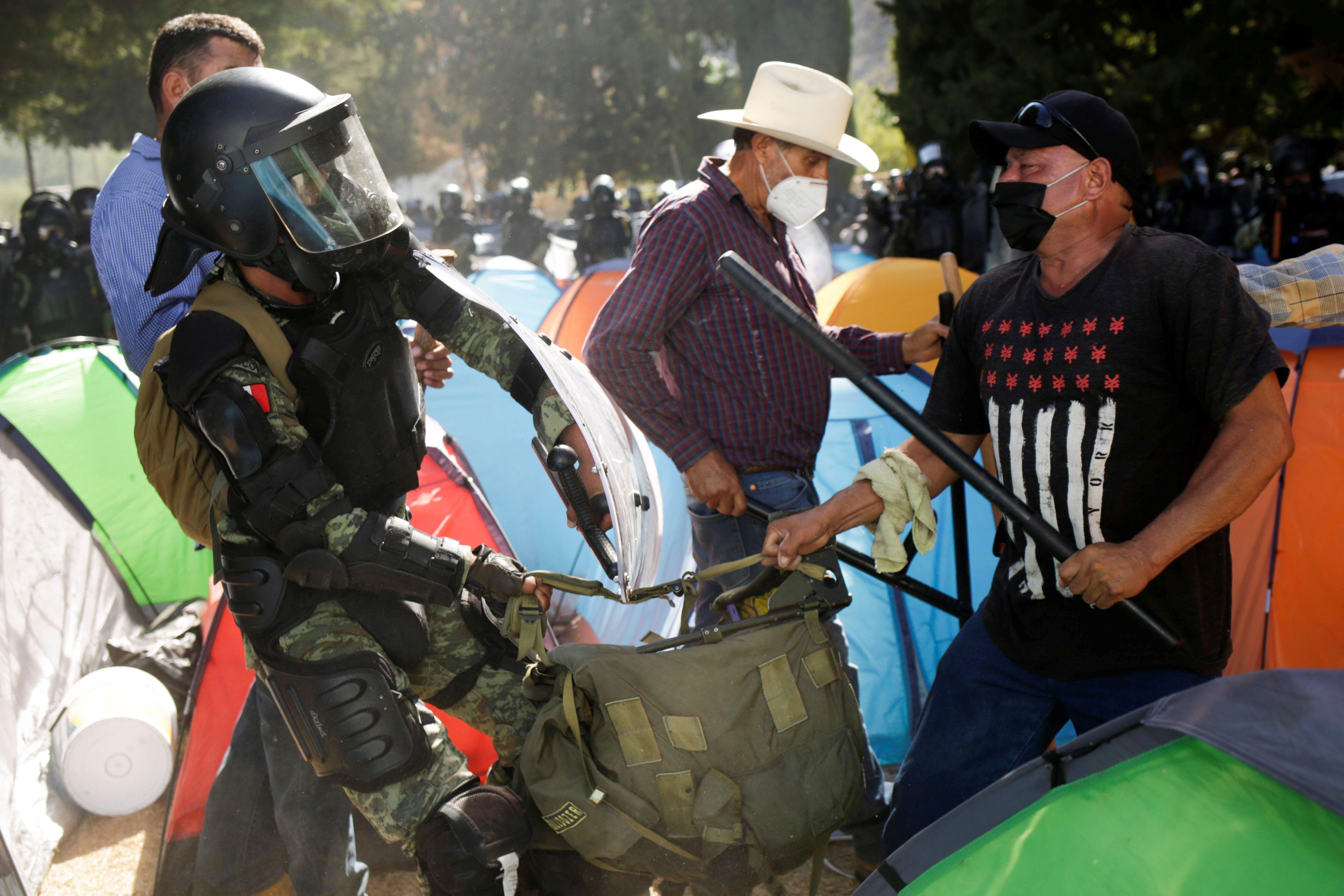
In 2020, Chihuahua farmers seized a dam during a drought to protest a treaty-mandated diversion of Mexico to the United States. In response, the federal government sent in the National Guard, killing at least two of his men. Recently, disgruntled citizens of Nuevo Leon and Coahuila burned PVC pipes carrying water from their area to more influential areas like Monterrey. It is difficult to know if any of the people involved in this civil unrest have gone missing, but I am not surprised. I fear that the death toll, including missing persons, will rise as the cartels grow in power and state-sponsored violence continues.
Mexico’s homicide rate soared from 8 per 100,000 in 2006 to 28 per 100,000 in 2020, according to the World Bank. This is all despite the fact that by 2016, the US gave her more than $1.5 billion in military aid to Mexico’s drug war. Simply put, if the purpose of the United States in providing aid is to reduce violence and strengthen the rule of law, it has made a bad investment. Indeed, with the release of the Bicentennial Framework, the US government acknowledges that it needs to change its approach to combating violence and cartels in Mexico. However, the new framework specifically ignores water-specific environmental factors. Additionally, in 2021 alone, the United States increased her humanitarian aid to Mexico and Central America by nearly $200 million to provide basic access to food, water, and shelter. It’s commendable, but if the water systems in these regions are left unaltered, with millions of people constantly on the brink of water shortages, one can expect some kind of stable poverty. I can only do it.
The United States not only has the resources, but the know-how to help with Mexico’s water crisis.
The Biden administration has donated $1.7 billion to indigenous peoples in the Southwest near the U.S.-Mexico border to help improve water infrastructure. These efforts may be repeated in geographically similar regions of Mexico. The Environmental Protection Agency is already doing so in limited areas through the Border Water Infrastructure Grant Program. The EPA will fund water projects in Mexico, but only if they occur within 62 miles of the U.S. border and have a direct impact on human and environmental health in the United States.
In other words, the United States is aware of the extent of Mexico’s water emergency. Meanwhile, Mexico City has contracted with several NGOs to install rainwater harvesting infrastructure to increase water storage, but is facing funding problems. In water-scarce Tijuana, a desalination plant was shelved for his nearly $500 million price tag, and the local government opted for private assistance to build a small desalination plant for $32 million. The plant will provide over 5 million gallons of water daily to over 100,000 people. For context, the United States provided five times that amount each year in military aid to Mexico between 2006 and 2016.
Thousands of Mexican families have not put an end to the disappearance or death of their loved ones. My experience has taught me the depth of our failure to fight against the spread of violence in Mexico.But it also shows that we can work to contain it.Water crisis is inseparable from the scourge of violence in Mexico. If the United States, which brings economic, humanitarian, and environmental benefits to a stable Mexico, uses part of the money it gives to support Mexico’s drug war to support Mexico’s private and public efforts. ,I believe. We will see remarkable progress in the fight against murders and disappearances in Mexico.
This is an opinion and analysis article and the views expressed by the author or authors are not necessarily Scientific American.
