











Unlike tissue in other parts of the body, such as skin, neuronal tissue in the brain does not regenerate after injury. But with the help of new types of hydrogels, it may one day be possible.
A biocompatible polymer gel developed by a team of scientists from Hokkaido University in Japan is composed of equal amounts of positively and negatively charged monomers. This combination was found to provide optimal adhesion for cells.
Scientists adjusted the ratio of crosslinker molecules within the hydrogel to give it a stiffness similar to that of brain tissue, creating tiny pores as “nesting” sites for cells. The gel was then soaked in growth factor serum to promote blood vessel growth before being surgically implanted into the damaged area of the mouse brain.
After three weeks, they found that immune cells and nerve cells from the surrounding brain tissue migrated into the implanted hydrogel, and blood vessels began to grow within it. injected into
After 40 days, the majority of these cells survived and some differentiated into neurons and neuronal-maintaining astrocyte cells. Additionally, some of these new neurons migrated out of the hydrogel into the surrounding brain tissue, indicating how well the material integrated into the brain.
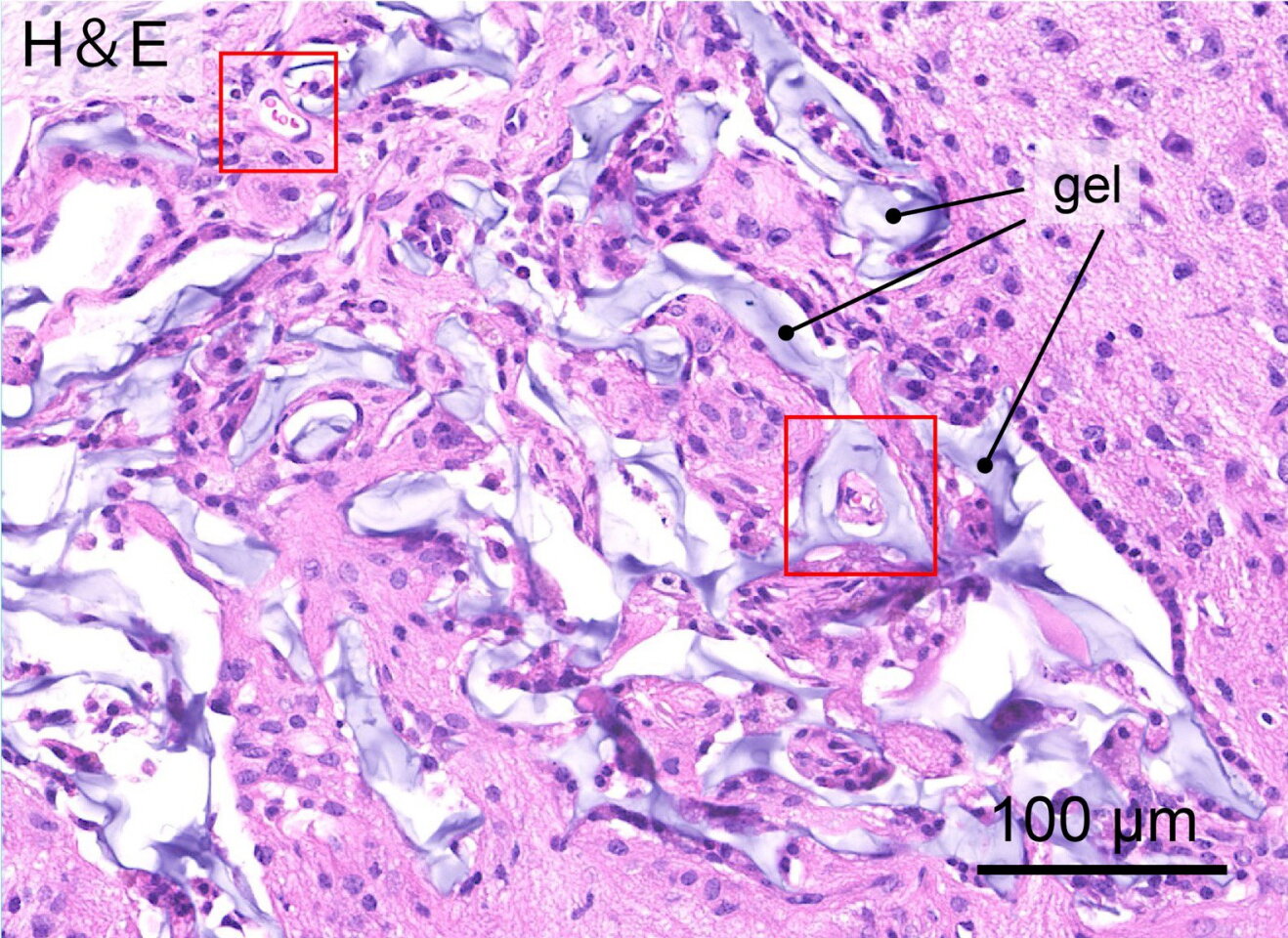
Satoshi Tanikawa, et al. scientific reportFebruary 14, 2023
It turns out that the timing of the various steps is very important. When scientists tried to implant the gel and add stem cells at the same time, the procedure was unsuccessful.
A paper on research led by Professor Satoshi Tanigawa and Professor Shinya Tanaka has been published in a journal scientific report.
Scientists at the University of Georgia have previously developed a unique “brain glue” hydrogel and used it successfully to treat brain damage in rats.
Source: Hokkaido University
