











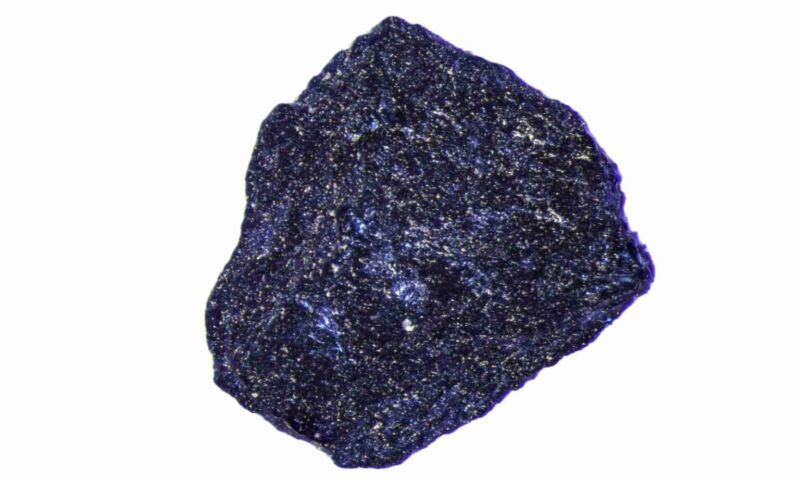
On Wednesday, a paper was published by Nature describing a mixture of elements that can be superconducting at room temperature. This work follows the general trend of finding new ways to pack hydrogen into mixtures of other atoms using extreme pressure. This trend has yielded a variety of high-temperature superconductors in previous studies, but they have been difficult to characterize because of the pressure involved. However, this new chemical superconducts at much lower pressures than previous versions, which should make it easier for others to replicate the research.
But the lab that produced the chemical retracted one of its earlier papers on high-temperature superconductivity because it lacked details about one of its key measurements. So I have no doubt that many other researchers will try to reproduce it.
Low pressure environment
The form of superconductivity involved here requires electrons to cooperate with each other to form so-called Cooper pairs. One of the driving forces for the formation of Cooper pairs is the high-frequency oscillations (called phonons) between the nuclei with which these electrons are associated. Light nuclei are easier to arrange, and hydrogen is the lightest. So finding ways to pack more hydrogen into the chemistry is thought to be a viable way to produce hotter superconductors.
However, the surest way to do it involves extreme pressure. These pressures can cause hydrogen to enter the crystalline structure of metals or form hydrogen-rich chemicals that are unstable at lower pressures. Both of these approaches have resulted in chemicals with very high critical temperatures, the highest point supporting superconductivity. But even though they are close to room temperature, the required pressure is a few gigapascals, each gigapascal being almost 10,000 times the atmospheric pressure at sea level.
Essentially, this involves an unrealistic temperature/pressure trade-off.
However, the hope is that these chemicals will be used to identify the general principles that produce this kind of hydrogen-rich superconductivity, and that they can be used to produce similar behavior under conditions that are much easier to maintain. It was possible to identify other chemicals that indicated
That’s what the new issue is about. The research team focused on lutetium based on the fact that the occupation of lutetium’s electron orbitals could provide a few more electrons that could participate in the formation of Cooper pairs, potentially facilitating superconductivity. was combined. They then added trace amounts of nitrogen in hopes that doping the material would allow the chemistry to adopt configurations that would help stabilize it, potentially lowering the required pressure.
