











According to new market research, Samsung will hold 20% of the Indian smartphone market in Q4 2022, while Xiaomi comes in second with an 18% share. Analysts believe this is primarily due to the “premiumization” of the domestic market. Indians now have more disposable income and are eyeing more expensive mobile phones.
Two years ago, India’s sub-$120 segment accounted for 41% of total smartphone sales, but today that share has fallen to 26%. In contrast, the premium segment ($360 and above) doubled to 11% growth.
This is the main reason why Samsung overtook Xiaomi. Xiaomi focuses on budget-friendly devices, while Samsung bets on mid-range to high-end models. For example, in 2022, the South Korean tech giant offered 16 premium mobile phones, while Xiaomi only had six. With their budget-friendly portfolios at £7 and £39 respectively, most of Xiaomi’s cheap smartphones were out of stock.
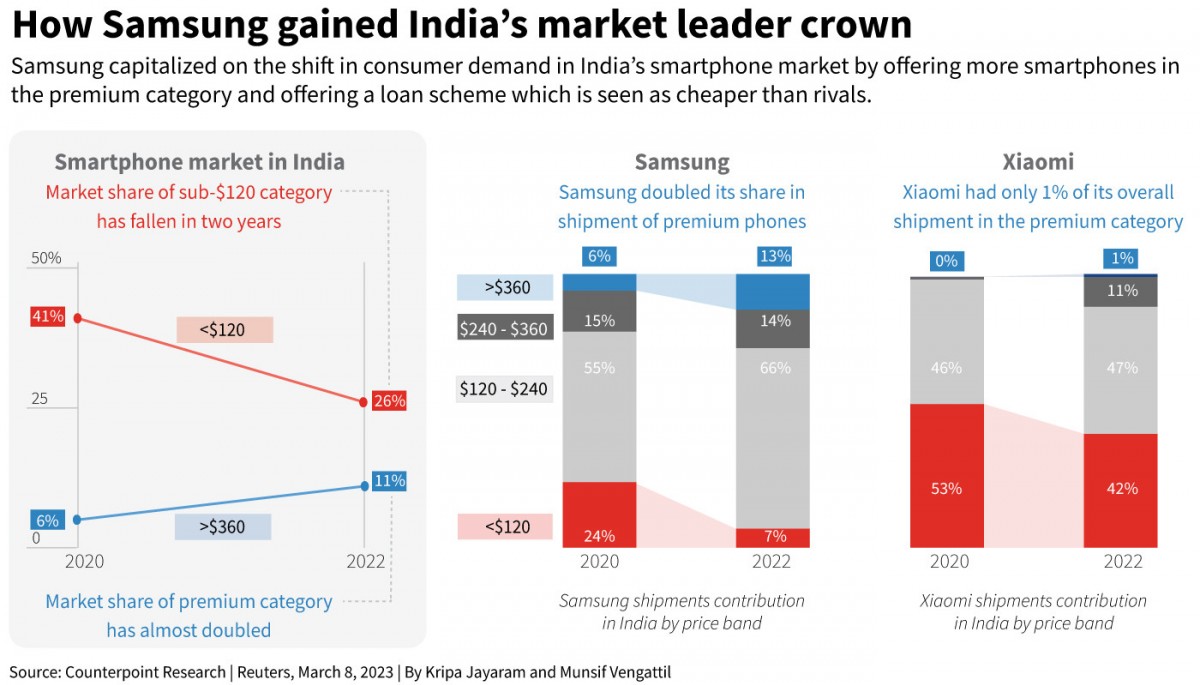
Xiaomi seems to be struggling to adapt to the growing and mature Indian market. Only 1% of Xiaomi’s sales are premium phones, while Samsung’s 13% of sales are his high-end devices. Additionally, the government has frozen $674 million in Xiaomi funds for illegal transfers to foreign companies. Given the turbulent relationship between China and India, this is no big surprise.
Meanwhile, Samsung’s aggressive lending strategy appears to be paying off. In 2022, the company will start offering easy-access loans to new customers without special requirements. Even those with low credit scores, no proof of address, and unstable income have been approved for smartphone loans, generating $1 billion in revenue.
In particular, analysts expect Apple to rise in the coming months and years as the company concentrates on luxury smartphones, which are in high demand as India’s living standards rise.
via
