











If you’ve ever walked barefoot on the beach at the end of a hot day, you know that sand retains heat well. For example, a container with 1 kilogram of sand will take over 5 hours to go from 40°C to 20°C. This is due to the low heat transfer coefficient of silicon dioxide, the main component of sand.And that’s the principle behind our innovative products sand battery Recently installed in Finland to store green power During the harsh Scandinavian winter.
There are now a number of renewable energy storage projects, some more fanciful such as gravity systems, and others like this pilot project based on electric batteries recycled from cars installed at a solar power plant in Navarra. , some of which are already in operation. Sand batteries are now complementing these experiences with promising alternative approaches.

World’s first sand battery
Markku Ylönen and Tommi Eronen are two Finnish researchers, First commercial sand batteryThe original purpose was to compensate for the intermittent nature of renewable energy sources such as wind and solar power by converting surplus electricity production into heat.to this endthey accumulated 100 tons of sand in silos with insulation Installed next to the power plant.
This sand cell uses resistive heating, also known as the Joule effect, where electrons flowing through a resistor create heat, much like a toaster or stovetop. The hot air produced is then circulated through a heat exchanger to transfer heat to the sand.Developer claims It can reach temperatures in excess of 500°C and store up to 8 MWh..
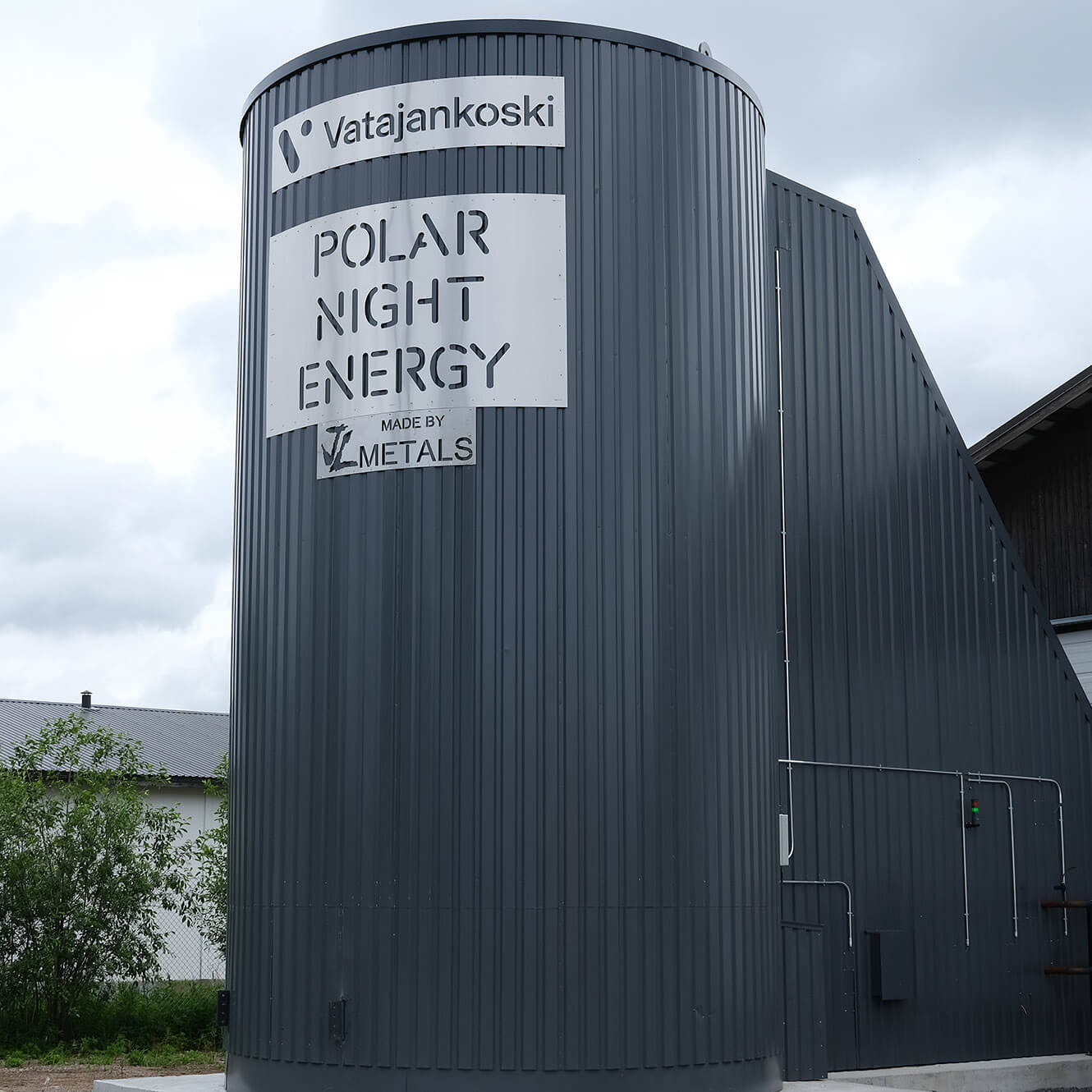
The battery is already in operation, providing heat to homes, offices and even public swimming pools in the Finnish town of Kankanpaa. This battery can store heat from renewable energy for months. With sand, a lot of energy is lost, so using the heat directly is more efficient than turning it back into electricity. Once the feasibility of the project has been demonstrated, the next step is to create a 1,000 times larger battery to transition to a more sustainable energy system.
Ambitious US sand gun battery
Across the US, the National Renewable Energy Laboratory (NREL) is working on a more ambitious prototype, but based on the same principles as its Finnish counterpart. The innovative battery, named ENDURING, could reach a storage capacity of up to 26,000 MWh. But how exactly does it work?
In this case gravity is added to the equation. NREL’s prototype uses a conveyor belt that lifts the sand upwards. heating element to heat it to 1200ºC For storage in silos, like sand dropping through a toaster’s heating element. When power is required, the particles are gravity fed through a heat exchanger, A powered steam turbine that produces electricity feedback to the grid.
In an article on the ENDURING prototype, US laboratories found sand to be a stable, low-cost material, with prices ranging from $30 to $50 per ton, and environmental impact during its extraction and at the end. points out that there is less service life. Also, although thermal energy storage has a low density, Its cost can be as low as $2 per kWh..
Advantages of sand batteries
Used as a heat accumulator, sand batteries are not as versatile as other technologies such as lithium, but in exchange they offer many advantages.
- Sand is an abundant and cheap material
- can store heat for months
- Alternative to gas or coal combustion in industrial processes
- Technology that does not require toxic substances or rare minerals
- Easy to install anywhere
- produce no waste
- Performance does not degrade over time
Sand batteries are part of a new wave of large-scale energy storage systems such as liquid batteries. Read more about these types of technologies in this article, or subscribe to our newsletter at the bottom of this page for the latest news.
sauce:
