











Everything about technological breakthroughs in self-driving cars has become a thorny debate. When will they hit the road? Are they viable? So-called “flying cars” are often considered part of that category, but have yet to materialize.However, UAM, or urban air mobility Vehicles may become part of the new urban mobility before ground-based self-driving cars. This article explains why and some of the key technologies involved.
What is Urban Air Mobility?
Urban air mobility is a term used to describe a new paradigm for air transportation of vehicles and goods in cities.The European Union’s Aviation Safety Agency estimates it will become a reality within 3 to 5 yearsThat is, until the middle of this decade.
This doesn’t mean you’ll see swarms of flying cars overnight.However, they begin to be used to resolve Some of the mobility challenges in cities – Pollution, traffic jams, accidents, etc.
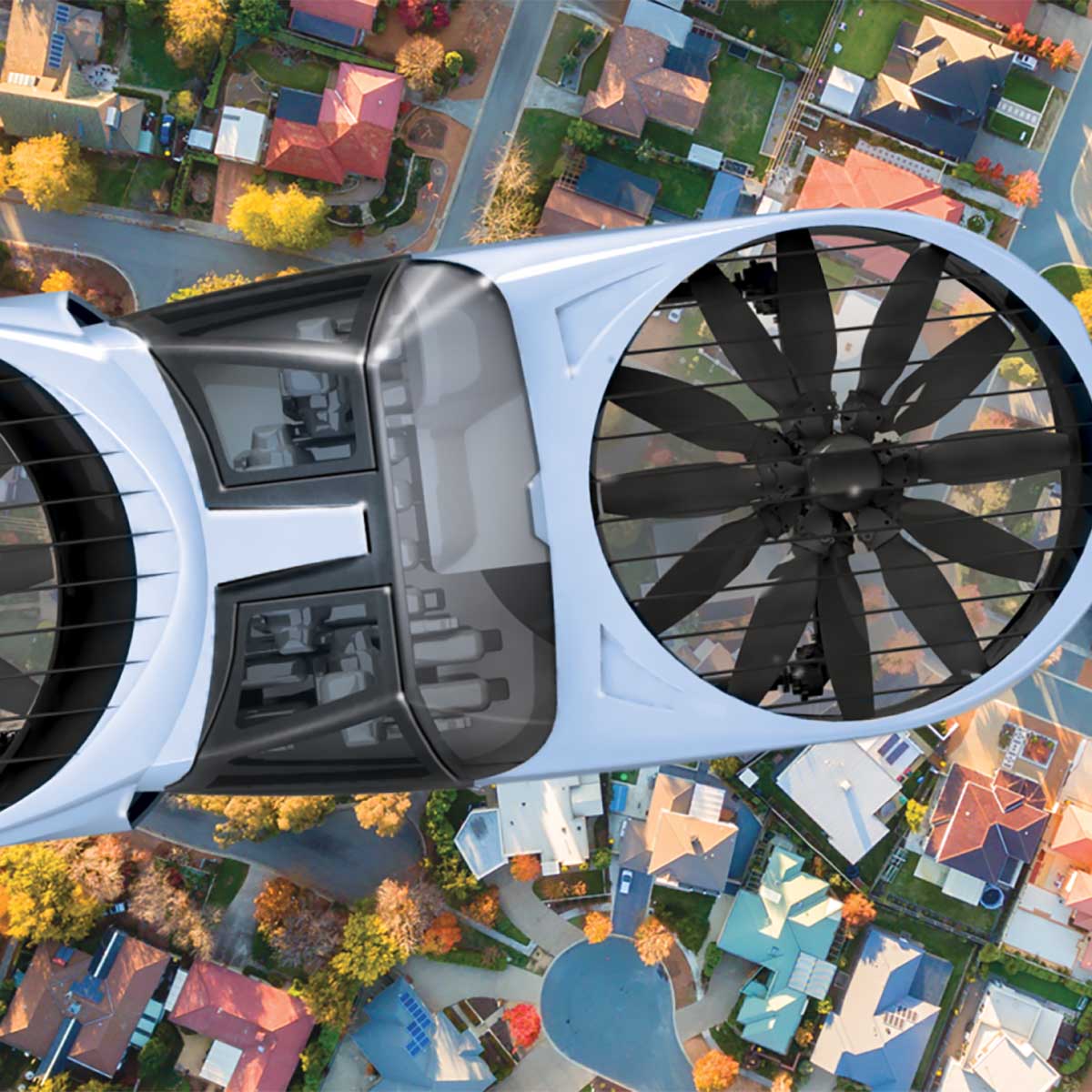
The vehicle most likely to play a leading role in urban air mobility is the eVTOL. Electric vertical take-off and landing aircraftBecause this is a car-aircraft fusion, commercial models are currently being developed by major airlines and automakers such as Boeing and Airbus.
do you like what you see? Download PDF here
What will city flying cars look like?
Visions of the future are meaningless unless they address real problems. A new generation of flying vehicles for cities or eVTOL is sustainable, user-centric and Equipped with autopilot or simple controls.
Flying helicopters and planes today requires complex authentication beyond the reach of the average citizen. eVTOL is democratize flight Simplify operation with electronic control technology such as a fly-by-wire system.

Autonomous eVTOL may emerge sooner than self-driving cars, as there are fewer obstacles such as pedestrians and traffic signs in the air.In addition to solving the physical challenges of airborne navigation, the key issue is Presence of communication protocol between vehicles allowed Traffic control and collision avoidanceIn other words, an ecosystem that prevents the Wild West of the sky.
Urban airborne vehicles, commonly known as “flying cars”, have the following characteristics:
- 100% electric
- vertical take-off capability
- fly-by-wire control system
- High degree of autonomy and security
Main eVTOL models
As already mentioned, major aircraft and car manufacturers are already active and we will see their proposals in the coming years. There are dozens of companies developing vehicles. Sometimes it’s a prototype that barely made it past the computer graphics stage, and sometimes it’s a much more advanced prototype. Here are some of the most relevant ones:
- Airbus: At the end of 2021, Airbus will launch a Flying Cab under the name CityAirbus. This is a vehicle with rotors and a V-tail that can reach 50 miles of range at 75 miles per hour. After testing on the demo machine, The first flight of the prototype is scheduled for 2023.
- work: It is a startup that has teamed up with uber It offers a new electric ride-sharing service, albeit with more ambitious specifications than Airbus.That vehicle has spent 10 years in development and may reach 155 mph.
- Eve: With a $2.4 billion valuation, the company is one of the biggest names in this new sector. Besides developing his eVTOL with advanced features similar to Joby’s, its goal is to create. Ecosystem with communication and logistics elementsWe have contracts with many partners for this purpose.
eVTOL application
Urban air mobility could move away from the current vehicle ownership model and become more relevant to car-sharing already implemented at ground level in large cities. For the time being, the following applications are on the horizon:
- Aerotaxis: The first part of the eVTOL, which can accommodate 4 to 6 passengers, will probably belong to passenger transport companies.
- Goods transportation and delivery: With initiatives like Amazon and Volocopter, the application could streamline parcel delivery in cities.
- Medical assistance: It can quickly get medical personnel and equipment to the scene of an accident more efficiently than traditional helicopters or urban areas.
- Humanitarian assistance: These vehicles can also save lives in war and natural disaster scenarios.
- Firefighting: They help control fires and evacuate city buildings.
Urban air travel has the potential to become one of the key elements of smart cities, but it still faces many challenges, especially in terms of autonomy and safety. By the middle of the decade, we’ll know if we have to keep waiting for it to happen, or if the time has finally arrived.
sauce
