











Salmonella is the most common type of food poisoning that can make people sick.
One problem with Salmonella-contaminated foods (most often meats, fruits and vegetables) is that they look, smell and taste nothing like normal.And it is already teeth It is possible to test food samples for bacteria, but these tests involve at least one day of bacterial culture in the lab.
In contrast, the new technology can be performed on the spot, delivering results in less than an hour. Designed by scientists at McMaster University in Canada.
At the heart of the technology is a novel synthetic nucleic acid molecule created by McMaster, sandwiched between layers of gold microparticles. The composite material lines the tip of a glass pipette used to aspirate a liquefied sample of the food in question.
If Salmonella are present in the sample, they will cleave the gold particles and release the nucleic acid into the liquid. A drop of the liquid is then placed on a paper strip, which turns red due to the presence of acid released by the bacteria. The higher the amount of acid (and therefore the higher the concentration of bacteria), the brighter the red.
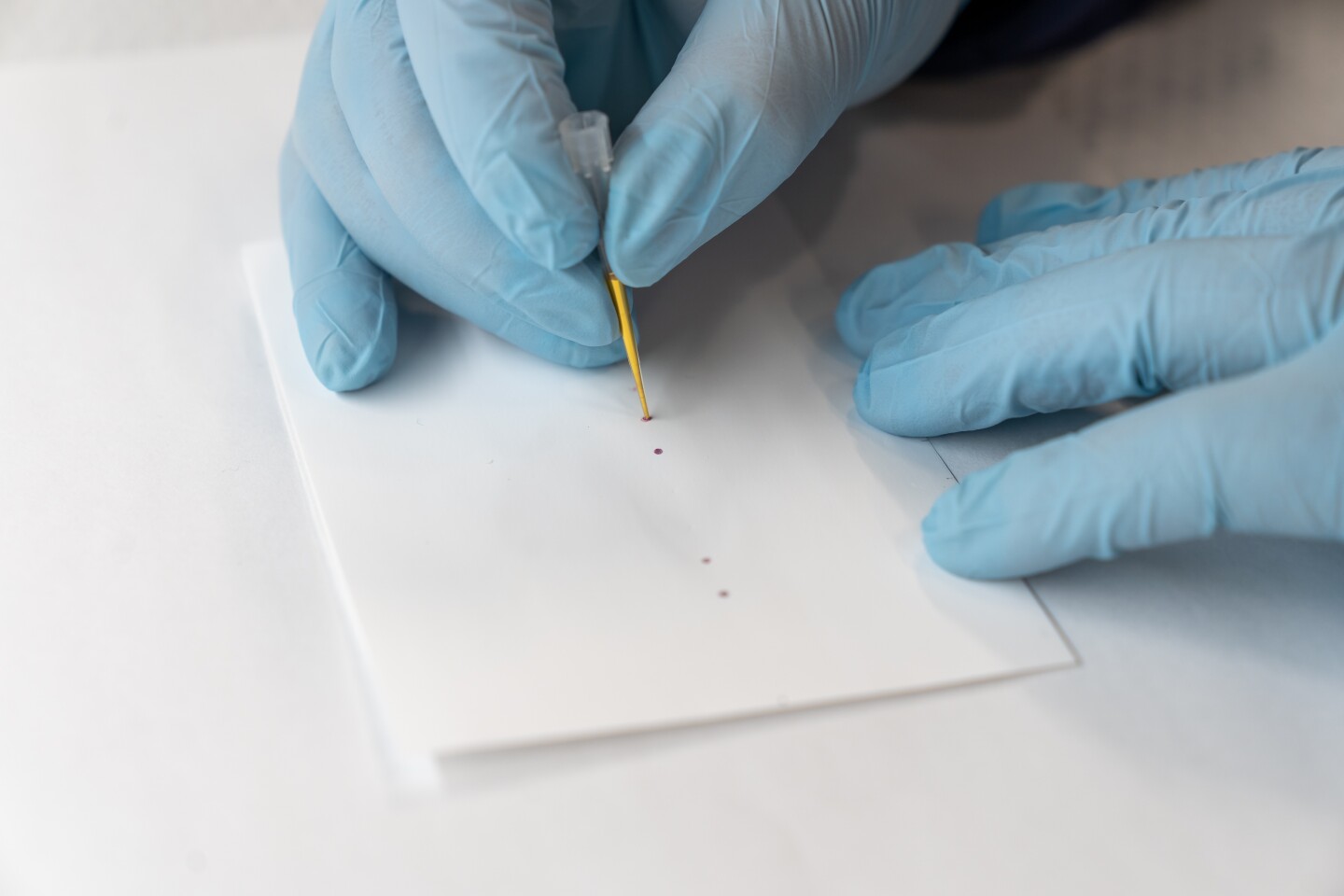
Matthew Clark, McMaster University
“Using these tests is easier than using the COVID tests that so many people are already doing,” said Dr. Carlos Filipe, chair of McMaster’s Department of Chemical Engineering. “In order to make this as effective and convenient as possible, it needs to be easy to use.”
Project partner Toyota Tsusho Canada now plans to commercialize the technology for use by clients such as poultry farmers, supermarkets and other members of the food industry. The system can also be incorporated into food packaging. This allows consumers to check for themselves if their food has been contaminated.
A paper on this research, led by Professor Yingfu Li, was recently published in the journal Applied Chemistry.
Source: McMaster University
