











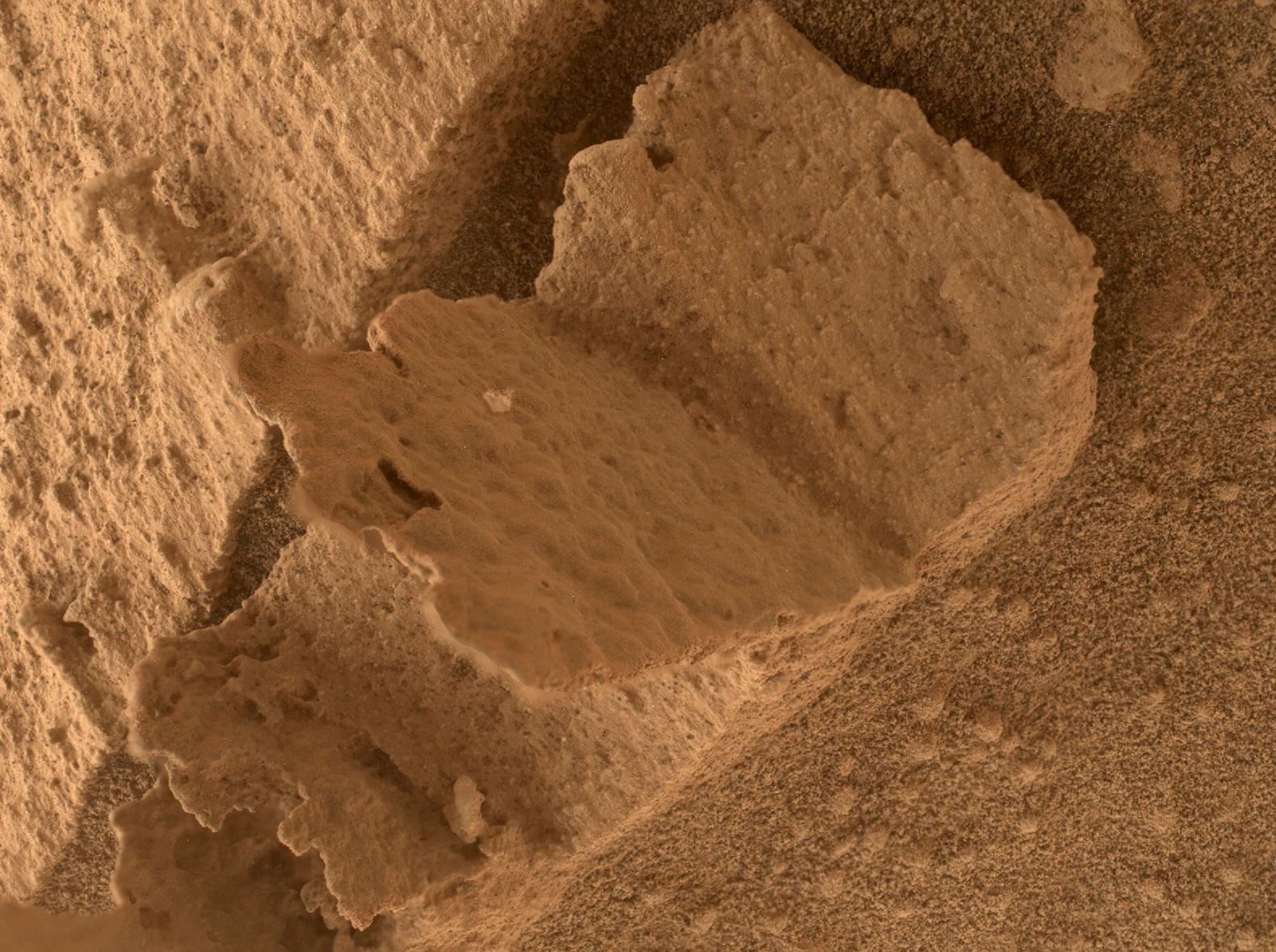
A cute new photo courtesy of the Mars rover Curiosity shows a miniature book-shaped rock located in the soil of Gale Crater.
Its shape is the result of the interaction of wind, water, and the human brain. Many of the rock shapes on Mars allude to a dynamic past, but objectively they are often plain, round pebbles, said Suzanne Schwenzer, a mineralogist at the Open University in the UK. It looks like However, some are reminiscent of objects familiar to the human eye. For example, the rover Curiosity recently captured the following image of a rock. Jagged shark teeth and delicate coral.
The human tendency to see familiar objects in vague patterns is called pareidolia. Famously, a photograph taken from the Viking 1 spacecraft in 1976 exemplifies this phenomenon on a large scale. The image showed an eerie face peeking out from the surface of Mars. “Face on Mars” became a pop culture sensation and fueled conspiracy theories about alien monuments. Higher resolution photos with less shadows then showed a rather plain mesa.
Curiosity took a picture of the bookstone on April 15th. It is a small stone only 2.5 centimeters (about 1 inch) long. Schwenzer says the origins of the miniature sculpture probably date back to about 4 billion years ago, when the sediments that formed the bottom of Gale Crater were deposited. At that time, the area had liquid water moving through the pores of the rock, depositing minerals in some places and dissolving them in others. This makes the rocks uneven in texture, Schwenzer said, so that when they reach the Earth’s surface and are whipped by the wind, they don’t wear evenly. “The softer parts weather faster,” she says.
In the case of book rocks, ancient cracks may have formed sheet-like “pages” of the strata, Schwenzer said. When rocks are cracked by strain from sediments deposited on top of them or by meteorite impacts, fluid can migrate into those cracks and new minerals can be deposited. If these minerals are harder than the surrounding rock, they remain after the rest of the rock has weathered.
“There is at least a three-step process,” says Schwenzer. “You get the rock, you create the harder part of the strata, and then you weather it.”
Gale Crater experienced wet and dry periods during its first billion years or so. The area probably last had liquid water about 2.6 billion years ago, Schwenzer said, and all carvings since then have been driven by the wind.
