











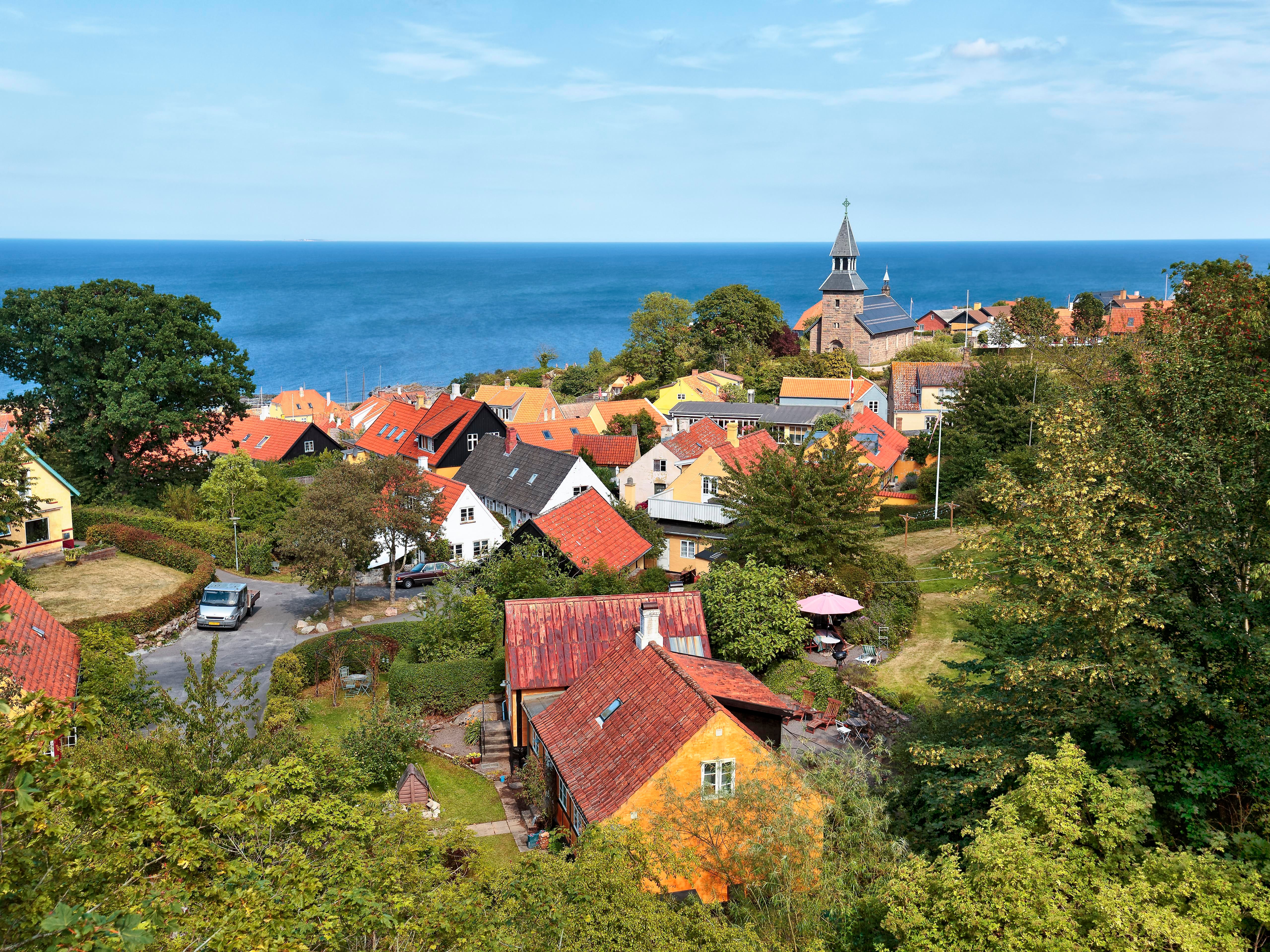
Following a mysterious report of an earthquake on a small Danish island in the Baltic Sea, seismological investigations were conducted pointing to atmospheric pressure waves as a possible cause. However, like other similar events, it is surprisingly frequent around the world, and the cause remains difficult to ascertain.
The Danish and Greenland Geological Survey, which operates two seismographs on the island of Bornholm, said the quake occurred at around 3:00 pm local time on May 13.
Seismic data showed the shaking was not caused by an earthquake, officials said. Scientists also don’t believe that the tremors that followed about 20 minutes after a possible small explosion in Poland caused the strange tremors.
Instead, officials concluded that “acoustic pressure waves” in the atmosphere likely caused the tremors, but declined to speculate as to what caused them. Acoustic waves, or sound waves, carry energy from a vibrating object and cause the pressure of a passing material (such as air) to oscillate.
Björn Lund, a seismologist at Sweden’s Uppsala University and director of the Swedish National Earthquake Network, says such unexplained tremors are actually not uncommon. The network received about 10 reports of tremors from parts of southern Sweden, just north of the island, during the afternoon and evening.
“This kind of thing happens a few times a year,” says Rand. “There are reports of tremors and low frequency noise over a very wide area, but the seismic data shows no indication of an earthquake or a large explosion.” he said, but added that he hadn’t heard of any such activity around these particular reports.
(Sweden records about 1,000 earthquakes a year, Lund says, averaging two to three each day, but most are too small for people to feel, much less to report.) cannot.)
Bizarre tremor reports without a clear geological explanation aren’t limited to Scandinavia, according to Canadian Natural Resources Agency seismologist Alison Bent. Bent says her office receives regular phone calls from people who feel the ground shaking, but even when scientists check the seismographs, they don’t always show signs of a real earthquake. There are no signs of other geological activity, such as mine explosions or heavy construction, he said.
“Most of the time you can’t tell them what it was,” Bent said. “We know what it is likely to look and feel like during an earthquake, so we can make suggestions.” So-called frostquakes, which occur when ice freezes rapidly, she says.
“They all feel the same way when they’re in the final stages of things,” Bent says of these various events. That makes deciphering seismic signals more difficult, she says. “As long as the ground is shaking, we will record it,” she says. “But unless it’s large and consistent, we typically don’t pick it up or pick it up as an identifiable signal.”
Nevertheless, seismometers (technically the inner workings of a seismometer, although the two terms are often used interchangeably) are used by scientists to understand many aspects of the Earth beyond geological activity. seismic geologist and science communicator Wendy Bohon says.
“Seismographs record anything that causes the earth to vibrate, and it varies,” says Bohon. This includes, of course, earthquakes, but also human activity, from urban traffic to bomb explosions, as well as the constant noise of the Earth’s oceans, atmospheric phenomena such as hurricanes, and even the impacts of Earth’s atmosphere. Even meteors are included. And there is also the “fan quake”, where the seismometer can detect vibrations from very loud fans in stadiums.
“These things happen all the time,” Bohon said of strange tremors like the one reported over the weekend on Bornholm. “It’s nothing new. It’s just that our technology is getting more and more advanced, allowing us to record more and more subtle vibrations, and more and more about how everything on Earth is connected. I am learning.”
