











Climate Wire | The 1987 Montreal Protocol is best known for protecting the ozone layer. Scientists now claim it slowed the disappearance of Arctic sea ice.
An international agreement to phase out ozone-depleting chlorofluorocarbons is widely regarded as one of the most successful environmental agreements of all time. This effectively protects the delicate ozone layer that protects the earth from harmful ultraviolet rays, and the atmospheric “ozone hole” is expected to be fully restored within a few decades.
It also provided an unintended climate benefit. Chlorofluorocarbons are potent greenhouse gases and their continued use would have made global warming worse.
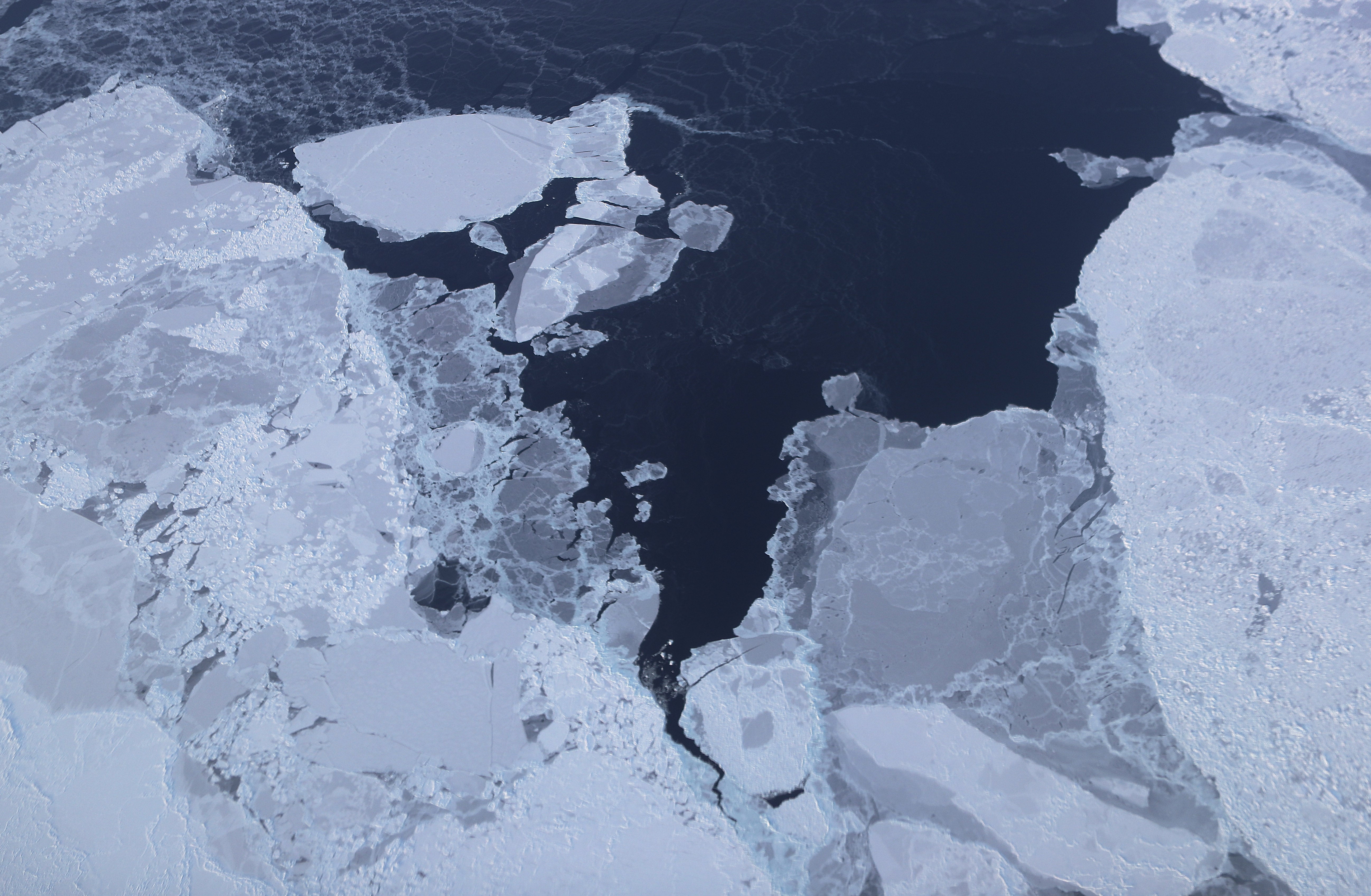
In short, a new study finds that the Montreal Protocol is helping slow the ongoing melting of the Arctic. More than 500,000 square kilometers, or nearly 200,000 square miles, of sea ice loss has probably already been avoided.
That doesn’t mean the treaty saved the Arctic the way it saved the ozone layer. The Earth is warming steadily, and the Arctic is heating about three times faster than the global average. Sea ice has been declining for decades, and scientists estimate the Arctic Ocean could experience its first ice-free summer within decades. Some studies suggest it could happen as early as 2035.
New research published in Proceedings of the National Academy of Sciencesfound that the treaty could have delayed the arrival of an ice-free summer by as much as 15 years.
Researchers Mark England and Lorenzo Porvani used climate models to investigate the long-term climate impacts of the Montreal Protocol. They compared his two scenarios in simulations. One is a real world scenario and the other is a “world avoided” scenario that simulates what would have happened if the Montreal Protocol had not existed.
It is still unclear exactly how quickly other greenhouse gases, especially carbon dioxide, will rise or fall through the atmosphere in the coming decades. It will depend on the actions that world leaders take to curb climate change.
A new study explains these uncertainties by applying two hypothetical greenhouse gas trajectories to climate simulations.
The first is a ‘business as usual’ scenario, which assumes little or no action on climate change between now and the end of the century. This is a serious, albeit relatively unlikely, pathway. The second, while not enough to meet the global climate goal of preventing a temperature rise of more than 2 degrees Celsius, envisages moderate climate action in the coming decades.
Under this moderate emission trajectory, in a world without the Montreal Protocol, global temperatures would rise by nearly 1 degree Fahrenheit by mid-century. The study also found that the treaty likely prevented about 2,700 square miles of sea ice from melting every time the world avoided ozone-depleting substances.
Models show that in a world without the Montreal Protocol, the first ice-free Arctic summer would arrive about 15 years earlier than in the real world.
This study does not consider the latest amendment to the 2019 Montreal Protocol, known as the Kigali Amendment. It aims to phase out the use of hydrofluorocarbons, a class of chemicals that can replace chlorofluorocarbons after the Montreal Protocol enters into force. HFCs do not deplete ozone, but they warm the climate.
The Kigali Amendment is expected to prevent another 1 degree Fahrenheit of warming between now and the end of the century. But the event is coming too late to have a major impact on the fast-approaching ice-free Arctic summer, new research says.
This is not the first study to point to the climate benefits of the Montreal Protocol. Other studies have also concluded that the treaty has prevented significant warming over the years, but perhaps more than new research suggests. Papers for 2021 environmental research letter It’s estimated that by 2050, global temperatures could rise as much as 1.8 degrees Fahrenheit if the Montreal Protocol didn’t exist.
Other scientists are looking specifically at the impact of the treaty on the Arctic. 2020 survey nature climate change They suggested that ozone-depleting substances may have caused about half of the warming experienced in the Arctic between 1955 and 2005.
A new study shows a similar case.
“Our findings clearly show that the Montreal Protocol is a very powerful climate protection treaty that has done more than repair the Antarctic ozone hole,” said two study authors. Polvani, one of them, said in a statement. “The impact is being felt all over the world, especially in the Arctic.”
Reprinted from E&E News with permission of POLITICO, LLC. Copyright 2023. E&E News provides important news for energy and environmental professionals.
