











At the end of the 20th century, education in a Spanish, American, or Chilean university was very similar to what was found in a classroom at the University of Bologna, Italy, in 1088. considered the oldest university). world). Indeed, the subject changed, Classical Trivium and Quadrivium The proliferation of science and art topics, and the specialization of university degrees, gave way.But the format of teachers, chalkboards, and desks wasn’t far from the medieval classroom. Applying big data to education hadn’t come yet.
In this article you will find:
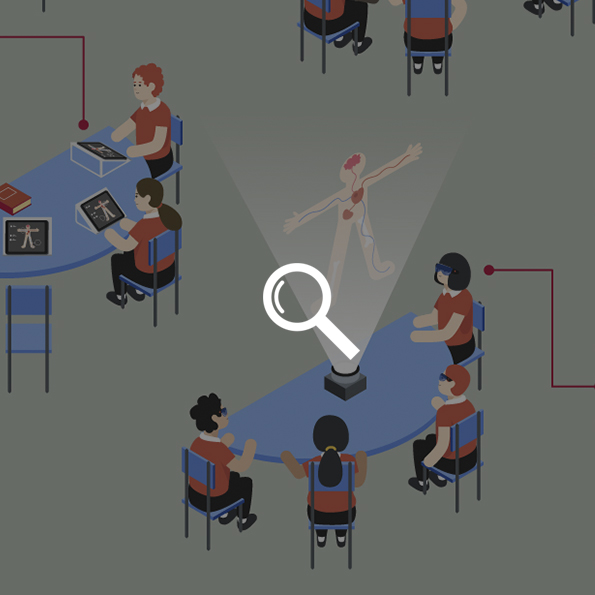
However, there was a gradual revolution in terms of devices and hardware. First projectors, then computers, then tablets, then digital whiteboards.
then came the boom online education or e-learningand channels on YouTube and other platforms.
Today we are in the third stage. big data Artificial intelligence applied in education.
All of this comes together in a new generation of learning spaces: smart classrooms. The growing importance of this approach has crystallized into a new term encompassing all these technological advances. EdTech.
This article focuses on one of the latest innovations, the application of big data.
How does big data apply to education?
The application of big data in the educational environment Developing protocols for collecting student datadatabase creation, and subsequent analysis.
Data collection, known as educational data mining, is a field that began to be talked about at the turn of the 20th century, with the first international conference held in 2008.
Student data includes not only academic performance, but also time spent using different tools, speed at which problems are solved, sources of information used, and most difficult questions to answer. It is even possible to measure the extent of student boredom.
This type of tool allows teachers to quickly detect students who have (or will have) problems and give them personalized attention.
Of course, when using education big data To be efficient, we must first advance digitization and the use of devices and software. This is still an open question in many academic centers. In summary, he said there are two main aspects to academic applications of big data.
education big data approach
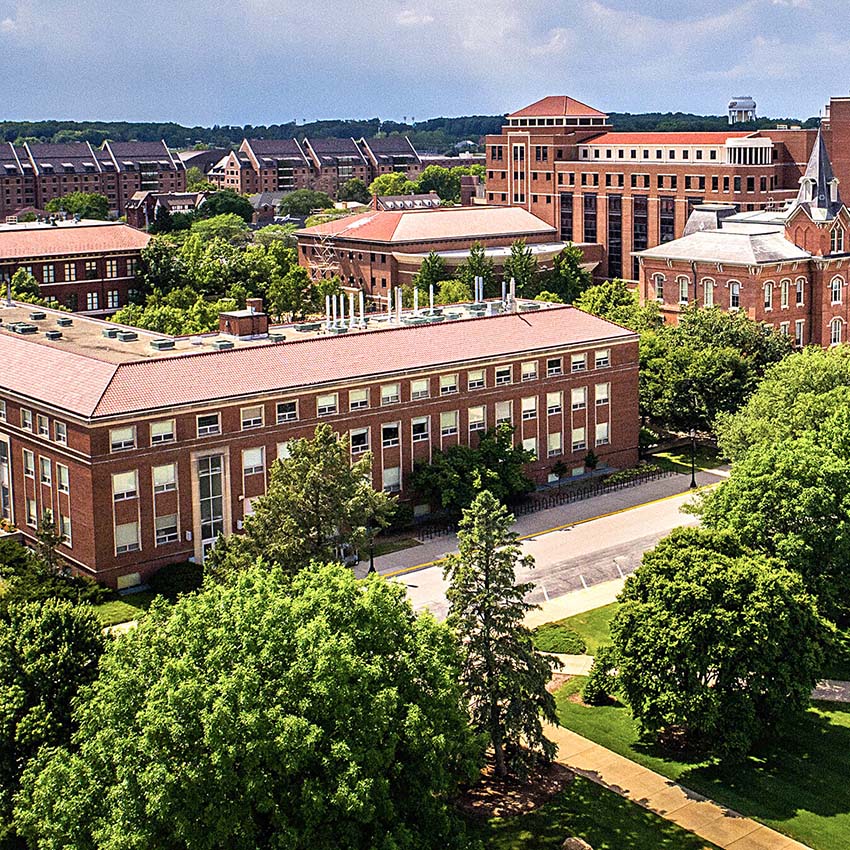
- At the level of schools, institutions and public bodiesThis gives you a snapshot of parameters like school dropouts and possible behavioral problems. These databases may also include the student’s socioeconomic background as a risk factor. One example is the Course Signals program pioneered by Purdue University in the United States in 2007. According to the university, its software has improved student retention by up to 21%.
- at the education and course levelThis application of big data revolves around the daily work of teachers, whether face-to-face or online. So to speak, an application in the field where educational decisions can be coordinated in near real time.
Some Advantages (Current and Future)
Big data in education is still in its infancy.So far, its biggest impact is online learningFor example, you can find out which parts of the program are most intriguing and how long each lesson is optimally just a click away.
but it promises transform the relationship between students and teachersAnd hopefully it makes life easier for the latter.
Main Benefits of Big Data Applied to Education that is:
- Reducing dropout rates by detecting risk factors.
- Personalization of curriculum and learning rhythm.
- Reduction of teaching work
- Performance evaluation optimization
- Real-time student monitoring
- Development of a career plan based on strengths and weaknesses.
Examples of big data software applied to education
There are already many analytical software tools that allow us to tap into the vast amount of data generated in the context of education. In addition to solving general problems such as those already covered, they apply to specific areas of study.
- Sparx Maths tools are software that combines big data and machine learning to adaptively analyze answers to over 32,000 math questions. Depending on the student’s path, the best questions are presented to fill the detected gaps. Knowre is another tool that has similar applications in the field of mathematics.
- BrightBytes is a big data tool for primary and secondary education that combines large amounts of anonymized data with specific student data. The platform covers everything from basics like attendance to issues like social and emotional learning.
- Tableau is visual approach The data representation allows teachers to see, at a glance, which students are lagging behind, their individual performance, and how they benchmark against other schools and colleges in their region or country.
- Another tool based on large-scale data analysis is Blackboard. This system is based on gamification. This means using games and video game techniques and resources to motivate students. This is a learning management software platform (LMS or learning management software). This software allows you to anticipate student problems and improve communication with teachers.
Big data is doomed in a society where continuous training and learning is already a reality. Optimizing people’s careers throughout their livesIn theory, someone could submit all educational data for analysis to detect gaps or find areas of academic development of interest.
Education is just one of many areas where big changes are being made by the application of big data.
For more examples and applications of this technology, check out this article.
sauce: Carnegie Mellon University, Upicus, Career Foundry, Wiley Interdisciplinary Reviews, https://bigdataanalyticsnews.com/big-data-influencing-education/
