











Historic nautical feats like the discovery of the Americas and Magellan’s circumnavigation of the world are approaching their 21st anniversary.st-Century Counterpart. Named after the original Mayflower, which carried the Pilgrim Fathers from Plymouth to the United States in 1620, this new ship is very different from its predecessor. First of all, it does not carry crew or passengers. You don’t even have a captain.Or, to be more precise, the role is a set of Artificial intelligence system.
Following its first AI test on the manned research vessel Plymouth Quest, operated by the UK’s Plymouth Oceanography Institute, the new Mayflower will make its maiden voyage entirely without human assistance. Thanks to the use of a set of cameras and sensors, combined with an AI system and her library of one million voyage images, the research vessel faces all maritime hazards alone. Therefore, different types of boats, buoys, rocks and dangerous debris in the deep sea can be identified and avoided.
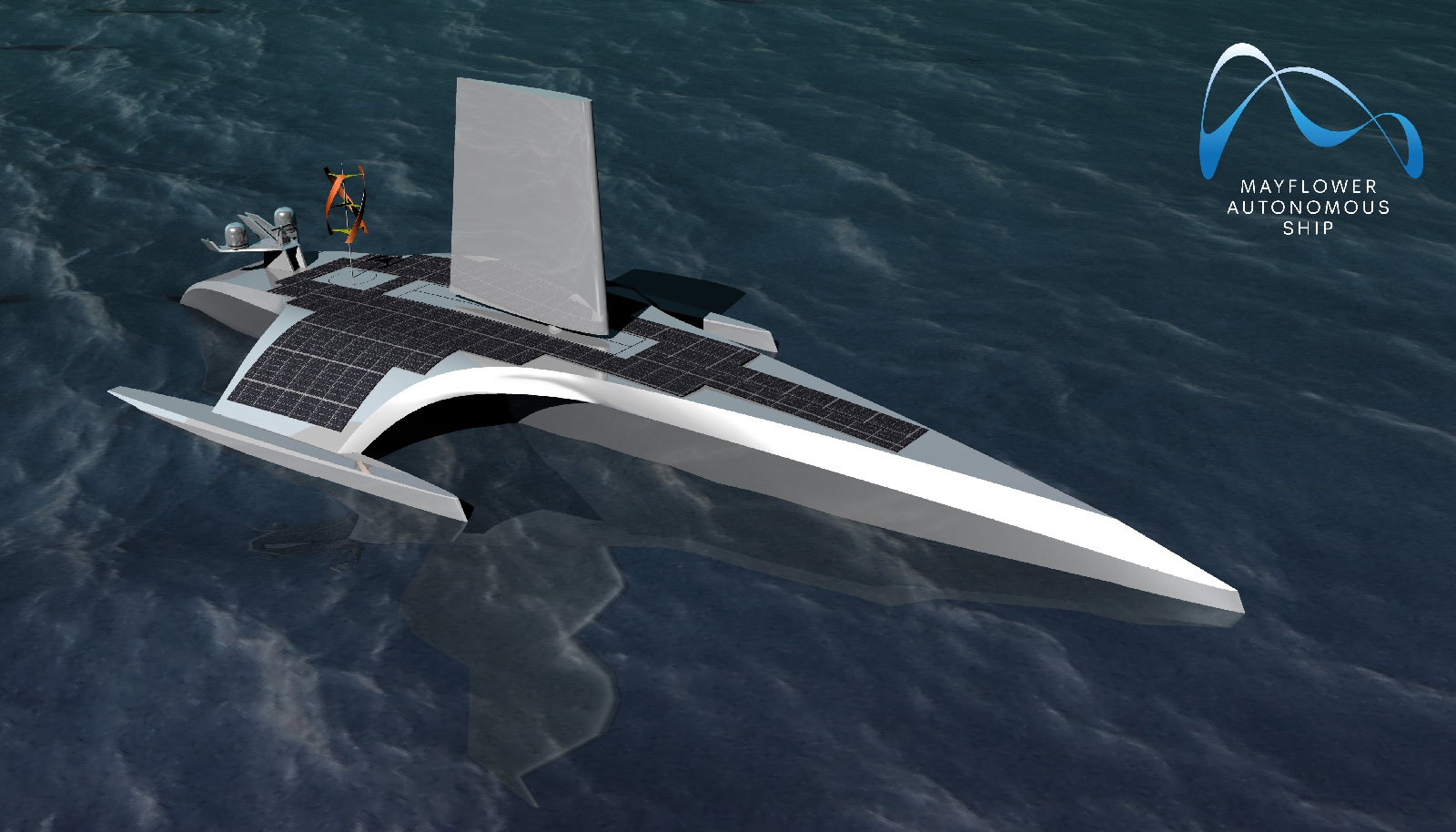
AI systems are also fed real-time weather information so they can make navigational decisions and predict severe weather. Since ships do not have access to high-bandwidth connections on most voyages, they rely on edge computing systems that process all data at local nodes. Several sensors that can measure waves and depth also feed the navigation system. For example, on-board radar can detect obstacles over two miles away. Finally, this new version of the Mayflower is also autonomous in terms of its propulsion system, as it will be powered by solar and wind energy along with auxiliary diesel engines.
In the future, the technology deployed on the Mayflower will help ocean studies focus on issues such as microplastics by analyzing water samples to better understand their origin and distribution.
A full-fledged autonomous shipping industry
This innovative self-propelled vessel technology project It was carried out by marine research organization ProMare in partnership with IBM, which provided the AI software and computing power to process all the data. Autopilot ships have been deployed before, but this is the first time a fully autonomous ship has undertaken such an ambitious voyage. Don Scott, Mayflower’s technical director, said he expects the self-driving ship market to grow to more than US$130 billion by 2030.
As we mentioned in a previous article, autopilot ships are poised not only to dominate the oceans, but they will also play a vital role in urban mobility. Autonomous electric ferries can therefore also help reduce urban pollution and ease traffic congestion.
sauce: IBM
