











Support IPWatchdog with an individual sponsorship: Click here
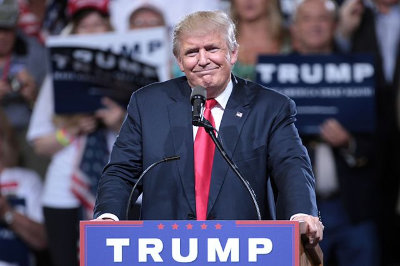 In the immediate wake of such an historic election, it is far too early to know what the intellectual property landscape will really be like under a second Trump Administration. However, IPWatchdog reached out to IP stakeholders for some initial comments, and their educated predictions and insights are included in full below.
Alden Abbott , Former FTC General Counsel; Senior Research Fellow Mercatus Center at George Mason University
“The reelection of President Trump likely will lead to a major recalibration of IP policy in a pro-innovation direction.
In antitrust, one may expect the Justice Department (DOJ) to reinstitute the strong property rights-oriented “New Madison Approach” advanced by Assistant Attorney General Makan Delrahim during Trump’s first term. In a nutshell, that approach stresses that patentees have no duty to license their patents, and that standard essential patents (SEPs) should have the same status and legal protections as other patents (including the patentee’s right to an injunction for infringement). Relatedly, the Trump Administration’s SEP-friendly NIST/DOJ/PTO SEP policy statement on licensing (rescinded by the Biden Administration) should be adopted once again. One may also expect the DOJ (and, perhaps, the Federal Trade Commission) to take a more permissive approach to patent licensing arrangements, recognizing that they are key to promoting the efficient transmission and diffusion of new technologies. This could be part of an ‘innovation-centered’ focus by the new Administration.
More generally, the second Trump Administration hopefully would also reject and replace the ‘weak-IP’ orientation of the Biden Administration, by, for example: (1) supporting legislation to clarify broad section 101 patentable subject matter reform; (2) supporting legislation to reinstitute the presumption of a right to an injunction as a remedy for patent infringement; (3) reinstituting U.S. Trade Representative (USTR) support for robust TRIPS IP protection (including rejection of TRIPS waivers); (4) rejecting the Biden Administration’s attempt to broaden Bayh-Dole ‘march-in” to regulate patent licensing prices; (5) rejecting price regulation of pharmaceutical patents; and (6) advancing a pro-IP policy both domestically and internationally (including, for example, rejoining digital free trade negotiations).”
Hon. Susan G. Braden , Jurist-In-Residence, Center for Intellectual Property x Innovation Policy C-IP2
“In my judgment, the re-election of President Trump is a major victory for the respect ALL property rights, including intellectual property rights! It should mean the demise of the ill- conceived ‘March- In Guidance,’ hopefully a restoration of the core mission of the USPTO to issue quality patents- first and foremost, and potentially a renewed interest by Congress to significantly reform the Patent Trial and Appeal Board. At the Federal Circuit, several vacancies should arise to add judges of the caliber of Judge Newman, if not her restoration to service. And a renewed appreciation for small inventors and entrepreneurs who have been overlooked for too long! And I suspect both Justices Thomas and Alito likely will retire, opening up room for a Justice that may have an interest in revisiting eBay, in particular.”
Michelle Cooke , Partner, ArentFox Schiff
“One thing is for certain – the president-elect understands the power and value of branding. Trademark laws will remain strong and consistent. In contrast, the election will impact the future of AI regulation. A year ago, the Biden administration issued guidelines and directives to various government agencies to assess the government’s role in AI, the impact of AI on commerce and security, and potential risks and guardrails. President Trump is firmly footed in the camp of deregulation as a driver of economic growth, an approach favored by many of his tech industry supporters. As U.S. companies dominate the AI industry, an economic juggernaut, a Trump administration will likely support helping the U.S. maintain its competitive edge and leadership role in the field over other concerns. In the absence of a major negative event directly tied to AI, less U.S. regulation as to AI should be expected.”
Heath Hoglund , President, Via Licensing Alliance
“The President plays a critical role in setting the tone with other key global trade partners, and President Trump historically took a tough line on trade with China during his last administration. While the full impact of the election on global IP rights and practice remains to be seen, one thing is certain. Though we may see increasing global fragmentation between the East and the West on issues of trade policy if the new administration takes the tough stance many expect, from an IP and patent licensing perspective, the United States remains inextricably linked with China and other partners in Asia.”
Hon. Paul R. Michel , Chief Judge (ret.), U.S. Court of Appeals for the Federal Circuit
“Because IP will not be a high priority for the new Trump Administration, policy will be set mostly by whomever finally emerges, perhaps in year 2, as its choice for Director of the USPTO. If that person is does not favor strong, reliable patents, the policy will undermine patents as the incentive for the massive technology investments the nation needs. Conversely, if the appointee supports robust patenting and balanced and predictable validity reviews at the PTAB, economic security, global competitiveness, job creation and national security will all thrive. Names rumored to date include persons in both camps. We need to try to assure a director who actually understands how work patents to drive innovation. It should not be too much to ask that the head of the patent office must believe in patents! The president-elect would also be well advised to appoint an ‘innovation czar” at the cabinet level to coordinate the many agencies involved so they all pull in the same direction.”
Hon. Randall R. Rader , Former Chief Judge (ret.), U.S. Court of Appeals for the Federal Circuit
“President-elect Trump is, above all, a businessman. He knows the value of intellectual property. He faces a challenge to deliver economic recovery and a path to prosperity in short order. Innovation and invention have always been the keys to U.S. economic growth. Thus, he is likely to appoint the people and adopt the policies that will revive the U.S. inventive spirit. In my mind, that includes the legislation to restore a sounder eligibility policy and a USPTO devoted to creating new economic directions.”
