











It is often said that much of the plastic we produce is still in the environment. when our great-grandchildren are bornThe problem arises because this type of petroleum derivative, unlike organic matter, has no natural “predators”. That’s what we thought until bacteria were discovered that could metabolize plastic.Not only that, but the production biodegradable plasticThe latest scientific breakthroughs, including the development of new nutrients and the use of specific strains, may offer a solution to this headache.
This article will cover:

Breaking down plastic with bacteria
In 2016, at a plastic bottle recycling plant in Osaka, Japan, scientists made a startling discovery.While examining the sludge outside the factory, they detected bacteria. Ideonella sakaiensis You can “devour” PET plastic, the most common raw material in bottle manufacturing.
They found that these microbes metabolized too slowly for practical use, which opened the door to a new field of research. Environmental plastic waste.
The problem is that plastic has been in the environment for decades. In other words, bacteria have not yet learned how to process plastic. But perhaps evolution can step in. To achieve this, genetic engineering techniques have been applied that enhance the capabilities of bacteria.So, in 2018, US and UK scientists managed to speed up the process, and bacteria Metabolize plastic in a few days.
At the same time, it was also discovered that certain strains could degrade plastic. However, the use of microorganisms is not limited to destroying existing plastics. Production of biodegradable plastic is also possible.
Making biodegradable plastic with bacteria
In late 2021, it was announced that a group of scientists at the University of Nebraska-Lincoln had used lignin, a natural polymer present in wood pulp and discarded in papermaking, to enhance the abilities of the bacteria that gave it that name. .of Rhodopseudomonas palustrisThis microbe is capable of producing PHB, which is a biodegradable plastic.
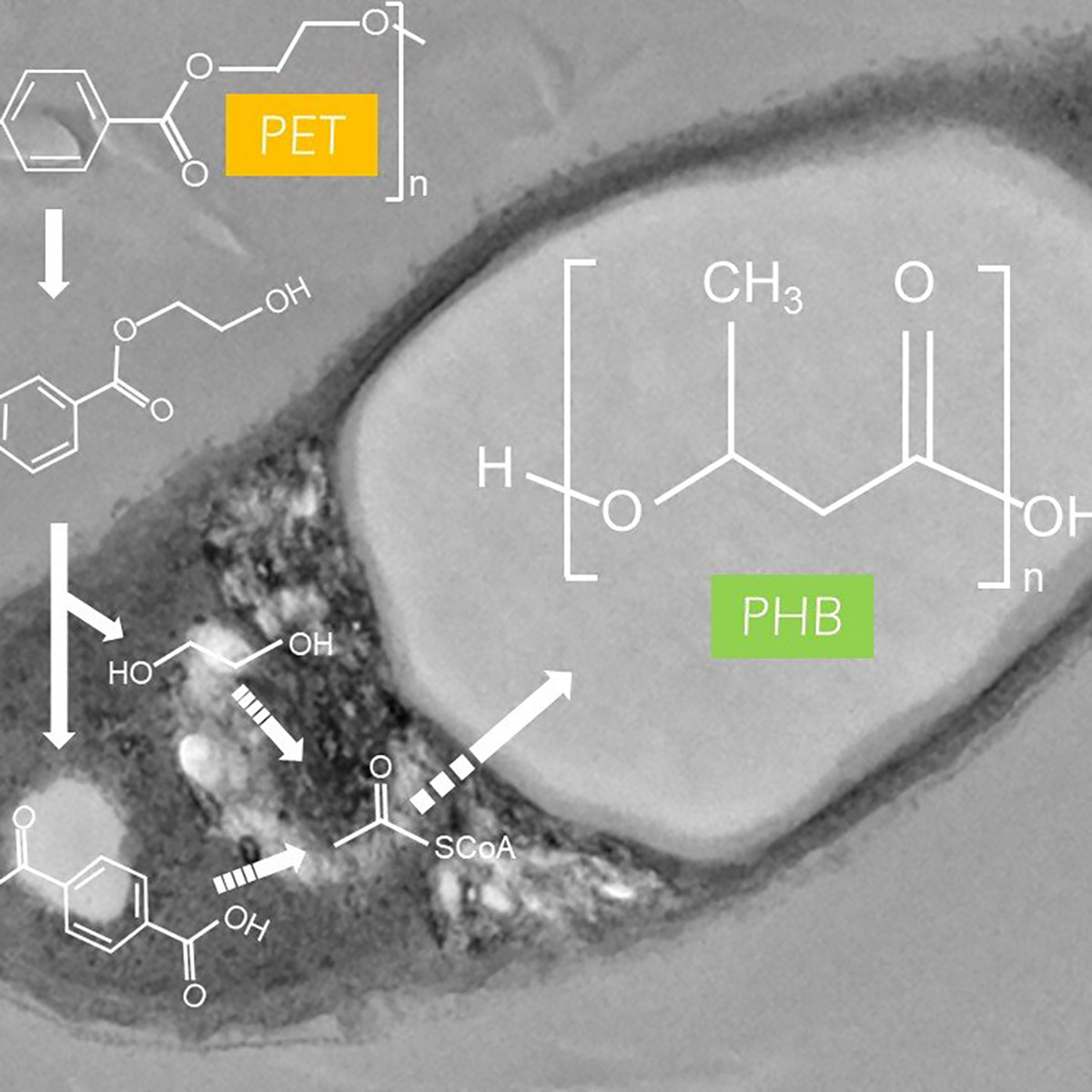
by using lignin From renewable resources, it It can increase the production of PHB that degrades within 3 months of exposure to the elements. This technology is expected to contribute to the commercialization of bioplastics in the near future.
Moreover, the latest scientific research shows that other bacteria such as those mentioned above can also produce biodegradable plastics. The challenge is to do it fast enough and at scale.
Types of biodegradable plastic
Before addressing types, it’s worth clarifying the difference between compostable plasticYou’ve probably seen plastic bags made from potato starch and other organic matter. This type of plastic is considered compostable because it can be composted. All compostable plastics are biodegradable, Many biodegradable plastics cannot be compostedThey break down and virtually disappear into the environment, but they have no fertile properties.
- Oxygen Biodegradable (OBP). These plastics degrade in the presence of atmospheric oxygen in an oxidation process. Its slow decomposition process makes it a candidate for long-lasting packaging. The main problem is that these plastics usually do not fully disintegrate and are transformed into microplastics.
- Hydrobiodegradable (HBP). This type of plastic degrades in the presence of moisture during the hydrolysis process. Hydrolytic degradation is much faster and more complete, so it is often used in the production of bags and single-use packaging. This category includes compostable plastics and other items derived from fossil fuels.
In the case of biodegradable plastics, the best research efforts are devoted to obtaining more resistant and durable materials without giving up complete degradation in the environment. Hopefully, it will be a big step in the transition to a circular economy.
sauce: Phys.org, Near Zero Waste, https://www.forbes.com/sites/scottcarpenter/2021/03/10/the-race-to-develop-plastic-eating-bacteria/
