











If the population data predicting 10 billion people living on the planet by 2050 are accurate, then we need to rethink the relationship between managing the energy we consume and the world’s resources in a different light. Otherwise, “Houston, we have a problem.”
This idea is actually the reason Legend Village Project,innovative A district outside Amsterdam that can self-generate the energy it needs As of 2017, 25 households are expected to be fully operational, according to officials. This innovative approach An unprecedented eco-friendly urban development model.
Regen Village is located in the Dutch town of Almere, 20 minutes by train from Amsterdam. In this village, all neighbors produce their own energy, grow their own food, manage their own waste, and recycle their own water. Embrace breakthroughs in renewable energy, geothermal, aeroponics and biomass processing.
“Regen Village will generate its own energy through wind, geothermal or solar power.”
As of 2017, an initial batch of 25 households will be available, with a total of 100 households planned to be part of this self-sufficient community. implement exactly the same model in other European countries, Sweden, Denmark, Norway, Germany, Belgium, etc. The village is an innovative urban management model that will not only give the planet a little respite, but will also be of great help to the household economy and even the budgetary provisions of local governments.
Main energy features of Regen Village
The concept of Regen Village is Research done at Stanford University Facilitated by entrepreneur James Ehrlich who decided to get involved Danish architecture studio Effekt Make it possible in your project. But how well does this neighborhood work, and what are such close and detailed relationships between all scheduled energy processes?
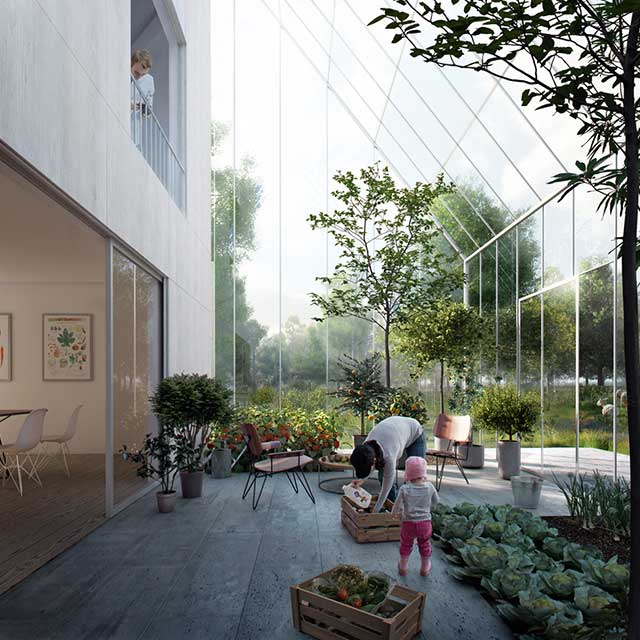
According to plans, the Regen Village community will: biomass technology, wind, geothermal or solar powerA smart grid design could, for example, send this energy to the garage to charge a shared electric vehicle. Indeed, the region’s self-sufficiency base is based on citizen cooperation.
Composting plays an important role in the overall project structureA large amount of the leftover by-product is utilized as livestock feed, its manure feeds a type of fly that is essential to the menu composition of certain fish, and its droppings are used to fertilize privately grown fruits and vegetables. increase. consumption orchard.closed and complete example energy efficient cycle. in the meantime, Non-compostable waste is converted into energy within the biogas plant.
Cutting-edge food production vertical orchard systemorganic farming, including seasonal gardens, aeroponics, aquaponics, or permaculture, storage systems Harness rainwater or graywater for irrigation.
I’m not sure Regen Village will display tulips and windmills like its other Dutch neighbors, but it’s clear that sustainable energy production is a hallmark of this hopeful neighborhood.
sauce: FastCompany and Buenavibra
image: effect
