











This article originally appeared on Inside Climate News, a non-profit independent news organization covering climate, energy and the environment. Republished with permission. Sign up for our newsletter here.
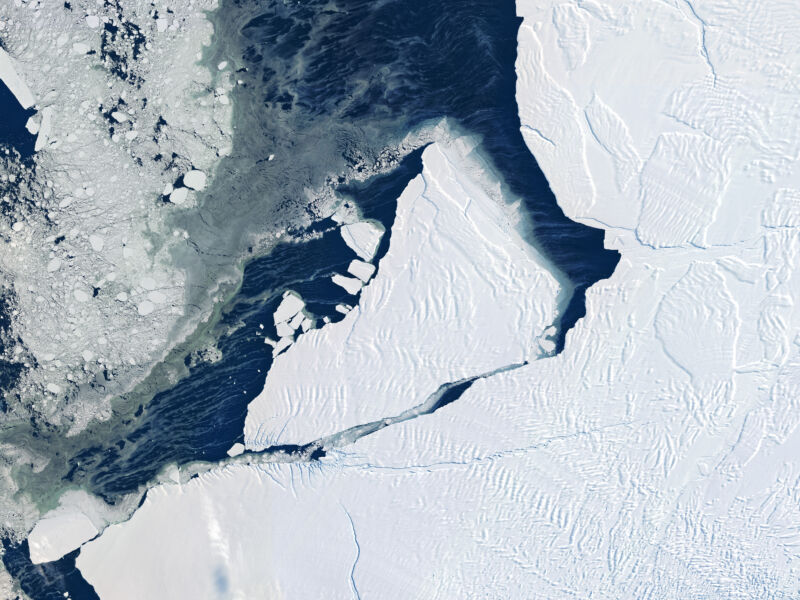
Research scientists on a ship along the west coast of Antarctica said their recent voyage was marked by eerily warm waters and record-low sea ice coverage on a global average.
“Despite that surprising change, what we have seen this year is dramatic,” said an oceanographer at the University of Delaware. Carlos Moffat Last week, after completing a research cruise aboard the RV Lawrence M. Gould from Punta Arenas, Chile, he collected data on penguin feeding, ice and oceans as principal scientist for the Palmer Long-Term Ecological Research Program. .
“Even me, who has watched these changing systems for decades, was amazed at what I saw, the degree of warming I saw,” he said. I don’t know, we don’t fully understand the consequences of this type of event, but it looks like an unusual ocean heatwave.”
If such a situation repeats itself in the next few years, it could rapidly destabilize Antarctica’s critical underpinnings of the global climate system, including ice shelves, glaciers, coastal ecosystems and even ocean currents. Such radical changes, beginning in the 1980s and accelerating in the 2000s, are already sweeping the Arctic.
Data collected during Moffat’s most recent expedition includes the first readings from temperature and salinity sensors deployed several years ago, giving scientists a starting point for comparisons. . Moffat said it was “premature and difficult” to attribute this year’s situation to long-term climate change until the results of his peer review are published.
“But it seems to me that this may be a truly unprecedented event,” he said. “These episodes of relatively rapid ocean warming, which can last for many months, are happening everywhere. They have not been common in the region.”
He said ocean temperature readings dating back to April 2022 speak to persistent warm conditions off the Antarctic Peninsula. The cruise covered an area more than 600 miles long, crisscrossed a continental shelf 125 miles wide, and recorded extensive ocean heating.
“It’s a very important area,” he said. “We don’t have data going back 30 years for the whole region. If you look at the situation, you can see that there is a very strong force.”
dangerous climate feedback
Greenhouse gases, mainly from the burning of fossil fuels, are the forces behind warming the atmosphere and oceans. The latest reports from Antarctica have raised concerns that a dangerous climate feedback cycle of warming seas and melting ice has begun around the continent. Johan Rockstrom,director Potsdam Institute for Climate Impact Research.
“We know that the Antarctic melt is most sensitive to lubrication by water,” he said. “It is the ocean that melts the ice from below, not the atmosphere from above. And this is really, really worrying…and very surprising. Because I was completely convinced that the ice sheets and the Arctic were the more sensitive of the two poles.”
Until about 2014, science suggested Antarctica was still gaining ice, but “that has changed,” he said. warns that there is likely an Antarctic tipping point between 1.5 and 2 degrees Celsius of warming, causing irreversible melting of ice shelves and glaciers.
The Paris Climate Accord to limit warming to its bounds shows that the vicious cycle in Antarctica is having a global impact, causing sea levels to rise faster than expected and contributing to a slowdown in the critical Atlantic thermohaline circulation. Understood and signed the following year. Cold water between the poles. He said studies show that ocean current systems have been affected by global warming in recent decades, leaving more warm water in the Southern Ocean to trigger ocean heatwaves. rice field.
Instead of flowing north toward the Gulf Stream, warm water persists around Antarctica “because that whole system has slowed by 15%,” he said. Antarctic water. ”
An icy death spiral could begin
Antarctica, with its ice sheet averaging more than a mile thick, covers an area the size of the neighboring United States and Mexico combined, with a center extending over 1,000 miles, about 5.4 million square feet. Because it stretches for miles, it was until very recently considered a frozen redoubt. from the sea.
The continent is also surrounded by the world’s only fast ocean current, with an accompanying band of jet streams for miles above it. Both have helped buffer Antarctica’s sea ice, terrestrial glaciers, and floating ice shelves from the sharp increase in climate extremes seen in most other parts of the world over the past few decades.
But observations from this year’s situation may bolster some recent studies showing how global warming is eroding that protection. A lunar study suggested that the “circumpolar deep water” at a depth of 1,000 to 2,000 feet warmed up to 2 degrees Celsius. This is related to the poleward shift of the westerlies.
This is the critical depth at which water crawls up the continental shelf and creeps under the floating ice shelf extension of Antarctica’s huge land ice sheet, already weak in West Antarctica alone. Thick ice on the eastern half of the continent.
As warming in the world’s oceans is projected to continue for decades to come, “ocean heat supply to East Antarctica will continue to intensify, potentially threatening the future stability of the ice sheet,” said 2022. The author of the paper writes:
Another study, published in Science Direct in June 2022, showed that if greenhouse gas emissions continue, so will the change in winds that push warmer water closer to shore. Fall into a death spiral.
A 2016 study outlined a worst-case scenario in which warming contributes to the rapid collapse of towering ice cliffs near the coast, accelerating sea level rise and raising water levels by 7 feet and 13 feet by 2100. bottom. An increase by 2150 will make it very difficult to adapt.
The water is already rising. In the 1990s, global mean sea level rose by about 3 mm per year, but this five-year annual rate he increased to 4.5 mm. Between August 2020 and January 2021, sea level has risen by 10 mm.
