











Dust is commonplace in our lives, and not only is it a daily nuisance, but it can also get into machines and equipment and cause a decrease in efficiency or failure.
Researchers at the University of Texas at Austin partnered with North Carolina-based Smart Material Solutions Inc. to develop a new way to keep dust off surfaces. As a result, a wide variety of materials can be dust-proofed, from spacecraft to solar panels to home windows.
This research is published in ACS Applied Materials & Interfaces.
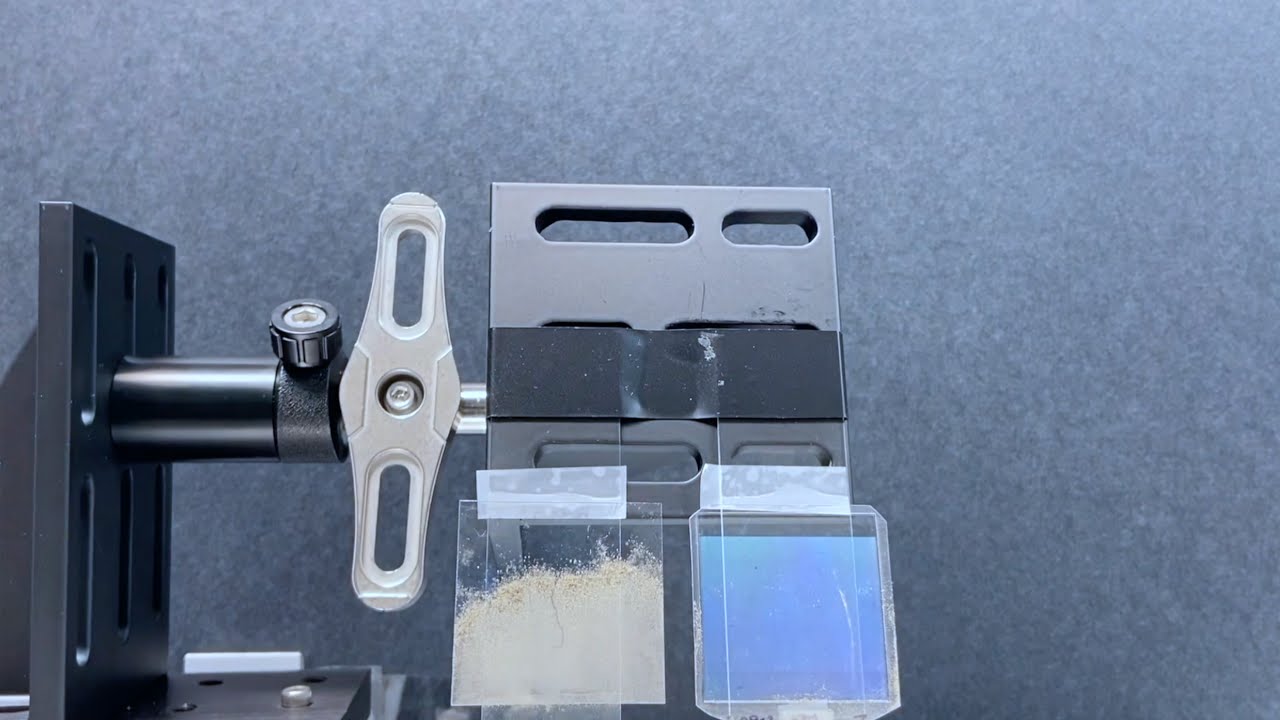
Chih-Hao Chang, associate professor in the Walker Department of Mechanical Engineering at the Cockrell School of Engineering and lead author of the study, said: “The particles don’t stick to the surface, so gravity alone pulls them off.”
In the test, the researchers piled lunar dust onto artificial surfaces, turning each surface sideways. As a result, only about 2% of the surface remained dusty, compared to more than 35% of his on a similar smooth surface.
The researchers said the findings boil down to something that the human eye can’t detect. bottom. These sharp, angular structures prevent dust particles from sticking to the material, instead sticking to each other and rolling off the material due to gravity.
These structures offer passive solutions. That means you don’t need extra energy or materials to remove the dust. Compare that to more active solutions such as a car windshield, which requires the use of windshield wipers and wiper fluid to remove dust.
The research was funded by a grant from NASA’s Small Business Innovation Research program, so the initial application is focused on space technology. Space dust is particularly troublesome because all risks are very high in that environment, and the conditions make dust removal difficult. The dust wreaked havoc on the Apollo missions and caused the Mars rover to malfunction.
“There’s not much you can do about moondust in space. It sticks to everything and there’s no real way to wipe it off or blow it away,” said lead author, who was an undergraduate researcher in Chang’s group. Samuel Lee said. “Dust on the solar panels of Mars rovers can cause them to malfunction.”
This technology could also have a huge impact on the planet. It can prevent solar panels from collecting dust and reducing their efficiency over time. It protects glass windows and in the future can also protect digital screens such as phones and TVs.
Dust-proof technology has been around for decades, but has received little attention outside the lab due to scaling challenges. The researchers used a manufacturing concept called nanocoining and nanoimprinting to print patterns onto objects in a modernized version of the way newspapers and photographs were mass-produced in the 1800s.
Original: Anti-dust technology paves the way for self-cleaning surfaces
Than: University of Texas at Austin
