











Since the introduction of DALL-E 2 and ChatGPT, there has been a fair amount of discussion about AI technology, and some of it has been justified.
It is true that the future of technology is uncertain. There is a great deal of debate about the ethics of using existing artwork, images, and content to train these AI products, and concerns about which industries will be displaced or changed. And it looks like the AI arms race has already begun between companies like Microsoft and Google.
Still, as an industrial designer and professor, I’ve found AI image generators to be a great way to improve the design process.
They do not replace the valuable insights and critical thinking skills I have accumulated over the years. But they spark creativity and expand the range of possibilities for the products my students and I design.
Look behind the design curtain
Industrial design involves the creation of everyday objects, with a particular focus on form and function. Industrial designers create everything from furniture and appliances to accessories and apparel.
A typical design process involves a lot of research and conversations with consumers about their needs. From there, designers brainstorm and sketch ideas, followed by prototyping and production. Finally the object is refined and manufactured.
In the early stages of brainstorming, designers spend a lot of time in their sketchbooks, drawing inspiration from their surroundings, history books, and their own experiences. The Internet also plays a big role. A place where designers collect many images that they use to create inspiration boards. Jonathan Ive, who designed many of his iconic Apple products, famously considered luxury watches as inspiration for his Apple Watch, usually used to wind mechanical watches to set the time. The “crown” used was used as an input device to allow the user to scroll. through content.
AI has enabled designers like me to generate images based on simple text prompts. Tools like DALL-E and Midjourney allow you to input abstract concepts and transform them into mass images.
Type in even the craziest sentences and receive a unique set of images generated just for you. Want to design a teapot? Here we have 1,000 of them. Some are shaped like dinosaurs. Others may be made of mashed potatoes.
Only a small subset of them may be usable as teapots, but they provide seeds of inspiration that designers can nurture and perfect into finished products.
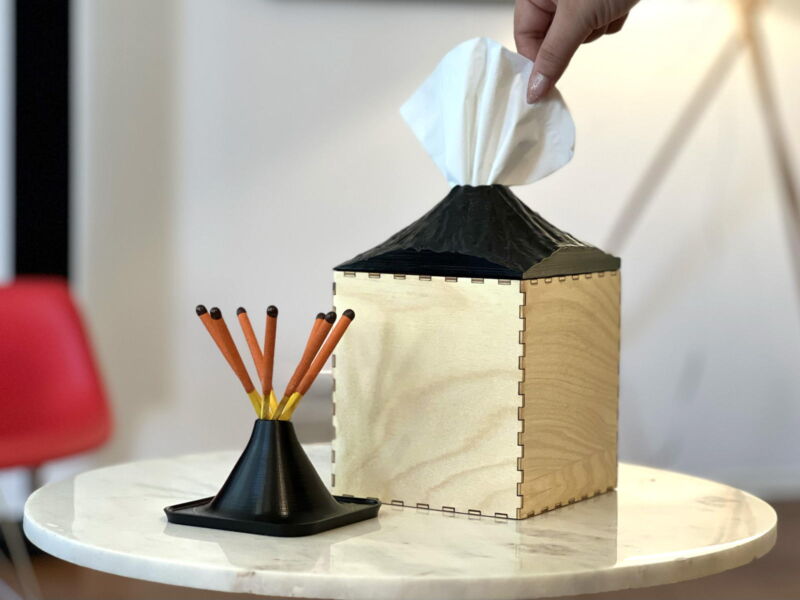
From nostalgia to tissue box
Perhaps a handful of these 1,000 teapot images can help designers come up with unexpected new shapes that are easier to hold, more economical to manufacture, and more aesthetically pleasing. Generative AI makes the brainstorming process easier, but it’s up to designers to make choices that ultimately lead to products that enrich people’s lives.
Recently, I have found myself using AI image generators such as DALL-E and Midjourney to explore complex ideas that are difficult or time consuming to articulate and translate into physical products. . For example, in one project I wanted to create objects that deeply connect people to places they have visited or lived, as opposed to the fridge magnet souvenirs that tourists often end up buying.
So I decided to design a small set of household items to sell to tourists visiting Antigua, a small colonial town in Guatemala just a few miles from where I grew up. I wanted it to have a nostalgic feel to the town and make the buyer want to come back.
I started by asking DALL-E for a nostalgic tabletop object. The results were hilarious and unexpected. You’ve received images of sad-looking objects, like an eraser or a grimacing tissue box. It was taking my prompts very literally.
