











In a teaser ahead of its first flight later this year, the U.S. Air Force released two new images of the B-21 Raider nuclear stealth bomber.
On December 2, 2022, Northrop Grumman and the U.S. Air Force gently lifted the lid on the top-secret aircraft that will one day replace America’s nuclear-armed bombers. This was an invite-only event, where the B-21 lit up dramatically, but not clearly, and the only image released was him.
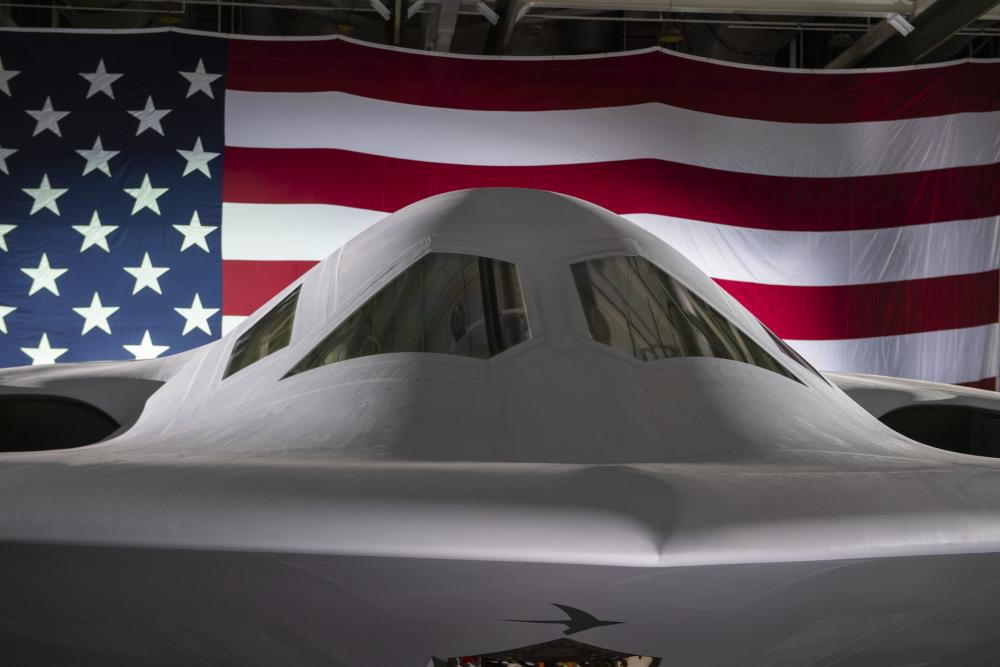
The Air Force has now released two more images taken at the same time as the first image. A close-up of the bomber canopy and a full shot from a higher angle provide some clues about the design of the B-21. The B-21’s design remains closely guarded, as even its dimensions are a secret.
Designed with what the U.S. government calls “unprecedented range,” the B-21 Raider will be able to fly long-range missions from U.S. territory without the need for forward bases and perhaps little in-flight refueling. is intended to be able to carry out . Since this range is very long, australian government has been advised to purchase the B-21 and operate it from a secure base in the South so that it can hit distant targets with conventional weapons.
Other facts about the B-21 that the Air Force has acknowledged are that, besides its long-range strike mission, it was used for intelligence, surveillance, and reconnaissance (ISR) missions, as well as electronic attack, communications, and other functions. It also has a high degree of autonomy and AI, so it can operate as a control platform for drone fleets without a crew.
us air force
New images confirm that the B-21 is an evolution of the B-2 Spirit bomber, combined with radical advances in stealth technology. The most obvious difference is the greyish white color of the new radar-absorbing composite coating, which is reported to be more effective and less fragile than the old coating.
Close-up images show that the coating is a composite material that looks woven rather than assembled, with layers added like tape. This improves the scattering of reflected radar signals. It’s especially noticeable around the cockpit windows, which have a more curved shape than the B-2’s because of this. A coating around the window covers all joints and seams for extra stealth.
The top angled image shows the composite coating extending to the engine intake. The engine nacelles are lower and blend into the body, the inlets are contoured rather than sharp and geometric, and the wings and fuselage blend more smoothly. The engine itself is well set back from the intake, likely to reduce the heat impact, and the nacelle fits better in the body.
Inside the air intake, previously thought to be part of the engine structure, was revealed to be a removable air intake cover prior to flight. Neither the tail nor the engine exhausts are clearly visible, but the structure of the tail appears to be more integrated with the wing and fuselage rather than the distinct serrated configuration of his B-2. I say yes. At the rear of the engine are some flat geometric structures that could be some sort of port or satellite data link antenna array.
The Air Force plans to purchase at least 100 B-21s, with the first one expected to enter service in 2027. This aircraft will replace the B-1B Lancer and B-2 Spirit bombers by 2040, and eventually the B-52 Stratofortress. in the 2050s.
Source: US Air Force
