











“If users don’t understand the principles of patent searching, don’t analyze the technical content, and just pass technical texts to ChatGPT to build search formulas, then there will be problems with search results.”
 Recently, ChatGPT (Generative Pre-trained Transformer), an artificial intelligence (AI) chatbot program developed by OpenAI, has become a hot topic and has attracted a lot of attention and discussion. Its applications in the areas of natural language processing and text analysis are well documented and of great interest. It can be used to generate various language models such as natural language text, dialogue, and question answering. He is currently one of the most advanced and efficient technologies in the language field.
ChatGPT has a wide range of applications. In fields such as medicine, finance, law, and media, ChatGPT can also be used to generate and analyze text data to improve work efficiency and accuracy. These days, the technology is also being used in the field of intellectual property, where some people are using it to draft patent applications.
While traditional patent search operations require patent attorneys to manually search and screen patents, ChatGPT automatically processes text data to extract and analyze information. Imagine a scenario where a user simply enters technical content or a patent publication number into ChatGPT and automatically completes a patent document search. There is no need to specifically commission a patent agent for the search. This has caused some patent search professionals to worry that their jobs will be superseded by her ChatGPT.
But can ChatGPT really be used for patent searches? What are its search capabilities? Let’s find out by running some tests.
Below are the objects to be searched.
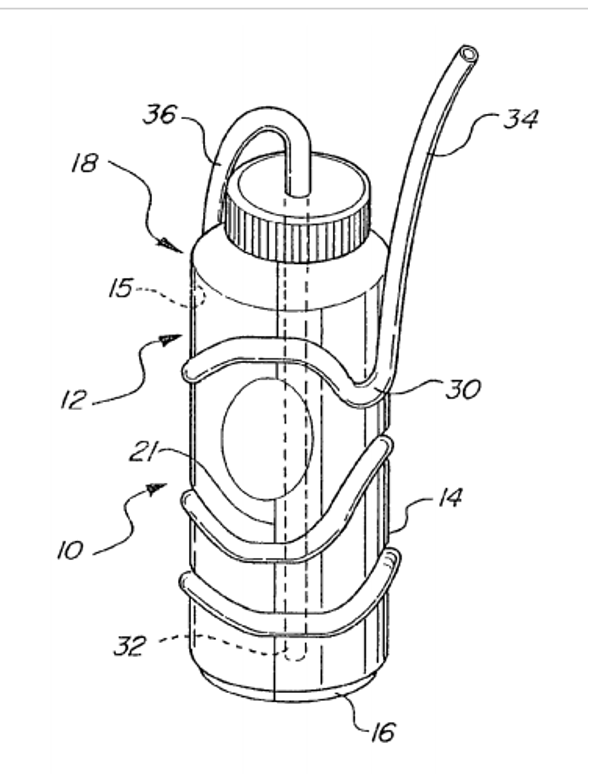
Figure 1
As shown in Figure 1 above, a cup is disclosed that includes a cup body, a cup lid, and a spiral straw. The top of the straw is the water intake, and the bottom of the straw is the water intake. It is characterized by a spiral straw wrapped around the outer wall of the cup, which makes the cup body shock-resistant.
In response to the above, I used ChatGPT directly for search work. In the ChatGPT dialog box, I entered the following statement and got an answer from ChatGPT.
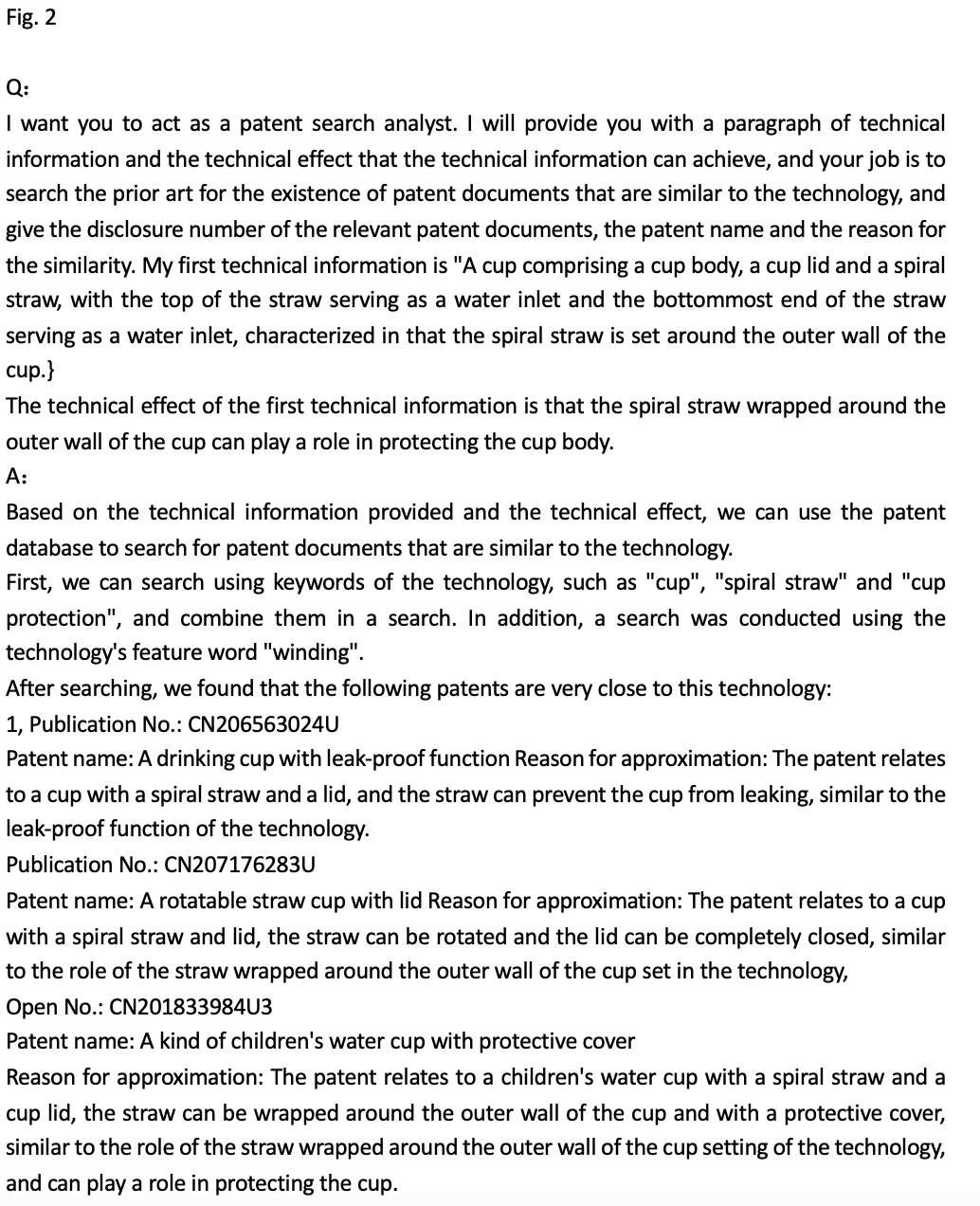
As shown in Figure 2, ChatGPT completed the search effort almost immediately, providing publication numbers, patent names, and similar reasons. Based on the content that ChatGPT outputs, it looks like we found a patent document that is very similar to this application. Does this prove that ChatGPT can easily complete your patent search task?
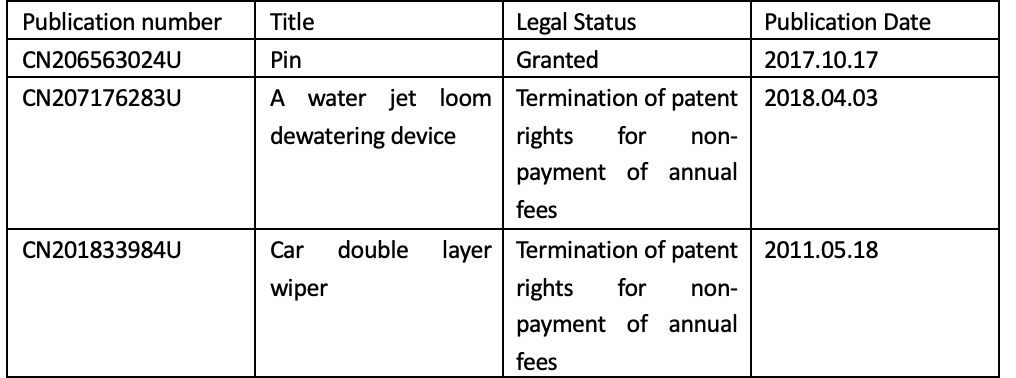
Figure 3
After finding the patents provided by ChatGPT in response to our question, we found that they were completely unrelated to what we were looking for. did it?
In fact, since ChatGPT is a semantic response model, it does not have the ability to search patent databases in real time. Regarding patent search work, the answers given may not be credible.
Does this mean that ChatGPT cannot be used for patent searches? Not exactly. In theory, ChatGPT excels at semantic recognition and extraction, allowing it to extract key information from text and build search formulas automatically. Users can directly search the database using this expression. This can replace the work of patent search professionals, at least to some extent. Based on this idea, ChatGPT will be further manipulated to extract features from technical text and automatically build search formulas.
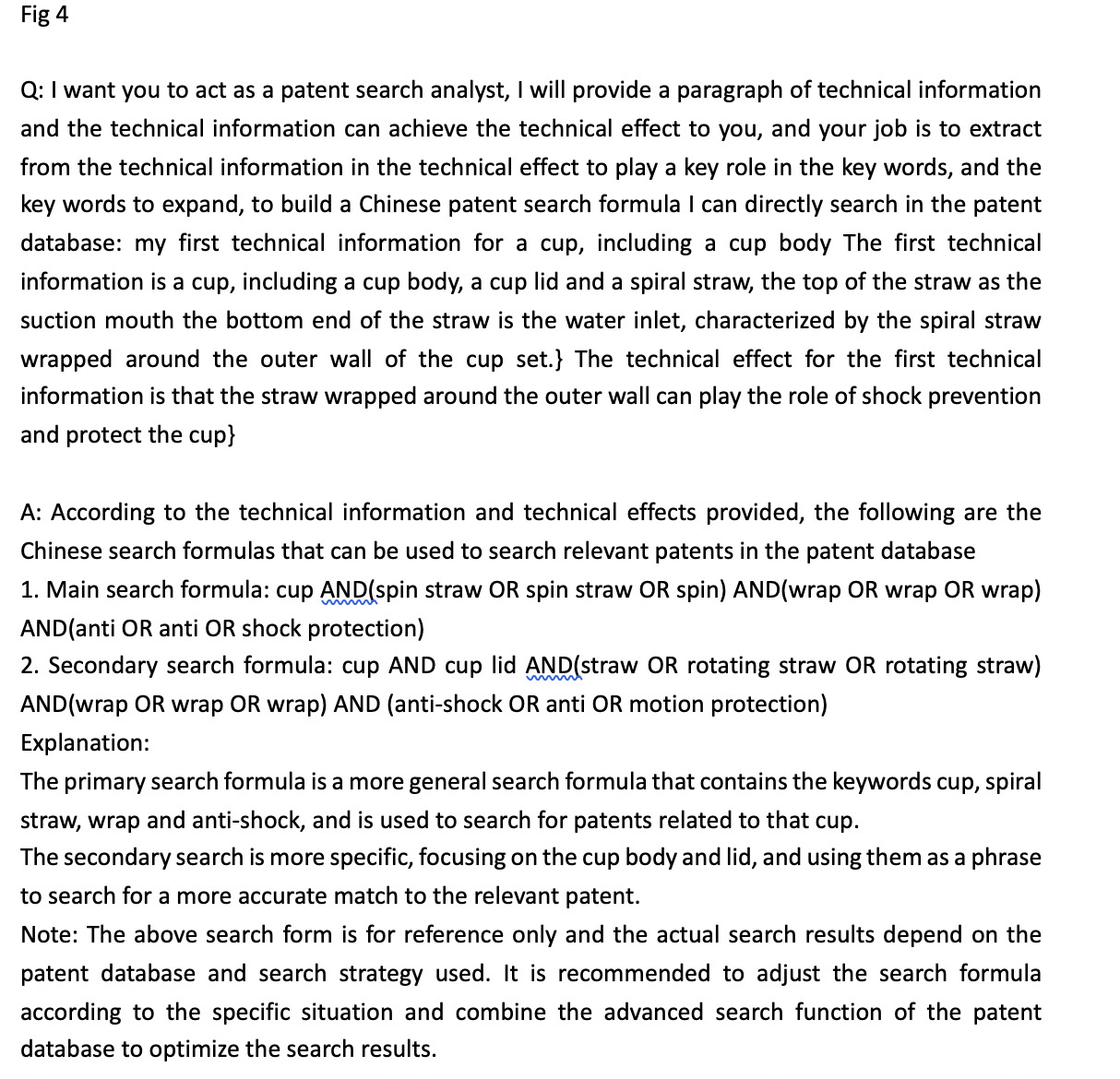
Thus, ChatGPT has extracted features such as cups, spiral straws, rolls, and impact resistance from technical texts based on technical effects to build a query formula, which seems to be a relatively accurate query formula. It is based on. of beneficial effect. The entered technical effect is inferred from the technical characteristics. This means that you have done some processing work on the technical effect. In most cases, the technical effects copied from the Invention Disclosure Form are relatively generic and may pose problems for ChatGPT’s recognition. for example:
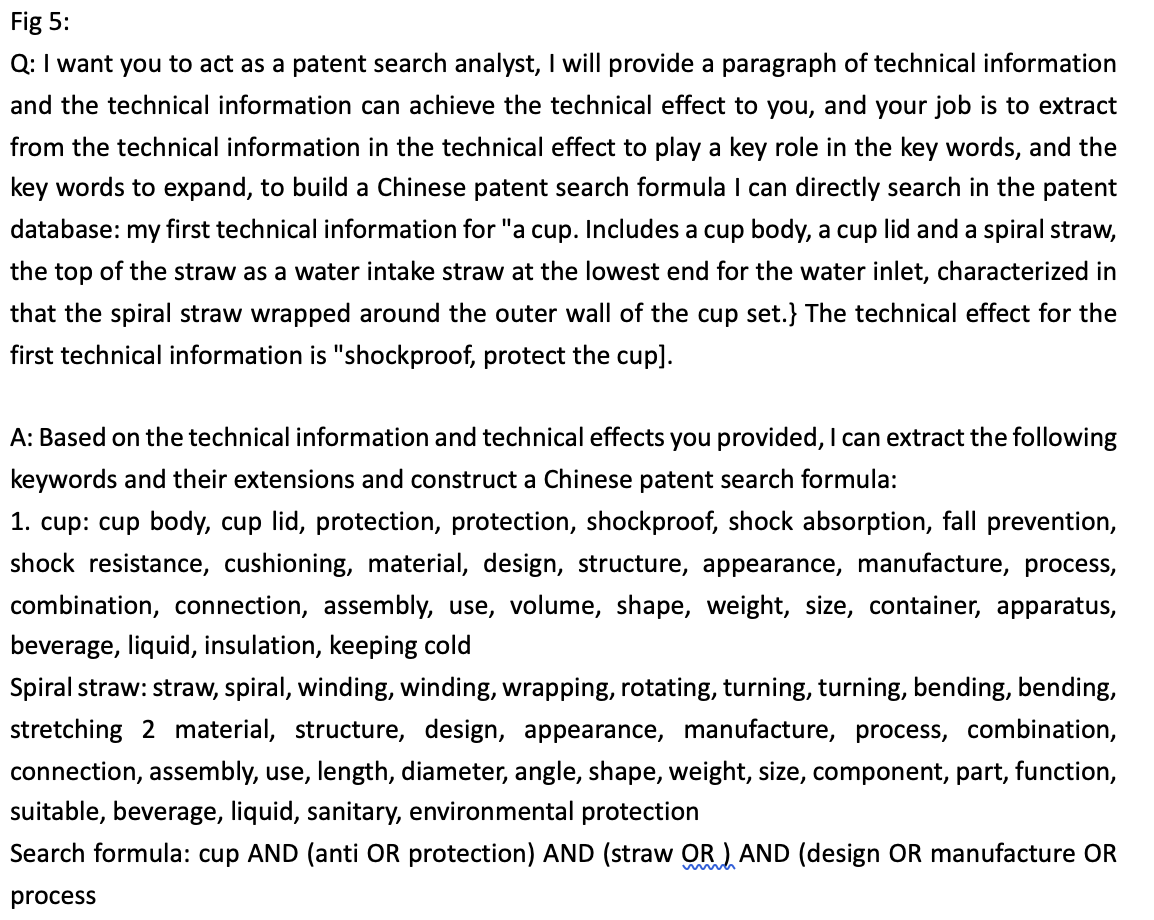
As mentioned above, ChatGPT cannot accurately extract search elements if the technical effect is not described in combination with the function. So, can ChatGPT extract the exact search elements if they don’t even provide any beneficial effect?
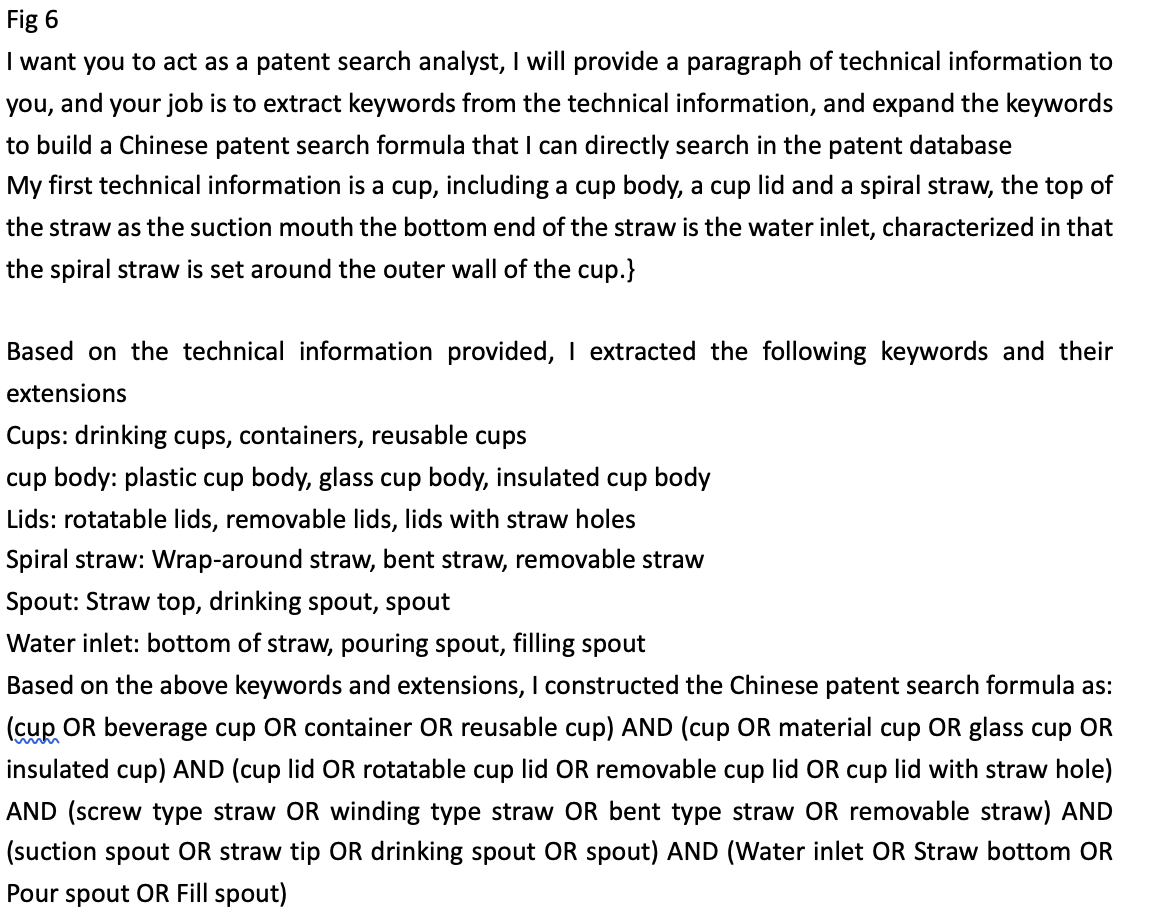
As you can see, if the search formula is not limited by beneficial effects, all the keywords of the technical texts provided are used in constructing the search formula, and the search scope is too small, failing to search for patents. Comparing the search formulas provided by ChatGPT in Figures 4 to 6, the search formula in Figure 4 seems more predictable. Using the “Title + Abstract + Claims” field to validate the search expression in Figure 4 yielded the following results:
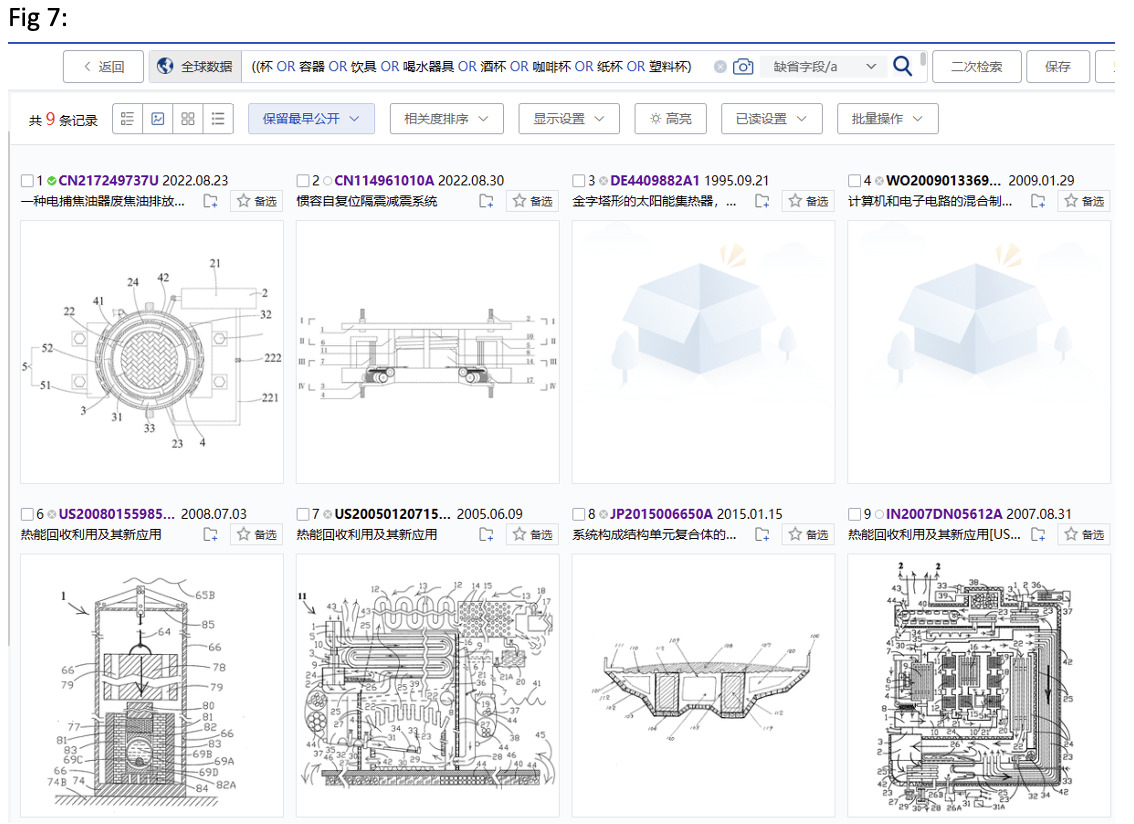
From Figure 7, we can see that there are only nine search results, most of which are irrelevant to what we are actually looking for. From the above, we can see that ChatGPT is currently not very capable at extracting keywords and constructing search expressions. In other words, users who do not understand the principles of patent search and simply pass technical texts to ChatGPT to construct search formulas without analyzing the technical content will cause problems in search results and lead to erroneous conclusions.
Well, it’s clear that ChatGPT can’t get the job done on its own. Would you like to work with a patent attorney? We ran another test, but this time we had her maximize her ChatGPT strengths, extracting keywords from technical text first.
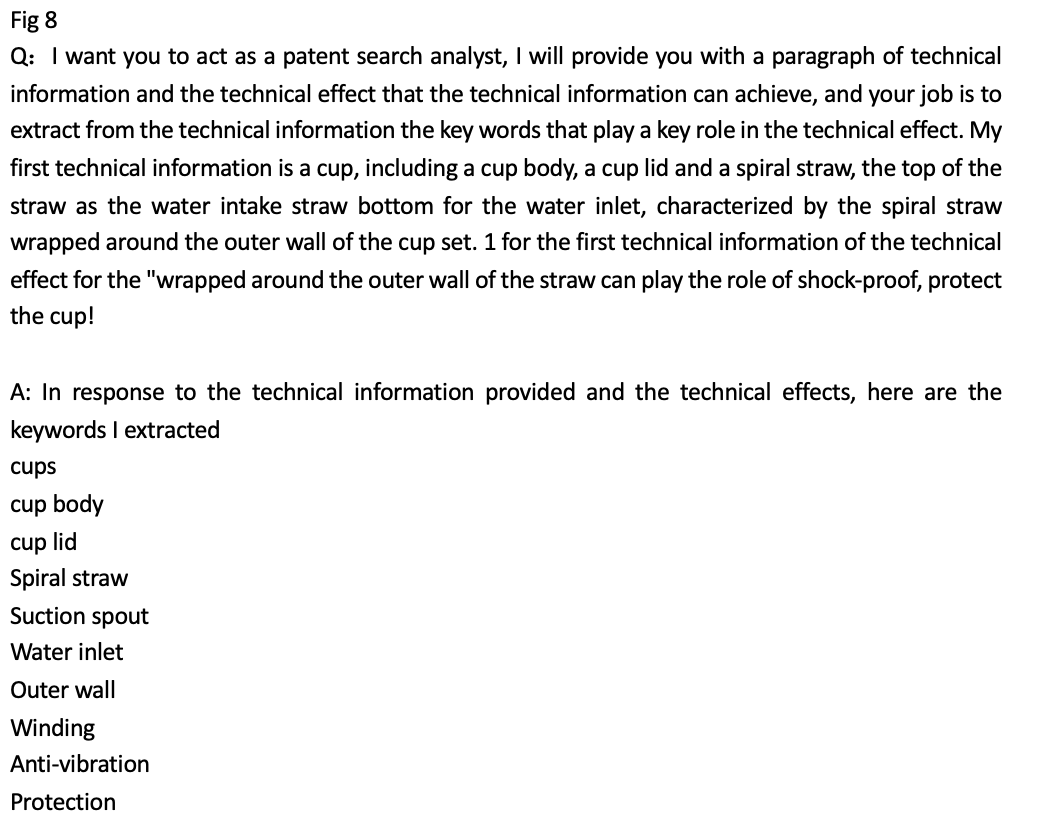
As can be seen in Figure 8, ChatGPT’s keyword extraction from technical text is highly accurate and the word segmentation is reasonable. In this way, the patent attorney can directly select the required search elements from the keyword results and let ChatGPT construct the search formula (that is, the patent attorney participates in the basic search element selection). for example:
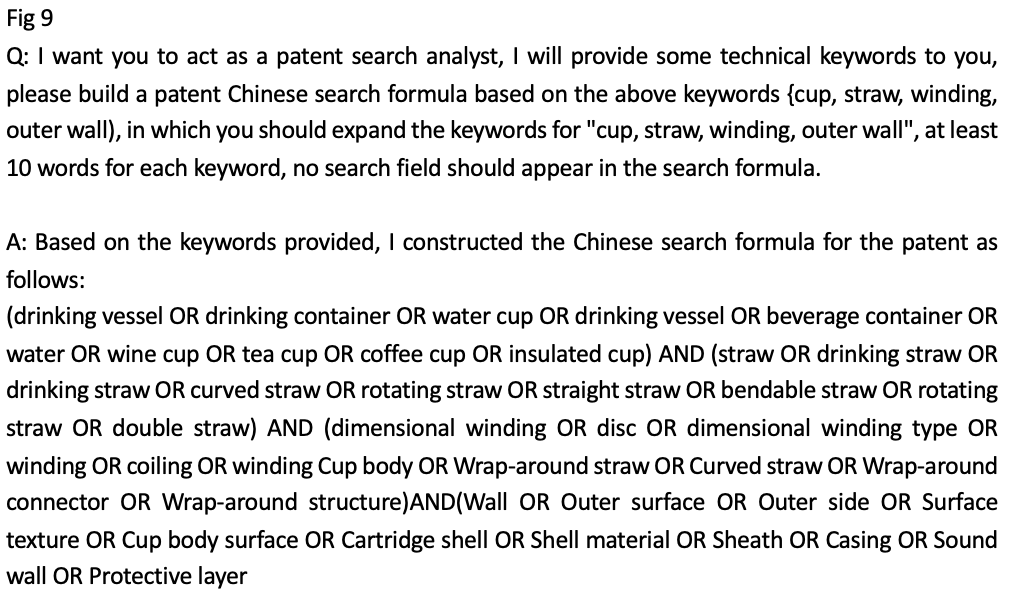
The results show that ChatGPT’s keyword expansion function is relatively good. Generated search expressions can be copied directly into the search database for searching without manually entering parentheses or logical operators. After validating the search expression, I got the following results:
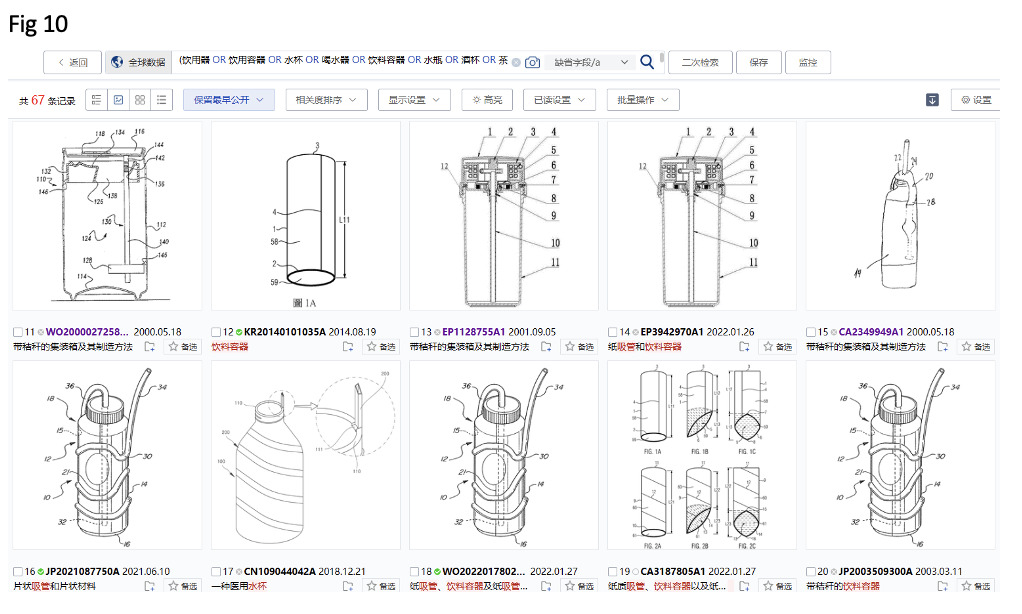
Quite surprisingly, the search results this time were relatively satisfactory, and the search results were all patents in question. In other words, by analyzing technical solutions, determining the exact search elements, and letting ChatGPT carry out keyword development and search formula construction, patent attorneys can improve the efficiency of patent search work to some extent, especially in preliminary examination. can do. After reading the technical proposal, the patent attorney can get the preliminary examination result of the target patent more quickly with the assistance of ChatGPT, and easily adjust the search formula (add or remove keywords, change search elements to classification numbers, etc.). , etc.). , adjusting the search field, etc.).
We set out to do another test to see if ChatGPT could be used to automatically detect classification numbers.
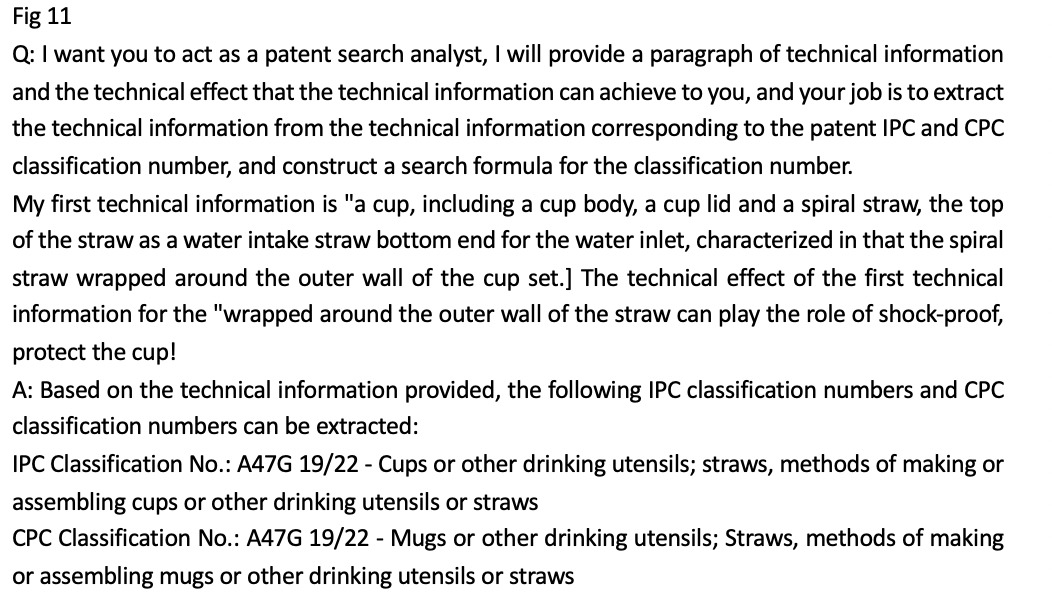
As you can see, ChatGPT can also provide a taxonomy number quickly, but keep in mind that every time ChatGPT outputs a numeric or code answer, it must be validated. As expected, the classification number is inaccurate.
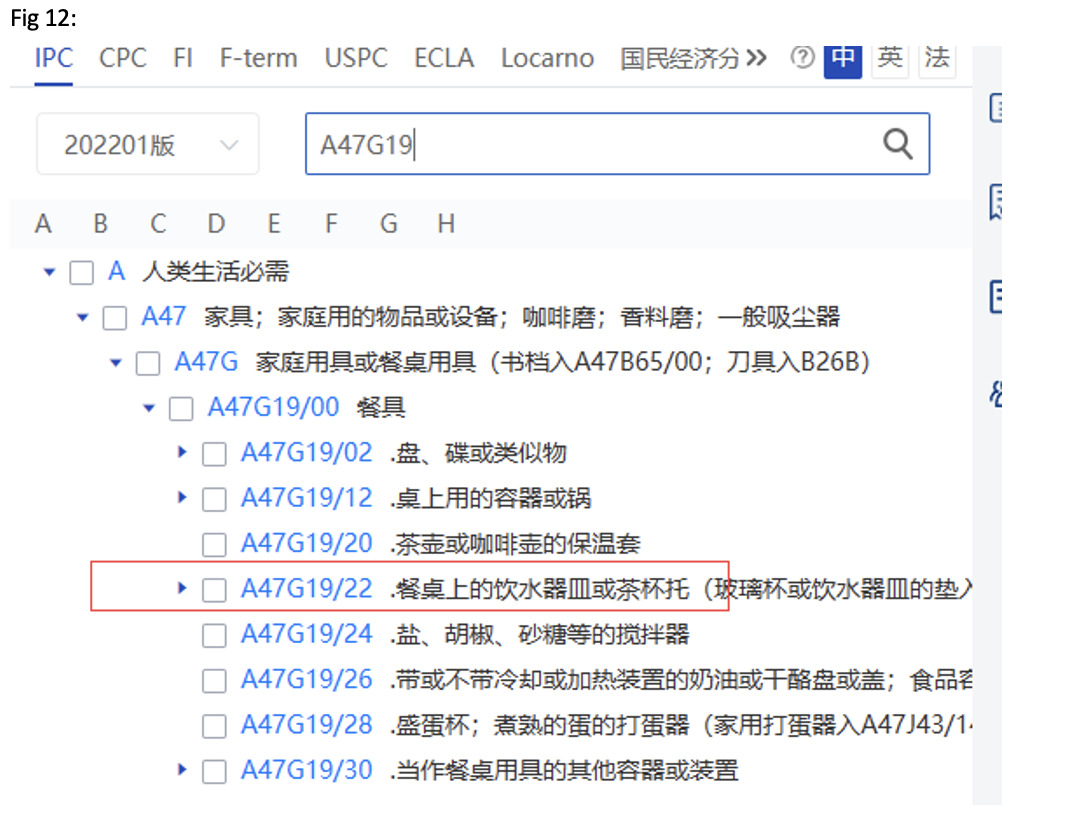
From Figure 12, we can see that the classification numbers provided by ChatGPT are for table-top drinkers, not traditional water cups. Therefore, the accuracy of using ChatGPT for classification number extraction is low. It would be more efficient to categorize the search results in Figure 10 to get the classification number for the water cup.
In summary, ChatGPT cannot automatically complete patent search tasks. ChatGPT can extract keywords well, but it can’t determine which keywords are basic search elements. Understanding the basic search elements is key to a patent attorney’s ability to successfully complete a search task and is a core value of the patent attorney. This is an area where ChatGPT cannot replace patent attorneys. Therefore, ChatGPT today will not cause unemployment for patent search professionals.
On the other hand, is it possible to improve search efficiency by using ChatGPT as a search tool for patent attorneys? Let’s say it’s limited.
On the one hand, patent databases are the battlefield for patent search work for patent attorneys. Most of the time and effort spent on searching is spent adjusting the search formula and browsing the retrieved patent documents, and ChatGPT simply provides a quick way to enter the ‘battlefield’. Compared to humans, ChatGPT is better at keyword expansion, but such features are available in common patent databases and perform better. In that sense, the benefits of using ChatGPT for patent search operations are limited to keyword expansion, and cannot substantially improve quality or efficiency.
Of course, iterative updates of ChatGPT may achieve accurate identification of basic search elements in the future or improve performance in determining similarity of patent documents. We also pay close attention to technological advances and update our readers with relevant information and usage tips.
Note: The figures included are machine translations of the Chinese questions and answers.
Image Source: Deposit Photo
Image ID: 634549688
Author: rokas91
