











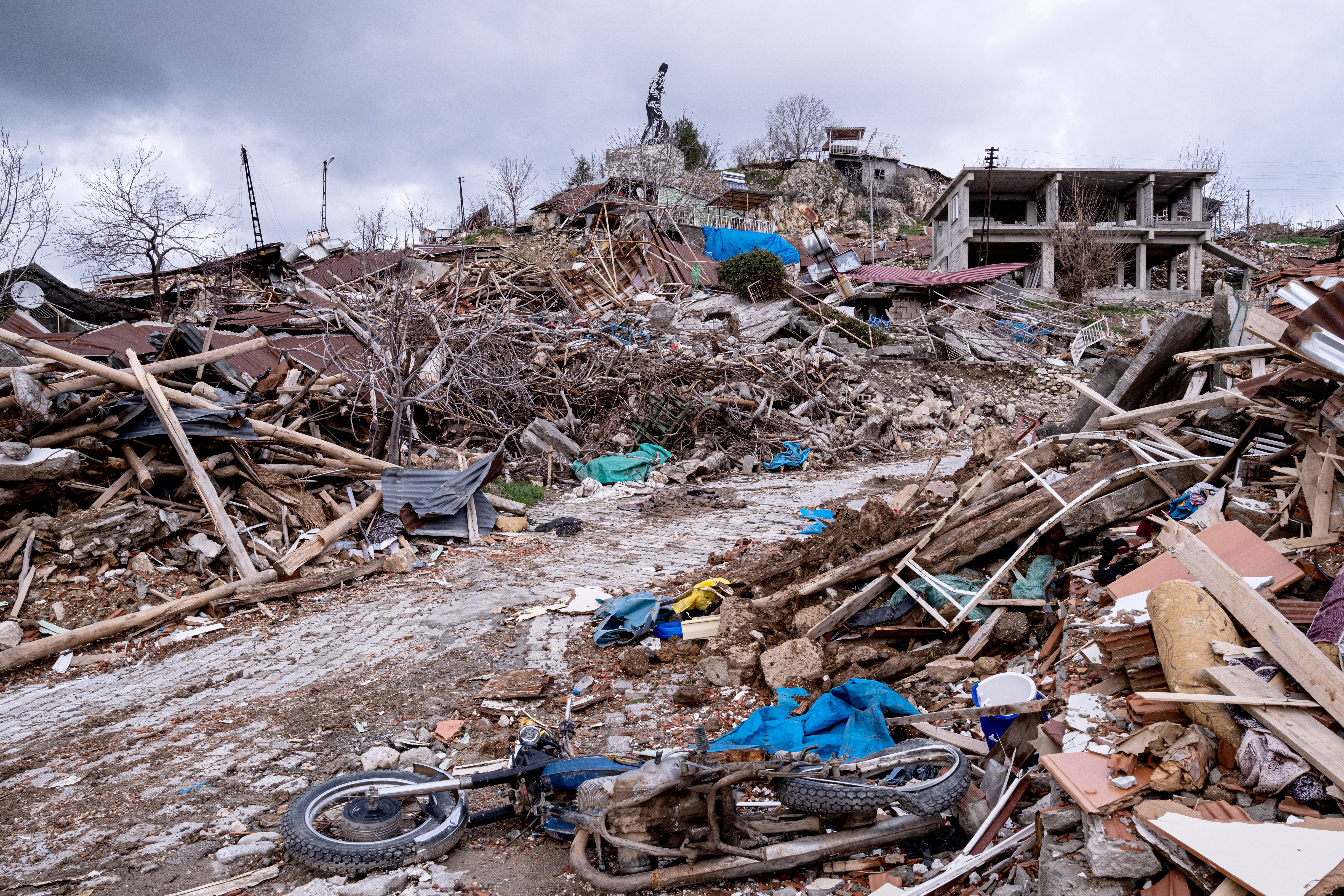
The earthquake that devastated parts of Turkey and Syria is a tragedy for millions of families, myself included. One of his hardest-hit areas, around the ancient city of Antioch, is where my father’s family has lived for generations. Thousands of people died and millions were affected by this disaster. Now that the last presumed survivors have been found, the area faces many other problems, including huge amounts of debris from collapsed buildings, roads, and more. This material is estimated to weigh up to 210 million tons. This is enough to cover 4 feet deep in Washington, DC or build a mound as tall as Mount Erciyes, Turkiye’s great volcano.
A 2017 report to Congress highlighted managing debris after a disaster as “one of the biggest challenges” on the road to recovery and rebuilding. These same challenges are now facing Turkey and Syria. With the large amount of post-disaster debris, the desire and need for quick cleanup, and the high cost of debris removal operations, many failures can have dangerous consequences.
Our research on debris management highlights planning as a key driver for reducing long-term adverse health impacts on people and ecosystems. The plan should identify and prepare disposal sites, establish recycling capacity, and provide guidelines on how residents, contractors, and local governments can safely manage the materials they encounter.
Debris removal accounts for approximately one-third of disaster recovery costs and can take months or years. If not managed properly, unlined landfills, rivers, beaches, or other open areas can become dumping grounds for potentially hazardous materials. This contributes to water and soil pollution, alters the course of rivers and poses a major threat to human, plant and animal life.
During the first 24 to 72 hours after a large-scale disaster strikes, debris management priority is to keep debris out of roads and otherwise accessible for search and rescue, evacuation, or delivery of supplies. That’s it. The focus then shifts to collection, bringing debris to temporary collection areas. The final step is disposal, which has multiple aspects such as sorting and sorting, recycling, landfilling in designated areas, and incineration. Decisions about how to dispose of debris at each stage are complex, with long-term social and environmental consequences. For example, whether and to what extent classification occurs during clearance and collection can affect the speed of search and rescue operations, the cost and duration of debris management operations, and the ultimate destination of debris. .
Where to put debris in the short term is an important social and environmental decision. After the Haiti earthquake, Riviere Gris became a dumping ground, especially for construction debris. An emergency landfill site was opened in Versailles (a neighborhood in New Orleans enlarged by Vietnamese refugees) after Hurricane Katrina, a decision that led to many protests over environmental issues.
In Turkey, construction waste from collapsed buildings is contaminated with asbestos and other toxic chemicals, household appliances and electronic equipment. People and environmental groups have expressed concern about the potential dangers hidden in these piles of debris, some of which are dumped in or near residential areas, farmlands, riverbeds, or wildlife sanctuaries. It has been. The Turkish government has released a debris management plan that refers to the separation, recycling, reuse for construction or proper disposal of debris. However, the implementation of these plans was difficult. Government officials welcome input from the public when they observe erroneous or illegal practices by contractors.
There are three key steps to improving the efficiency and effectiveness of debris management activities: Technology and/or data driven decision making in implementation. and overlooked. As best prepared, the planning process should involve many organizations and experts from a wide range of disciplines, including geology, civil and environmental engineering, urban and regional planning, public health, and industrial and systems engineering. Oversight during execution is important to ensure that the plan is properly executed and amended if necessary.
Post-disaster response involves multiple stakeholders (governments, non-governmental organizations, contractors, etc.) and emphasizes the importance of joint pre-disaster planning, along with deployment exercises conducted in “peacetime” scenarios for possible disaster scenarios. Gender is further emphasized. In short, a “systems approach” is essential given the chain of decision-making and cascading effects from planning to the logistics of implementation.
Data and technology can help in all aspects of debris management. For example, the Hazus tool developed by FEMA produces risk estimates to inform local government planning decisions. EPA’s Disaster Debris Recovery Tool provides information for more than 20,000 debris management facilities. Technology can also collect and share data, or map local conditions, to help assess the type, amount, and location of debris after a disaster. Unfortunately, such tools and technologies are not available in many vulnerable areas around the world. This is an area where cooperation between countries and governments, perhaps with support from funding agencies and coordination by non-governmental organizations, can greatly benefit planning efforts and reduce the negative impacts of future disasters.
For thousands of years, the city where my father’s family was born has been a mosaic of people from different cultures and religions. Some of civilization’s oldest relics may be lost forever. I hope that in the rush to restore and rebuild, debris management must play a central role and not cause another kind of devastation to future generations.
This is an opinion and analysis article and the views expressed by the author or authors are not necessarily Scientific American.
