











To restore damaged reefs, some groups grow hardy corals in nurseries and transplant them onto existing reefs. The new Maritechture system is designed to streamline that process, allowing it to run on a much larger scale.
Maritechture was created by the Coral Hub team at King Abdullah University of Science and Technology (KAUST) in Saudi Arabia. Commercialized through spin-off company Ocean Revive.
The system consists of four components: coral tiles, coral crate, reef nails and coral pods.
In indoor or outdoor nursery environments, clients such as marine conservation groups start by growing climate-resistant coral fragments on small limestone tiles. Rows of tiles containing these corals are placed in stackable pallet-like boxes and transported from nurseries to degraded reef sites.
Scuba divers then transfer the tiles from the crate to the reef and use nails to secure the tiles to the existing dead coral reef. Pods work if no such bed exists. They are modular, three-dimensional limestone structures that are placed on the ocean floor and serve as alternative hosts for tiles.
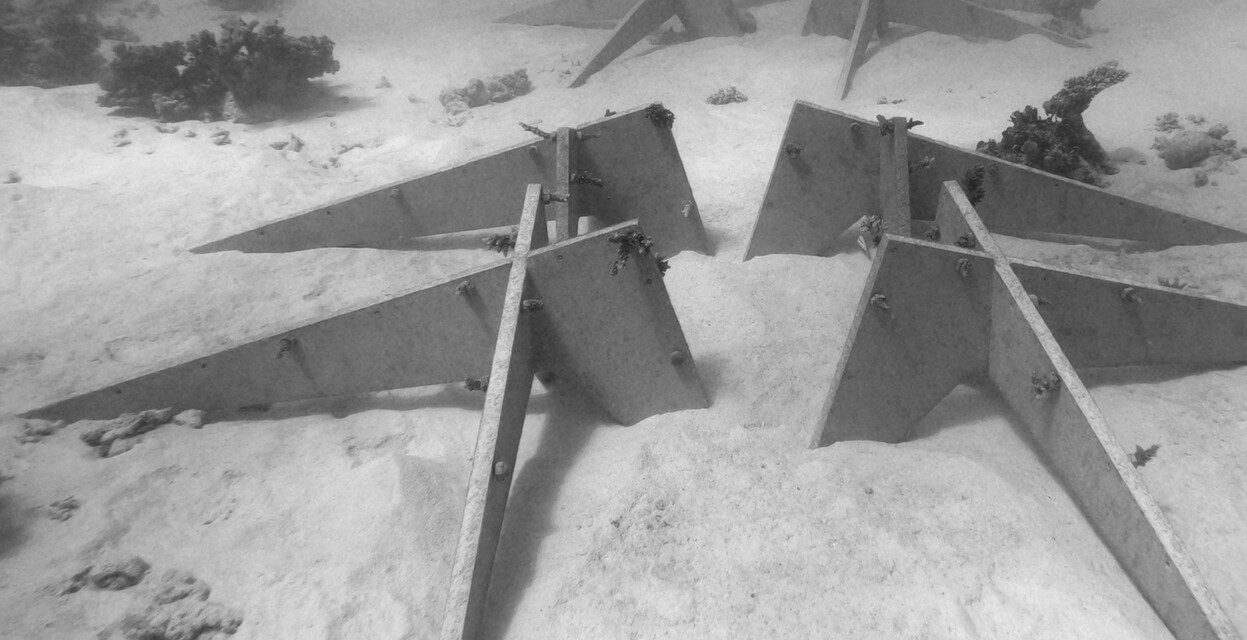
ocean revive
Each crate can carry up to 56 coral tiles. According to Ocean Revive, a dive team of two She can anchor over 50 tiles to the reef in 30 minutes. Each tile’s microchip can then be read by a handheld device, allowing clients to track information such as which types of coral work best in which settings.
Coral pods can be flat packed for easy transport and then assembled on site. It is estimated that in half a day a team of six divers could deploy 90 Pods and create up to 250 square meters (2,691 square feet) of artificial reef. As an added bonus, underwater coral polyps have been found to colonize the pods naturally, adding to the coral debris grown in the nursery on the tiles.
KAUST’s coral reef restoration initiative on Shusha Island plans to use the Maritechture system, which is said to be the world’s largest restoration project to date.A paper on this technology was recently published in the journal Frontiers of marine science.
Source: Ocean Revive, KAUST via Alpha Galileo
