











One of the oldest building materials in the world – already in use in Roman times – is at the same time the subject of countless research projects today. After all, concrete is still the basic element of construction. However, technological advances are driving the development of concrete that is more sustainable, self-healing, and capable of sequestering carbon dioxide.
Usually these qualities are achieved through new ingredients, from adding organic waste such as beets to using calcite-producing bacteria. I turned to Tactile sensing concrete that can store energy.
What are metamaterials?
First, it is essential to clarify What is a metamaterialBasically, they are man-made materials with electromagnetic properties not found in nature due to the creation of nanostructures with specific shapes.
The theoretical development of metamaterials dates back to the 1970s, when Soviet physicist VG Veselago published a paper describing potential properties of metamaterials. In fact, the field itself is so new that the term “metamaterials” itself was not coined until his 1999. metasurface It applies the principle of metamaterials, but means 2D, i.e. a few nanometers thick.
The most common example is materials with negative refractive indexThat is, the light can be deflected in opposite directions. In nature, all elements have a positive refractive index. For example, water has an index of refraction of 1.33, while glass has an index of refraction of 1.45.Technically, the ability to control the refraction of light is the so-called invisibility cloak, that is, science-fiction-worthy materials that make people and objects covered by them invisible. Or a camera the size of a grain of salt, as described in this article.
New metamaterials that act as sensors and generate energy
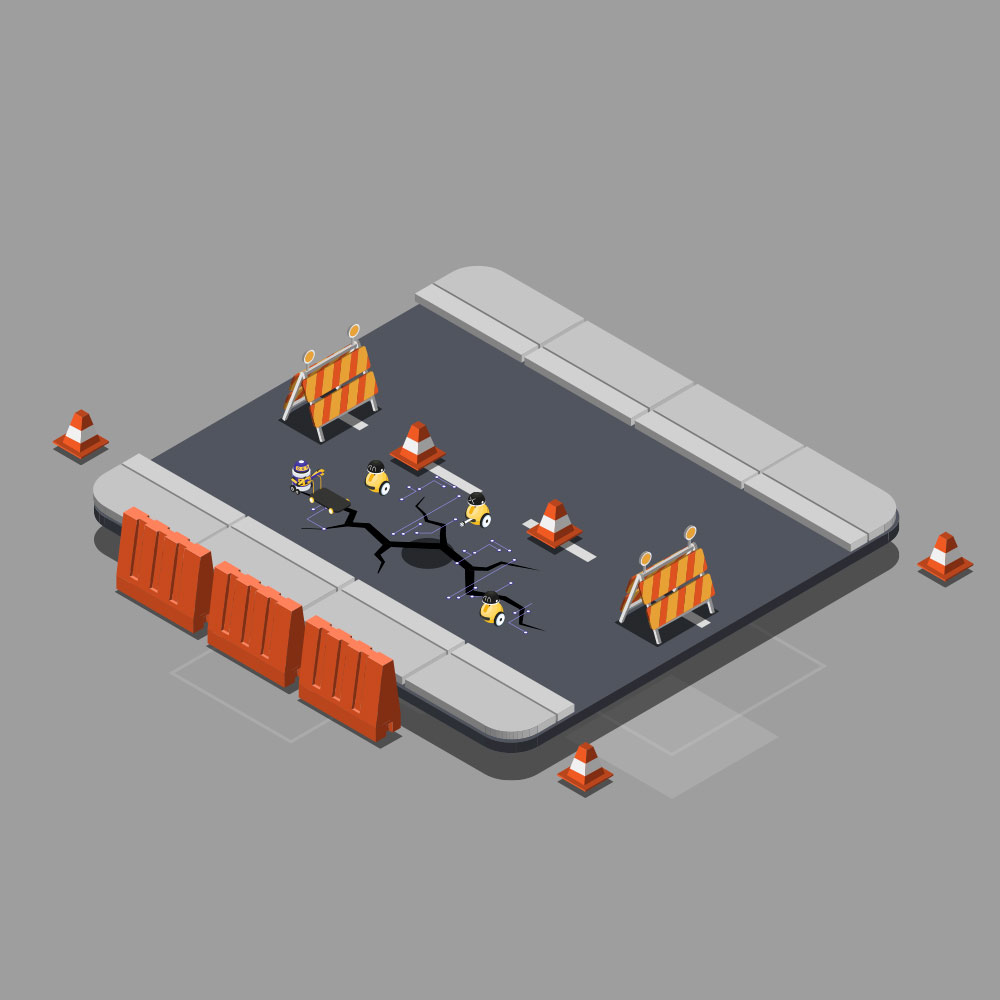
A new type of concrete, proposed by University of Pittsburgh researchers in a paper published in the scientific journal Advanced Materials, can monitor variables such as pressure and store energy at the same time. These properties have been explored in previous work on ‘self-aware’ materials. That is, using structures that transmit information about the loads and stresses they experience without the need for additional sensors.
As explained, the properties of metamaterials can be changed in the following ways: Adjust the shape of its nanostructuresFor concrete, strength, durability and flexibility can be fine-tuned. The University of Pittsburgh relies on a reinforced auxetic polymer lattice embedded in a conductive cement matrix containing graphite powder.
Cement acts as an electrode and generates a small electrical charge when subjected to pressure. This charge can be used to detect cracks in concrete during an earthquake or impact, or to power LED lights or low-power devices.
In experiments, in addition to these properties, scientists have found: Material can be compressed up to 15% without losing its structural integrity. This gives the same results as conventional concrete with less material, resulting in less CO.2 Emissions in its production. Finally, new concrete production is scalable, cost-competitive, and paves the way for industrial-scale manufacturing.
Smart Roads Built with Metamaterials
According to researchers, these anomalous properties can also be used to build smart roadThe idea is to allow road managers to see the condition of road surfaces in real time and make quick repairs. On the other hand, the amount of energy is very small, but enough to power signaling components such as integrated lights and chips that communicate with self-driving cars. In this way, the road can signal and guide vehicles even in situations where the GPS signal is poor.
The roads of the future will not only accommodate road traffic, but will integrate multiple functions. For example, solar roads, ie roads with solar cells. Another area of research is the development of electrified roads, where electric vehicle batteries can be charged using inductive technology. Moreover, roads can even self-repair. It also integrates recycled materials such as tires, so all of this is more sustainable.
sauce:
