











This story was created in partnership with Retro Report. See more of their documentary here.
narrator: For decades, the Southwest has been crippled by a growing crisis. The worst drought in 1000 years. But in Tucson, one man has tried to transform one home, one neighborhood at a time.
Brad Lancaster: Having grown up here in Tucson, I have seen water conditions deteriorate over time. Many springs have dried up as the groundwater table has dropped. I wanted to find a solution. And then I took off, tracked people down, and started experimenting.
Rajendra Singh: Now you are at the center of the wisdom of water.
Lancaster: That’s when I learned about Singh and the amazing work being done to restore the five dying rivers.
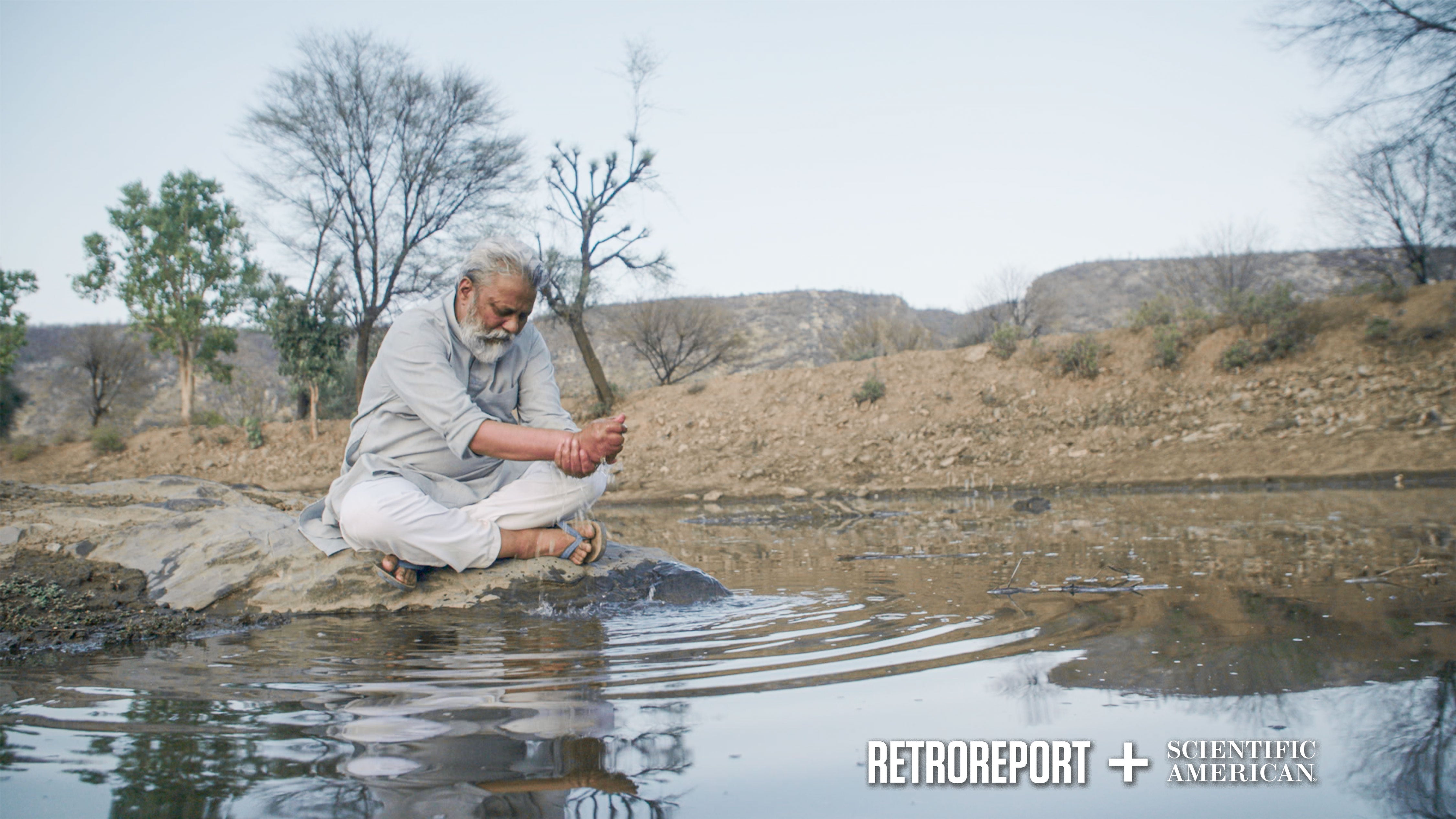
narrator: In the 1980s, Dr. Rajendra Singh visited one of India’s poorest rural areas to provide medical care, but quickly realized that drought and decades of overpumping were causing a more immediate crisis. I found out
Shin: An old man said he didn’t need your medicine. No education required. I need water. So tell me. He will teach you how to save water.
narrator: Returning to an ancient practice once considered outdated, Singh began digging a large pit known as the Johad. It can capture monsoon rains and recharge the aquifer for the dry season.
Shin: The British Empire destroyed its culture, its methods of water conservation. However, johad is a very simple method and johad is deeply tied to Indian culture.
narrator: With little help, Singh worked on creating his first Johad. But when the monsoon filled it, others noticed it and wanted to learn.
Shin: So when people saw I created Johad, a lot of them came back and asked what kind of support we could do.
Today, over 1,300 villages can be said to have water.
At the heart of this modern world challenge is water. Without this focus, the world cannot survive.
narrator: Singh ultimately helped rebuild the fortunes of much of India. However, his teachings spread far beyond the borders of India.
Shin: This inspiration is for the community, not just me.
narrator: Such historic practices were revived in places like Zimbabwe by visionary farmers such as Zefania Fili Maseko, who became the mentor of Brad Lancaster.
Lancaster: It was very different from what I was exposed to in college and so on. It was usually a high-tech, high-cost strategy that was practically inaccessible to individuals, families, or neighborhoods.
In short, I was simply overwhelmed by the incredible positive effect this piece had. But I also realized that if you have the ability to move a shovel, anyone can do it, wow, you can do this.
The first thing I did was not really reduce my water usage. Instead, it was pushing the water further.
What is that example? All walkways were raised to provide a catchment surface for drainage to adjacent plantings. Water was channeled from the home drain into a basin with trees. I started collecting water from the roof, put it in a tank, and sent it to the kitchen sink.
Like the old TV show The Fall Guy, I love the outdoor bathtub. Rainwater or city water can be used in this outdoor shower. So with this bucket… get the water out. Cool off. Yes, it will keep you cool on hot summer days.
Did you know that a 400-square-foot roof alone can provide 95% of your water needs? The biggest challenge is being able to see what changes are possible. But with a little modification, it becomes like climbing a rung of a ladder. You will see the following rungs:
narrator: After a devastating drought in 1974 dried up its wells and diversified its water sources by diverting to the Colorado River, Tucson had begun to incorporate some conservation efforts. But Lancaster wanted to show that rainwater could be a big part of the solution.
So he started recruiting neighbors. Among the first lessons was how to create curb cuts, utilizing techniques used by local indigenous peoples who have long diverted rainwater to their crops and gardens.
Lancaster: Water flows along the gutters here, into curb cuts, and fills this entire basin behind the trees, freely irrigating all of these versatile native plants.
This was illegal when we made the first one. But neighbors have seen how well it works. So the vegetation was great.
They say, I like to come here and see new flowers, new growth, things I haven’t seen before. So, with the inspiration of the past and the desire to change the present, we held this annual tree planting project. And how can we plant this forest and care for it in ways that help build more resilient communities? That’s why.
Neighbor: Hey Brad, how are you? I have never come to say hello and seen a goat being milked. This is Lalique, right?
Lancaster: yes. Now, if you’d like, you can schedule your milk training.
Neighbor: look? See, this is how he does it. He is, above all, an educator.
Lancaster: So now you’re walking down our street You can’t see the barren passage. It is a multi-layered forest of many diverse species of plants. In the old days, when I was walking, I rarely met my neighbors, but now I always run into them. amazing.
narrator: Brad’s successful construction in the neighborhood prompted him to consult with other conservation projects and urge the city to act. He eventually legalized curb cutting and encouraged rainwater harvesting.
Lancaster: It was incredible to see. From the decade when we could count on our hands how many people we knew to harvest water, so that almost every neighborhood in Tucson now has someone harvesting water. I was doing it because the health around me was improving.
Silvia Valdiles: My house was the first house in this neighborhood to have a water tank. So it was really cool to learn how to do that. And we can share the skills and that person can do it in their neighborhood or home.
Rachel Frank: These are indigenous concepts. We want to connect with our indigenous roots. We want to be sustainable. We want our food to grow in ways that are part of our roots.
Jesus Romero: All messed up, yeah. Yeah it happened many times.
Once you start participating in these projects, your view of the world changes a bit. Many of these lessons and strategies are like common sense, but you are not exposed to them. So it’s up to us to make it fair and share it with everyone else.
narrator: Due to myriad conservation efforts, the city has reduced its water use by more than 30% over the last few decades, despite a rapidly growing population.
Blue Baldwin: Adding green stormwater infrastructure can provide shade and improve quality of life. Sustainability is part of public health.
It’s pretty progressive. The city of Tucson is one of the best-positioned cities in the Southwest as far as water safety is concerned. This is thanks to all these grassroots activities that think positively about water conservation, look to the community, and harness water and rainwater. Get off the street and into the landscape locally.
narrator: But as the drought continues, the threat grows, from booming development to the declining Colorado River.
Baldwin: In an environment where water is becoming increasingly scarce and precious, we need to maximize the use of various water resources. Rainwater is a renewable, free resource that can offset other water demands and use it in the most efficient way possible.
Lancaster: The biggest obstacle to widespread adoption of water harvesting in the United States is the lack of exposure to water harvesting systems in operation. I have yet to find a place where these water collection approaches cannot help and enhance the site.
Aaliyah Johnson: While pouring this water from the aquarium into Ola, the water is slowly circulating around.
Lancaster: If you don’t have people practicing this simple water harvest, you don’t have the cultural seed to be able to speak to other people and say, “Well, this is how I did it.” Evolve it. So it’s imperative that you start.
teacher: You are going to help me teach everyone. thank you.
Lancaster: we are moving in that direction. We are only at the beginning of our journey. But we need to build resilience for as many people here as possible. This becomes part of the culture and part of daily practice.
mother: my helper is here. she is a smart girl
teacher: Well, well, Aaliyah is often in the garden. Eh, are you getting emotional? Oh sweet lady. oh.
mother: Kids like her will make a difference, that’s for sure.
