











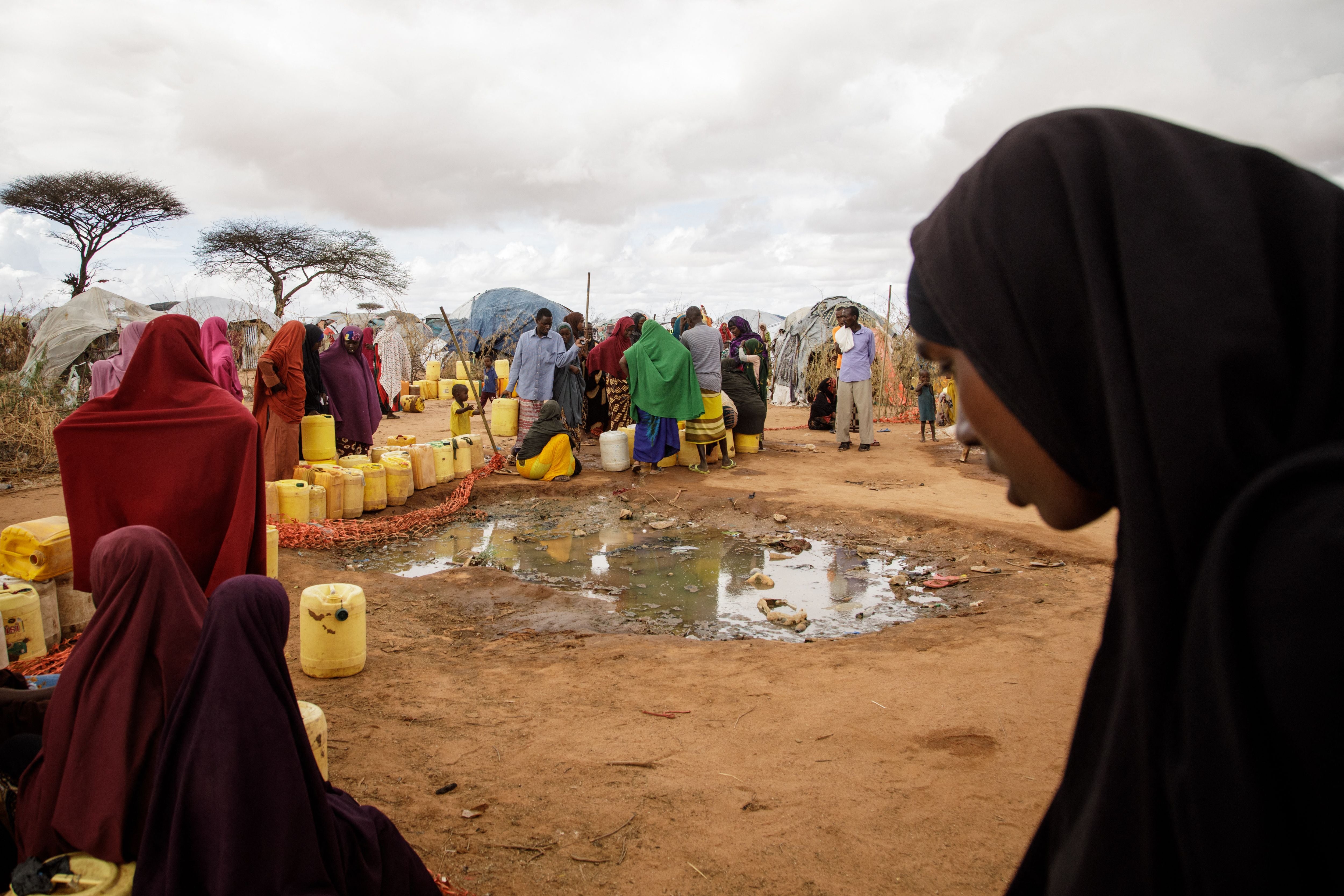
The Horn of Africa lacks life-sustaining seasonal rains year after year. The heat scorched and dried the soil. The crop has withered. Millions of livestock died. Millions of people face severe food shortages and hundreds of thousands are on the brink of starvation.
The region is no stranger to droughts, and while humanitarian crises in Somalia, Ethiopia and Kenya have received poor international media coverage, the current drought is believed to be the worst in decades. And without human-caused climate change, it wouldn’t have happened.
The Horn of Africa has two rainy seasons, the ‘long’ from March to May and the ‘short’ from October to December. After 2020, with five of these seasons failing, an international group of 19 researchers wondered what role climate change might play in this lack of rainfall and the resulting devastating agricultural droughts. I tried to find out what it did. The team’s work is part of the World Weather Attribution (WWA) initiative. This is an international scientific collaboration that looks for signs of the climate crisis when, or shortly after, extreme events occur.
WWA researchers will study trends in weather observations over time and use computer models to compare current climates with those without the 1.2-degree Celsius increase the world has experienced since the late 19th century. to analyze the event.
The myriad factors that contribute to drought can make analysis difficult. Contrast, for example, with heatwaves, which have a direct and obvious relationship to global warming. The WWA project investigated changes in precipitation patterns, evapotranspiration, or how much water is lost from soils and plants.
The team found that long rains over the Horn of Africa are about twice as likely to get less rain in today’s climate, while short rains are actually wetter. However, the latter trend has been overwhelmed in the last few years by an unusually prolonged La Niña event. This occurs when the waters of the equatorial Pacific are unusually cold, leading to changes in key atmospheric circulation patterns that affect weather around the world.
The analysis found that climate change played a major role in increasing evaporation in this drought. This is because soil and plants dry out much more quickly in warmer temperatures. Friederike Otto, Grantham climate scientist at Imperial College London and co-leader of the WWA, said, “In a world without climate change, if there had been less precipitation, there would have been much less evaporation, so it would be classified as a drought. I wouldn’t have,” he said. The Institute for–Climate Change and the Environment announced the findings at a press conference on Wednesday.
“These conditions are likely to continue,” said Joyce Kimtai, a WWA team member at the Kenya Meteorological Service at a briefing. “As the system continues to warm, we may see the combined effects of temperatures and low precipitation causing very exceptional droughts in this part of the world.”
That drier future is coming despite the fact that the affected countries have contributed little to the climate crisis.
The results “seem very reasonable,” says Benjamin Cook, a climate scientist at NASA’s Goddard Space Institute who studies drought but was not involved in the new analysis. However, he warned that it is “a particularly difficult region of the world” to explore in this kind of study, due to the relatively sparse weather data and the region’s complex climatology.
At the press conference, team members emphasized that it is the persistent backdrop of other social, political and infrastructural factors that turn climate disasters into humanitarian disasters. What we have is very much increased by vulnerability and exposure, not just weather events,” Otto said.
The Horn of Africa has been hit hard by deep-seated conflict, the coronavirus pandemic, unsustainable land-use practices such as deforestation, and rising food prices linked to the war in Ukraine. All these factors increase the vulnerability of people in the hardest-hit areas. Most of them are farmers and pastoralists who may have the means to cope with one or he may have missed a rainy season, but are now overwhelmed. Phoebe Wafbwa Sikuk of the International Federation of Red Cross and Red Crescent Societies said at a press conference, “This will allow people to actually move to other areas in search of water and pasture for their crops or food for their families.” are being forced to migrate to the United States, which in turn increases the risk of outbreaks of diseases such as cholera and gender-based violence.
Mitigating the severe malnutrition and other hazards that follow this drought will require “working with our communities to prepare for the worst of future droughts,” Wahubwasikku said. For example, this means ensuring that early warnings of low rainfall reach all involved communities, and that farmers and pastoralists have access to drought-tolerant crops and livestock breeds. “We may not have a silver bullet that will provide a solution for everyone,” she said. “It has to be like us to create a buffet of options that communities can choose and mix to address the impact of drought, because drought will continue to happen.” is.”
