











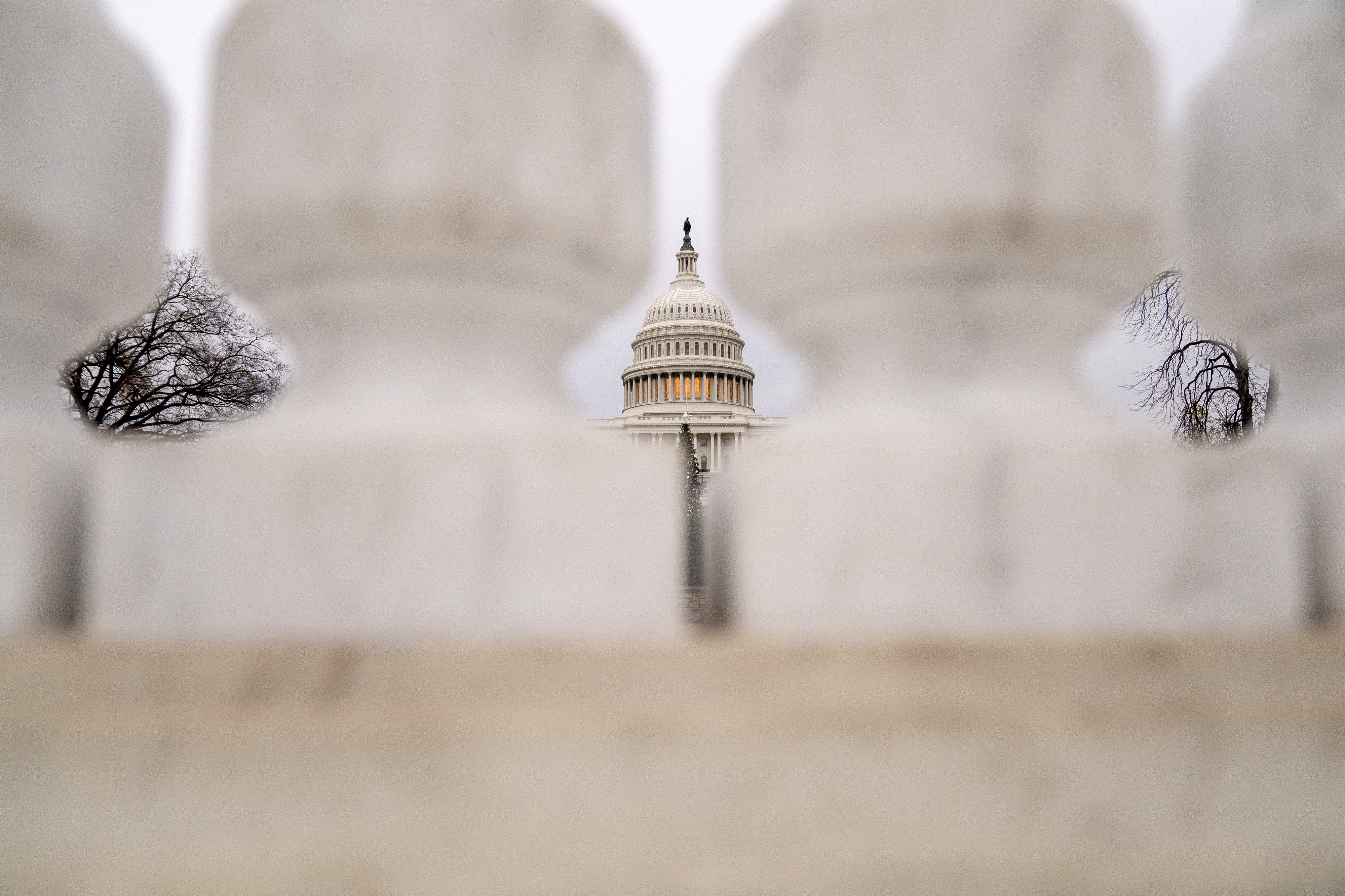
For more than a century, the concept of democracy has meant liberal democracy, we vote for leaders, and governments are determined by defining documents like the United States Constitution. In a liberal democracy, there is also a separation of powers between representative government and the various branches of the rule of law.
But this is not the only way democracy works, and we are moving away from that ideal these days.
For example, in countries like Turkey, Russia, and Hungary, the population has elected a majority of authoritarian leaders, and they have a growing disdain for liberal democratic norms. Despite claiming to support democracy and democratic ideologies, these leaders routinely ignore attempts to limit their power and pressure the independent media. They limit public understanding of their decision-making. But for the most part, these leaders regularly seek public approval through popular vote on their plans, and often win it. In Turkey, for example, President Recep Tayyip Erdogan is still fighting Kemal Kirikdaroglu despite economic hardships and what many call a poor response to a devastating earthquake. there is These countries represent illiberal democracies, where power is concentrated in the executive branch of government, and checks and balances in other sectors are non-existent or severely weakened.
While many Eastern European and South Asian countries are losing the liberal dimension of democracy, democratic voting is fading in the countries where the ideal first took root. On both sides of the Atlantic, those who live in traditionally liberal democracies are unhappy. They feel that their vote doesn’t matter and that politicians are ignoring the issues that matter most to them. In a global economy regulated by conventions, rules and supranational institutions, the space left for democratic deliberations at the national level is shrinking. This disconnect fuels the culture wars that permeate everyday life in so many Western countries, and those culture wars lead to further erosion of liberal democracies. Similar to climate change, our society is getting hotter, more reactive and less stable.
If it is too late to turn the clock back on a legislative body focused on policymaking and more sober executive decision-making, democratic thinking will have to adapt to meet the demands of the public. Otherwise, we will see the society we have built collapse.
A shift in the base of participatory government in the West began in the post-Cold War years. At the time, the leaders of democracies delegated power to external rules and autonomous technocratic institutions, much like many European Union institutions developed in response to the deepening of the internal market in the 1990s. started a seemingly irreversible process. It was as if the fall of the Iron Curtain, and the ideological conflict that followed, had relieved our leaders of much of their political responsibility to the electorate. The process was only nominally democratic in the sense that democratically elected politicians were responsible for the decisions, but in times of economic boom led by private companies, this seemingly mundane They rarely campaigned explicitly for this decision, amid a general lack of concern for visible public governance procedures. Sector spending and private sector employment.
In the case of European integration, the phenomenon, dubbed the “tolerant agreement”, is best described by former European Union Commissioner Pascal Lamy. “People weren’t ready to agree to integration, so they had to get away with saying nothing.” Too much about what happened. While to date, EU-wide regulation, fiscal rules and common monetary policy imply that economic policy is increasingly carried out in Brussels and Frankfurt by bodies that are not accountable to their citizens. In , politics remains anchored to the nation’s capital because there is no real political integration. .
At the global level, nowhere is the abandonment of power clearer than in the decision to replace the 1995 General Agreement on Trade and Tariffs (GATT) with the World Trade Organization (WTO). WTO members have also signed so-called trade agreements. The relevant intellectual property rights incorporate strict patent and copyright rules, which greatly limit the scope of antitrust policy. They accepted the establishment of an international investor tribunal that would significantly reduce the scope for adopting policies that could affect the interests of multinational corporations. And more generally, it has relinquished a significant portion of its domestic policy responsibilities related to trade, technology and investment to external regulation. The crux is that in many Western democracies important issues have been left off the political agenda, creating a very democratic setback.
The end result of this is the proliferation of populist ideas in the West by politicians seeking the support of a disillusioned public by the decisions of some of their predecessors. Brexit is a perfect example of this. Those disaffected among the British electorate were seduced by the idea of regaining a say in policy-making and the privileges of communitarian institutions beyond their control. At the same time, the loss of national governments’ authority over economic policy forces politicians to campaign around non-economic wedge issues based on values, morals and lifestyles, which are increasingly prominent in public discourse. became It is the sense of violation of these core values that drives the culture wars, and it is precisely the centrality gained by the non-economic fissures in public discourse that has fueled the culture wars surge in the 2000s. It is intended to explain.
Culture wars are nothing new in the United States. In the 1960s, religious conservatives and liberals, and even non-believers, split according to their attitudes toward social and racial justice, religion, and science. These divisions, rooted in deep differences of opinion based on culture and beliefs, have largely persisted. Today, however, cultural divisions play a role in public debate like never before, and the Jan. 6 invasion of the Capitol by pro-Trump mobs exemplified the mutual resentment among the American public. there is
The ideological split around vaccination during the COVID-19 emergency demonstrates the emerging political relevance of the non-economic wedge. In the first cycle of the US vaccination campaign, almost all blue states achieved higher vaccination rates than almost all red states, amid political intervention and attempts to manipulate people.
Social media goes hand in hand with the dissemination of these and other conflicting ideas. Their algorithms consciously amplify dangerous misinformation and privilege the most divisive content posted on the network. Because this content is shared more often by users, bringing it to the foreground maximizes traffic and sales on the platform. But it inevitably creates further divisions. The tactic, denounced by Facebook whistleblower Francis Haugen, creates perverted incentives, encouraging even relatively moderate users to sharpen and polarize content in order to gain visibility, ultimately leading to Typically, it fuels anger and distrust of the organization.
The future challenge is to reconcile liberalism and democracy. The primary solution would be to “mitigate” the effects of the sensational changes in the functioning of democracy in just a few short years, and to restore power to the people through their elected institutions. needs institutional change. This scale is difficult to assemble in today’s divided society. And this is a move that no country can do alone.
The only solution, at least in the short term, is to “adapt” democracy to the new situation and restore full autonomy to elected governments in at least some key areas, such as industrial and innovation policy. is the road. This allows our governments more freedom to experiment with economic policy, which is crucial for absorbing the multiple economic and non-economic shocks that characterize our turbulent times. At the same time, democratically elected leaders should strive to adopt policy frameworks that are more grounded in production and job creation. Only a framework specifically designed to create jobs, increase wages and reduce the inequalities that contribute to overheating society will reduce grievances, bring citizens closer to institutions and promote democratic coexistence. You can contribute to the maintenance of the model of
The views expressed herein are those of the authors and do not necessarily reflect those of the United Nations.
This is an opinion and analysis article and the views expressed by the author are not necessarily those of the author. Scientific American.
