“Apparently, the critics who have tried so long to misuse the march in rights provision of the Bayh-Dole Act to impose price controls have given up on that ill-fated gambit only to try an even more desperate ploy.”
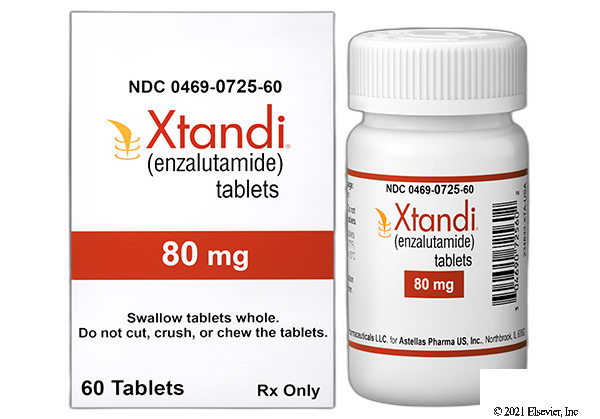 On April 9, Knowledge Ecology International (KEI), the Union for Affordable Cancer Treatment (UACT) and Universities Allied for Essential Medicines (UAEM) sent a letter to Chiquita Brooks-LaSure, Administrator for the Centers for Medicare and Medicaid Services, requesting that CMS use alleged statutory authority to allow companies to make and sell generic versions of Astellas and Pfizer’s blockbuster prostate cancer drug, Xtandi®.
The letter comes two months after the Department of Health and Human Services (HHS) denied an appeal of a decision not to march in on the drug under 35 USC §203. The National Institutes of Health (NIH) first denied the petition, which was brought by KEI, in March 2023, and said its analyses “have found Xtandi to be widely available to the public on the market” and “NIH does not believe that use of the march-in authority would be an effective means of lowering the price of the drug.” HHS ultimately concurred with the NIH decision on appeal.
This week’s letter seeks to circumvent that denial by invoking a different provision of Bayh-Dole, 35 U.S.C. § 202(c)(4), which the groups say grants the U.S. government a “world wide nonexclusive, nontransferrable, irrevocable, paid-up license to practice or have practiced for or on behalf of the United States any subject invention throughout the world.” The letter also asks CMS to exercise “the right of the government to use patents under 28 U.S.C. § 1498,” which the letter says gives the government the ability “to use or give third parties the right to use any U.S. granted patent on an invention” for inventions it funds under the Bayh-Dole Act, subject to “reasonable and entire compensation” to the patent owner. The letter claims:
“In this case, since the government has the Bayh-Dole Section 202 license to the three patents required to make and sell enzalutamide, the required compensation for a use by or for the government will be zero.”
But Joseph P. Allen, Executive Director of the Bayh-Dole Coalition, said in a statement released yesterday that the groups “fundamentally misrepresent, and grossly exaggerate, the government’s powers under” these provisions. Allen explained:
“This is a flawed interpretation of how both laws actually work. 28 U.S.C. § 1498 is functionally an eminent domain statute, which gives the government the ability to disregard patent protections in order to directly manufacture, or contract for, certain urgently needed products — traditionally, military equipment for national security purposes — and then retroactively compensate the patent holders for the infringement. The statute has been invoked only a handful of times in its more than 100-year history — and in every single instance, the products in question were physically acquired by, and directly used by, the Department of Defense or other federal employees. And when this has been done, Sec. 1498 requires the government to compensate the patent owner for the full market value of the invention being used.
Similarly, the government license under the Bayh-Dole Act is only for meeting mission needs of the agency funding the invention, normally funding additional research or meeting its own procurement requirements. Medicare and Medicaid clearly do not fall under this category.”
Allen further characterized the letter as a misguided attempt to skirt the government’s recent march-in rights denial for Xtandi. “Apparently, the critics who have tried so long to misuse the march in rights provision of the Bayh-Dole Act to impose price controls have given up on that ill-fated gambit only to try an even more desperate ploy.”
Separately, the Biden Administration is currently considering a proposal that would significantly broaden the criteria for marching in on patented technology developed with federal funding. The “Framework for Considering the Exercise of March-In Rights” has drawn sharp criticism on a bipartisan basis.
The groups’ interpretation of these provisions could have much broader consequences, concluded Allen:
“It should also be kept in mind that this argument could be applied to virtually any product, not just drugs. That’s how banana republics function. It’s a model which would have the same devastating impact if ever adopted in the United States.”